
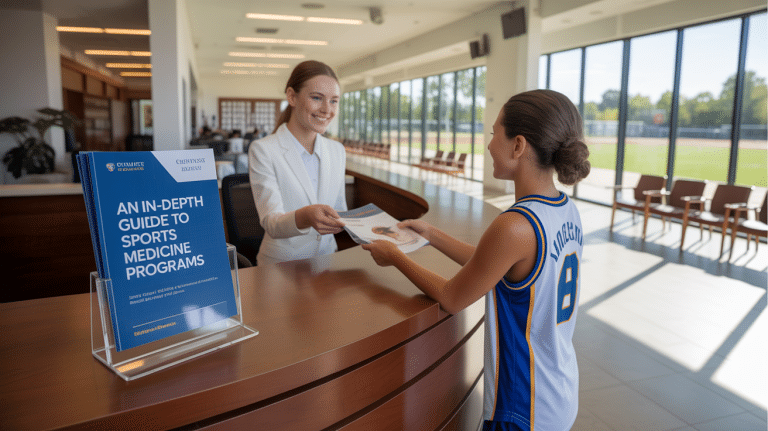
An In-Depth Guide to Sports Medicine Programs
What is Sports Medicine?
Sports Medicine is a branch of medicine that focuses on the treatment and prevention of sports-related injuries. The field encompasses a variety of aspects, including exercise physiology, biomechanics, nutrition, and physical rehabilitation. It is tailored for individuals aiming to work with athletes, active individuals, and those interested in maintaining or improving physical performance through scientific principles.
Students pursuing a degree in Sports Medicine learn to handle injuries that occur in various physical activities, working closely with athletes to enhance performance and ensure safe participation in sports.
What Do You Study in Sports Medicine?
Core Subjects and Foundational Courses
- Health and Healthcare Foundations: This course introduces students to the principles of human health and wellness, emphasizing the healthcare system’s role in sports and physical activity.
- Human Anatomy & Physiology: Essential for understanding how the body works, this subject covers the mechanics behind bodily movements, injury mechanisms, and strategies for rehabilitation.
- General Sciences: Students study foundational sciences including Biology, Chemistry, and Physics, which form the basis for advanced topics in health and sports science.
- Kinesiology and Biomechanics: By analyzing human movement, this course explores how biomechanics affect health and performance, aiding in injury prevention and enhanced athletic efficiency.
- Exercise Physiology: This subject addresses how exercise influences the body and its systems, providing insight into performance optimization and recovery strategies.
- Injury Care & Prevention: Students learn to assess, prevent, and manage injuries, equipping them with vital skills for real-world application in athletic settings.
- Nutrition: Understanding the principles of nutrition is essential for advising athletes on diets that enhance performance and recovery.
- First Aid & CPR: These life-saving skills are critical for emergencies that may arise during sporting events and practices.
- Medical Terminology: Developing proficiency in medical language is fundamental for effective communication in healthcare environments.
Advanced/Specialized Training
- Athletic Training: This course introduces students to the care, prevention, and rehabilitation of sports injuries, providing practical insights into the athletic training profession.
- Cardiac Rehabilitation and Occupational Therapy: These specialized modules prepare students for careers in clinical settings that focus on rehabilitation and recovery processes.
General Education Requirements
In addition to the specialized courses, students are required to take general education courses in areas such as English composition, mathematics, psychology, public speaking, and humanities to ensure a well-rounded academic background.
Hands-On Experience
Most programs emphasize hands-on learning through labs, internships, or practicum experiences, granting students the opportunity to develop the applied skills necessary for professional practice. These experiences allow students to engage in live scenarios, enhancing their readiness for employment upon graduation.
Careers After Sports Medicine
Graduates of Sports Medicine programs can pursue various career paths, either entering the workforce immediately or advancing their education for more specialized roles. The typical positions include:
- Athletic Trainer
- Physical Therapy Assistant
- Exercise Physiologist
- Cardiac Rehabilitation Specialist
- Occupational Therapy Aide
- Sports Consultant
In terms of salary, here are average earnings for common job titles in the field:
- Athletic Trainer: $45,000 – $55,000 USD / €38,000 – €46,000 EUR
- Physical Therapy Assistant: $40,000 – $50,000 USD / €34,000 – €43,000 EUR
- Exercise Physiologist: $50,000 – $65,000 USD / €42,000 – €55,000 EUR
- Cardiac Rehabilitation Specialist: $55,000 – $75,000 USD / €46,000 – €63,000 EUR
- Occupational Therapy Aide: $35,000 – $40,000 USD / €30,000 – €34,000 EUR
These careers are often found in settings such as hospitals, rehabilitation clinics, fitness centers, educational institutions, and sports teams.
Is Sports Medicine Hard to Study?
Like any scientific program, studying Sports Medicine presents its challenges. Students often face rigorous coursework that demands strong analytical, observational, and critical thinking skills. The curriculum requires a solid foundation in science and math, making prior knowledge in these areas beneficial. Common challenges include:
- High Academic Demands: Courses cover complex topics requiring intensive study and understanding.
- Practical Application: Students must effectively apply theoretical knowledge in practical settings, necessitating strong critical thinking and quick decision-making skills.
- Time Management: Balancing coursework, practical training, and any additional commitments can be challenging for students.
Required Skills and Preparation Tips
- Strong Interest in Health and Fitness: A passion for promoting wellness and improving physical performance is necessary.
- Good Communication Skills: Effective interaction with patients and teammates is vital in healthcare settings, particularly in sports medicine.
- Analytical Skills: The ability to analyze and interpret data accurately is crucial.
- Time Management: Balancing various course requirements and practical experiences effectively.
Preparation tips include gaining volunteer experience in sports-related fields, engaging in fitness activities, or taking introductory courses in health sciences ahead of enrollment.
Top Certifications After Sports Medicine Graduation
Upon graduation, students gearing up for careers in Sports Medicine may consider obtaining the following certifications:
- Certified Athletic Trainer (ATC): Through the Board of Certification (BOC) in the United States, vital for aspiring athletic trainers.
- Fitness Trainer Certification: Various organizations offer fitness trainer certifications, recognized globally.
- CPR and First Aid Certification: Essential certifications required for many jobs within the healthcare and sports sectors.
These credentials enhance employability and validate the graduate’s expertise in their chosen field.
Where to Study Sports Medicine
Students interested in pursuing a degree in Sports Medicine have numerous choices, particularly at prestigious universities in Turkiye. Here are a few top institutions offering this program:
These universities boast comprehensive programs in Sports Medicine, emphasizing both academic rigor and hands-on experiences.
Conclusion
Sports Medicine is a vibrant and rewarding field that prepares students to work with athletes and sports enthusiasts in various capacities. The journey through a Sports Medicine program is challenging yet fulfilling, equipping graduates with vital knowledge and skills for a plethora of careers. If you are considering this path, reach out to Study in Turkiye for personalized guidance to navigate your options effectively. Embrace the journey in Sports Medicine and step into an exciting career dedicated to improving health and athletic performance.
Take the Next Step with Study in Turkiye
We encourage you to explore the vast opportunities available to you in Sports Medicine and related fields. Let Study in Turkiye help you find the right program for your aspirations.

