
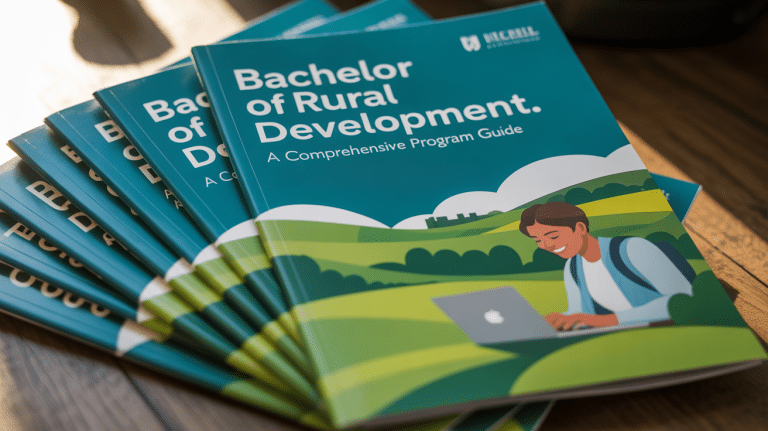
Bachelor of Rural Development: A Comprehensive Program Guide
What is Bachelor of Rural Development?
The Bachelor of Rural Development program aims to prepare professionals who can effectively contribute to the sustainable development of rural areas. Incorporating a broad spectrum of disciplines, the curriculum focuses on various aspects vital for rural empowerment, including social dynamics, economic growth, environmental conservation, and policy-making.
Students are trained to handle real-world challenges and engage with various stakeholders, including government agencies, non-governmental organizations (NGOs), and community-based organizations. This preparation is essential for those looking to make a meaningful impact on rural communities and advocate for effective policies.
What Do You Study in Bachelor of Rural Development?
Core Areas of Study
- Social, Economic, and Environmental Issues: The program dives into the fundamental complexities of rural life, focusing on the dynamics among social structures, economic prosperity, and environmental sustainability.
- Rural Economics and Finance: Students learn about the unique economic systems that govern rural areas, including financial management techniques essential for assessing rural projects and resource distribution.
- Sustainable Resource Management: The curriculum covers pivotal topics such as sustainable agricultural practices, natural resource management, and strategies for environmental conservation.
- Community Development: Emphasizing strategies for community empowerment, focusing on integral aspects such as rural infrastructure development.
- Policy and Governance: Engaging modules on public administration, policy formation, and governance structures relevant to rural settings.
- Practical Skills: Hands-on experience with opportunities for fieldwork, internships, and project-based learning.
Example Courses
- Fundamentals of Rural Community
- Rural Economics and Finance
- Introduction to Natural Resources
- Rural Infrastructure Management
- Education & Training in Rural Context
- Sustainable Rural Communities
- Introduction to Environmental Studies
- Introduction to Public Administration
- Research in Rural Traditional Governance
Careers After Bachelor of Rural Development
Graduates can anticipate diverse career opportunities within various sectors aimed at supporting rural communities. Potential career paths include:
- Rural Development Officer
- Community Health Inspector
- Agricultural Policy Advisor
- Rural Policy & Food Security Specialist
- Project Manager or Coordinator within government agencies and international development organizations
- Community Development Practitioner
- Consultant for rural enterprises and businesses
Salary Expectations
The financial prospects for graduates vary based on location and sector. Average salaries can be summarized as follows:
- Rural Development Officer: $55,000 – $70,000 (USD) / €50,000 – €65,000 (EUR)
- Community Health Inspector: $45,000 – $60,000 (USD) / €42,000 – €55,000 (EUR)
- Agricultural Policy Advisor: $60,000 – $80,000 (USD) / €55,000 – €75,000 (EUR)
- Rural Policy & Food Security Specialist: $50,000 – $75,000 (USD) / €45,000 – €65,000 (EUR)
- Project Manager or Coordinator: $65,000 – $85,000 (USD) / €60,000 – €75,000 (EUR)
Is Bachelor of Rural Development Hard to Study?
Pursuing a Bachelor of Rural Development comes with its unique set of challenges. Students typically face:
- Complex Subject Matter: The interplay between social, economic, and environmental issues can be intricate.
- Fieldwork Requirements: Practical components necessitate field visits, internships, and hands-on projects.
- Critical Thinking and Problem Solving: Graduates are expected to tackle complex developmental challenges creatively.
Preparation Tips
- Prior Knowledge: A background in social sciences can provide a helpful foundation.
- Engage with Practice: Volunteer with local NGOs or community initiatives for real-world experience.
- Develop Soft Skills: Strong communication, teamwork, and leadership skills are essential.
- Utilize Resources: Engage with academic advisors and career services offered by institutions.
Top Certifications After Bachelor of Rural Development Graduation
Upon completing a Bachelor of Rural Development, there may be certifications or licenses that can further enhance employability:
- Project Management Professional (PMP): Beneficial for managing large-scale development projects.
- Certified Rural Development Practitioner (CRDP): Validates knowledge and skills tailored for rural development practitioners.
- Sustainable Agriculture Certification: Valuable for graduates intending to specialize in agricultural development.
- Community Development Specialist Certification: Enhances credentials for working closely with community organizations.
Where to Study Bachelor of Rural Development
Here are some top private universities offering a Bachelor of Rural Development program:
These institutions provide robust academic frameworks to ensure students acquire the required knowledge and skills for successful careers in rural development.
Take the Next Step with Study in Turkiye
Explore further to find your path in the Bachelor of Rural Development program and make an impact in rural communities.

