
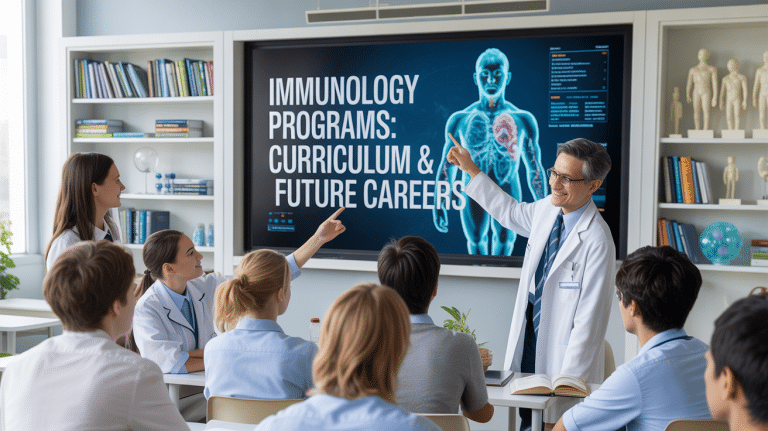
Immunology Programs: Curriculum & Future Careers
What is Immunology?
Immunology is the branch of biomedical sciences that deals with the study of the immune system, its structure, functions, and role in health and disease. Immunologists investigate how the body defends itself against infections and how these responses can go awry, leading to diseases such as allergies, autoimmune disorders, and cancers. The aim of an immunology program is to equip students with the knowledge and skills to pursue various career paths across academia, healthcare, and industry.
What Do You Study in Immunology?
The curriculum for immunology programs is comprehensive, integrating core subjects with specialized electives to prepare students for advanced challenges in the field.
Core Coursework Components
- Advanced Topics in Immunology: Offered in the fall semesters, this course covers the principles of immune system function, including innate and adaptive immunity, immune response mechanisms, and immunopathology.
- Advanced Principles of Immunology: This spring semester course expands on foundational topics, focusing on experimental immunology, including the design of immunological experiments and interpretation of data.
- Cell and Molecular Biology: Essential core courses typically required in the first year, focusing on cellular processes and molecular mechanisms crucial for understanding immunological functions.
- Experimental Design Courses: Graduate-level courses that emphasize methodologies and tools used in immunological research, often accompanied by practical lab components.
Elective Requirements
In addition to core subjects, most immunology programs require students to take elective courses to tailor their education based on specific interests or career goals. Examples might include:
- Pediatric Immunology
- Pathogenesis of Infectious Diseases
- Vaccinology
Laboratory Experience and Research
Laboratory work plays a critical role in immunology studies. Students generally engage in:
- Hands-on Laboratory Research: Conduct experiments related to antibody production, vaccines, and immune responses.
- Seminar Discussion Courses: Develop critical analysis and presentation skills through discussions on current research topics and advancements in the field.
- Teaching and Mentoring: Depending on the program, students may participate in teaching undergraduate courses or mentoring junior students.
Professional Development
The curriculum often incorporates professional development components to prepare students for post-graduate success:
- Conduct of Science Courses: Addressing research ethics and integrity.
- Critical Reading for Immunology: Focusing on analyzing scientific literature and understanding emerging trends in immunological research.
Careers After Immunology
Graduating from an immunology program opens doors to various career paths in multiple sectors, including healthcare, academia, and biotechnology.
Potential Job Titles
- Immunologist
- Research Scientist
- Clinical Laboratory Scientist
- Vaccine Developer
- Biomedical Engineer
- Healthcare Consultant
Industries and Sectors
- Pharmaceutical companies
- Government research institutions
- Healthcare providers
- Academic institutions
- Non-profit research organizations
Average Salaries
United States: $83,000 – $100,000 per year
Europe: €45,000 – €65,000 per year
Note: Salaries may vary based on experience, location, and sector. For instance, immunologists in high demand areas may command salaries toward the upper end of these ranges.
Is Immunology Hard to Study?
Like any in-depth scientific discipline, studying immunology can be challenging. The program requires a solid foundation in biology and chemistry, along with the ability to apply complex concepts.
Common Challenges:
- Volume of Information: Understanding various immune pathways, cellular interactions, and molecular mechanisms can be overwhelming.
- Lab Work: Mastering experimental techniques and analytical skills requires practice and precision.
- Research Skills: Developing the ability to critically evaluate scientific literature and methodologies is essential.
Required Skills:
- Strong analytical abilities
- Attention to detail
- Critical thinking
- Laboratory skills
Preparation Tips:
- Pre-Requisites: Take foundational biology and chemistry courses beforehand.
- Engage in Research Early: Seek opportunities for undergraduate research or internships in labs during your studies.
- Stay Informed: Regularly read current literature in immunology to understand ongoing research trends and discoveries.
Top Certifications After Immunology Graduation
Upon graduating, students may wish to pursue additional certifications and licenses to enhance their credentials and professional opportunities. Essential certifications may include:
- Board Certification in Immunology: Offered by various professional associations.
- Clinical Laboratory Scientist Licensure: Required for jobs in clinical laboratories, usually governed by state regulations.
- Good Clinical Practice (GCP): Certification useful for those entering clinical research.
Where to Study Immunology
Students interested in pursuing a degree in immunology have several excellent options in Turkiye. Here are some universities that offer strong immunology programs:
Conclusion
Immunology programs are designed for those eager to explore the intricacies of the immune system and its impact on health and disease. With rigorous coursework, a focus on research, and various career pathways, graduates are well-prepared to make significant contributions to science and healthcare.
If you are considering an immunology program abroad or have specific questions about your options, reach out to Study in Turkiye for personalized assistance in finding the right academic path for you.
Take the Next Step with Study in Turkiye
Explore further options to shape your education and career in immunology.

