
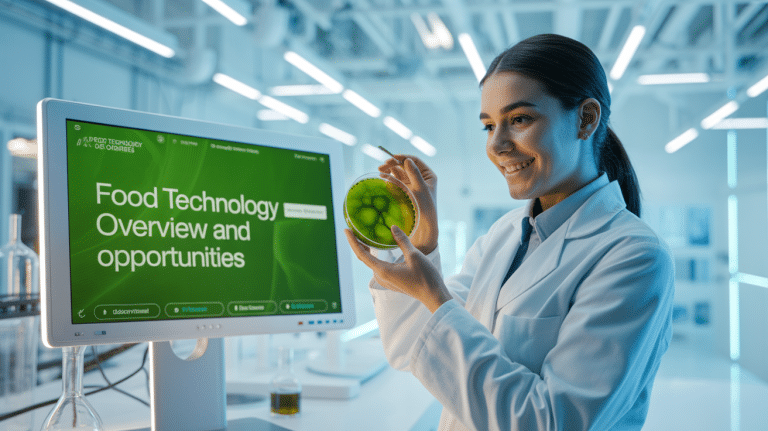
Food Technology Degrees: What You Need to Know
What is Food Technology?
Food Technology is the study of the transformation of raw ingredients into safe and nutritious food products. It encompasses a range of topics, from basic food sciences to the engineering aspects essential for mass food production. Students in this field learn not only about the biological and chemical properties of food but also about the technological processes that affect food quality and safety.
As global food challenges increase, graduates in Food Technology are becoming indispensable in the industry.
What Do You Study in Food Technology?
Food Technology programs generally combine theoretical knowledge with practical skills. The curriculum typically includes a blend of core science courses and specialized technical courses.
Core Science Courses
- Organic Chemistry: Covers the structure, properties, and reactions of organic molecules in food.
- Food Chemistry and Analysis: Students learn about the chemical makeup of food substances.
- Food Microbiology: Focuses on microorganisms affecting food.
- Food Engineering: Studies the application of engineering principles to food processing.
- Food Laws and Regulations: Covers the legal framework governing food safety.
Technical Skills Development
- Introduction to Food Processing: Overview of techniques used in the food industry.
- Unit Operations in Food Processing: In-depth study of fundamental processes.
- Technical Problem Solving: Develops troubleshooting skills.
- Product Development: Focuses on innovation and market research.
Many programs offer specialization tracks, allowing students to tailor their education.
Careers After Food Technology
Graduates of Food Technology programs enjoy various career opportunities:
- Food Technologist
- Quality Assurance Manager
- Food Safety Inspector
- Research and Development Scientist
- Regulatory Affairs Specialist
- Production Manager
Industries and Sectors
- Private Food Manufacturers
- Government Agencies
- Research Institutions
- Regulatory Bodies
- Food Retailers
Average Salaries Globally
Salaries for food technology professionals can vary based on location:
- United States: $50,000 – $85,000 (approximately €45,000 – €80,000)
- European Union: €38,000 – €70,000
- Turkiye: 250,000 TRY – 450,000 TRY
Is Food Technology Hard to Study?
Studying Food Technology presents challenges common among rigorous scientific disciplines. Students might encounter complex concepts in chemistry, microbiology, and engineering.
Common Challenges
- Heavy Workload
- Scientific Rigor
- Technical Skills
Required Skills and Preparation Tips
To succeed in Food Technology, students should focus on developing:
- Analytical and critical thinking skills
- Proficiency in mathematics and sciences
- Effective communication skills
- Time management skills
Preparation tips include engaging in study groups and seeking relevant internships.
Top Certifications After Food Technology Graduation
- Certified Food Scientist (CFS)
- HACCP Certification
- Registered Dietitian Nutritionist (RDN)
- ISO 22000 Certification
Where to Study Food Technology
Several top private universities offer robust Food Technology programs:
Take the Next Step with Study in Turkiye
Explore further into your future in Food Technology with expert guidance from Study in Turkiye. We are here to assist you on your educational journey.

