
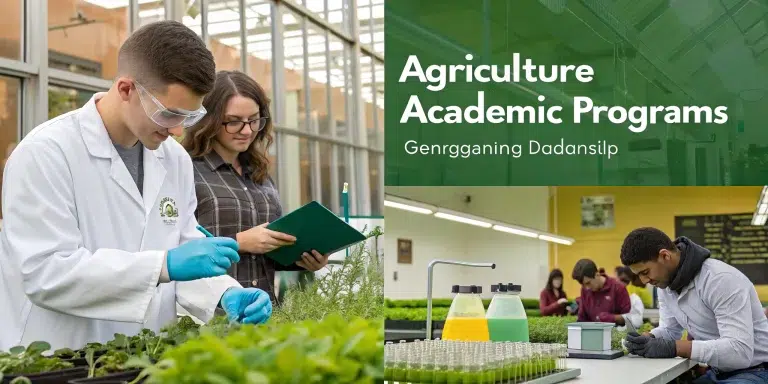
Overview of Agriculture Academic Programs
What is an Agriculture Program?
Agriculture programs at the undergraduate level are designed to provide students with both a general education and specialized knowledge required for careers in the agricultural industry. These programs typically emphasize:
- Scientific principles and applications in plant and animal production.
- Business and economic aspects of agriculture.
- Technical and practical skills necessary for work in diverse agricultural settings.
The curriculum often integrates classroom learning, laboratory experience, fieldwork, and communication skills development, creating a comprehensive educational framework for students.
What Do You Study in Agriculture?
Agriculture degree programs offer structured coursework across several disciplines relevant to modern agriculture:
Core Courses and Areas of Study:
- Plant Science:
- Focus on biology, growth, and production of crops.
- Topics may include plant physiology, agronomy, and sustainable crop management.
- Animal Science:
- Covers the care, breeding, and management of livestock and poultry.
- Students learn about animal nutrition, genetics, and health management.
- Soil Science:
- Involves understanding soil properties, management, and conservation.
- Courses might cover soil fertility, ecology, and erosion control techniques.
- Business and Economics:
- Management of agricultural production and marketing, as well as farm business operations.
- Key subjects include agricultural finance, farm management, and agricultural policy.
- Agricultural Mechanics/Machinery:
- Technical aspects of equipment and facilities used in agriculture.
- Hands-on training with modern agricultural machinery and maintenance practices.
- Natural Resources and Conservation:
- Focus on sustainable practices and understanding the environmental impacts of agriculture.
- Coursework might include wildlife management and conservation strategies.
- Biotechnology:
- Introduction to emerging technologies in crop and animal production.
- Areas of study may include genetic modification and laboratory techniques.
Degree Structure Examples:
- Programs like the Associate of Applied Science in Agriculture include a foundation in plant, animal, and soil science, along with business and economics, allowing students to focus on their area of interest, such as production or support industries.
- The General Agriculture degree allows students to concentrate in areas like Agricultural Education, Plant and Soil Science, or Animal and Poultry Science. Typically, this degree requires completion of general education, departmental core, major core, supportive, and elective courses totaling around 120 credits.
- Agribusiness programs uniquely blend agricultural science and economics, prioritizing management and policy decision-making within the agricultural sector. Electives allow students to tailor their studies to individual career goals.
Experiential Learning:
Many programs include laboratory and fieldwork, as well as opportunities for leadership and career skill development. Students may also participate in organizations such as the Future Farmers of America (FFA), enhancing their practical experiences and networking within the industry.
Careers After Agriculture
Graduates of agriculture programs are prepared for a variety of career paths, including:
- Agribusiness management roles (operations, marketing, supply chain).
- Agricultural production (crop/livestock management, farm ownership).
- Roles in government agencies (policy, inspection, conservation).
- Agricultural education (teaching agriculture in schools, outreach).
- Technical support roles in agricultural industries (equipment, biotechnology, resource management).
- Forestry, natural resource management, and conservation.
Sample Job Titles:
- Agricultural Manager
- Farm Operations Manager
- Agronomist
- Animal Scientist
- Agricultural Consultant
- Agricultural Educator
- Crop Manager
- Agricultural Economist
Average Salaries:
United States:
- Entry-Level: $40,000 – $55,000 (USD)
- Mid-Career: $60,000 – $80,000 (USD)
- Senior Level: $90,000 – $120,000 (USD)
Europe:
- Entry-Level: €30,000 – €45,000 (EUR)
- Mid-Career: €50,000 – €70,000 (EUR)
- Senior Level: €80,000 – €100,000 (EUR)
Is Agriculture Hard to Study?
Studying agriculture presents a unique set of challenges and rewards. Here are common challenges students may face, along with the skills and tips for preparation:
Common Challenges:
- Complex Scientific Concepts: Students must grasp various scientific principles which may require strong mathematical skills.
- Hands-On Learning: Practical experience is critical, demanding time management and commitment to labor-intensive tasks.
- Technological Adaptation: Keeping up with evolving agricultural technologies can be daunting for some students.
Required Skills:
- Strong analytical and critical thinking skills.
- Good communication and interpersonal abilities for teamwork and networking.
- Adaptability, especially regarding new technology and methods.
Preparation Tips:
- Take introductory courses in biology, chemistry, and mathematics to build a solid foundation.
- Engage in internships or volunteer work in agricultural settings to gain practical experience.
- Join student organizations related to agriculture for networking and support.
Top Certifications After Agriculture Graduation
After completing a degree in agriculture, graduates may consider pursuing certifications and licenses to enhance their qualifications. Essential certifications might include:
- Certified Crop Adviser (CCA): Recognizes expertise in crop management.
- Pesticide Applicator License: Required for those applying pesticides commercially.
- Agricultural Business Manager Certification: Validates proficiency in agribusiness management.
- Soil Science Society of America Certification: Acknowledges specialized knowledge in soil science.
Certifications can vary by region, and graduates are encouraged to research local requirements and opportunities.
Where to Study Agriculture
Students interested in pursuing agriculture programs have several excellent universities to consider for their academic journey. Here are a few notable institutions:
- Ankara Medipol University – Turkiye
- Bahcesehir University (BAU) – Turkiye
- Uskudar University – Turkiye
- Istanbul Kalın University – Turkiye
Conclusion
Agriculture programs offer multidisciplinary training, preparing students for diverse career paths within the agricultural sector. By combining practical experience with foundational knowledge, students are well-equipped to address the challenges and opportunities within this vital industry. For personalized assistance in navigating your academic journey, reach out to Study in Turkiye today!
Take the Next Step with Study in Turkiye
Explore further educational opportunities and take the first step toward your future in agriculture.

