
Mechanical Engineering Degrees: Courses & Careers
What Do You Study in Mechanical Engineering?
Careers After Mechanical Engineering
Is Mechanical Engineering Hard to Study?
Top Certifications After Mechanical Engineering Graduation
Where to Study Mechanical Engineering
What is Mechanical Engineering?
Mechanical engineering stands as a versatile and comprehensive engineering discipline that focuses on the design, development, building, and testing of mechanical systems. It encompasses everything that moves, from individual components to complex machines and even the human body.
This program is particularly suitable for students who have a strong interest in physics, mathematics, and technology, as well as those who enjoy problem-solving and creative challenges.
Mechanical engineers are responsible for designing and implementing solutions that rely on mechanical systems. This includes tasks such as conducting research, developing prototypes, and overseeing the manufacture of machinery and equipment. The field continues to evolve with advancements in technology, sustainability, and innovative materials, making it a dynamic and promising area of study.
What Do You Study in Mechanical Engineering?
Students pursuing a degree in mechanical engineering will engage in a robust curriculum that is designed to provide both theoretical knowledge and practical skills.
Core Subjects
- Calculus and Analytical Geometry
- Physics
- Statistical and Probability Theory
- Thermodynamics
- Fluid Mechanics
Elective Courses
- Robotics and Automation
- Renewable Energy Systems
- Advanced Materials Engineering
- Biomechanics
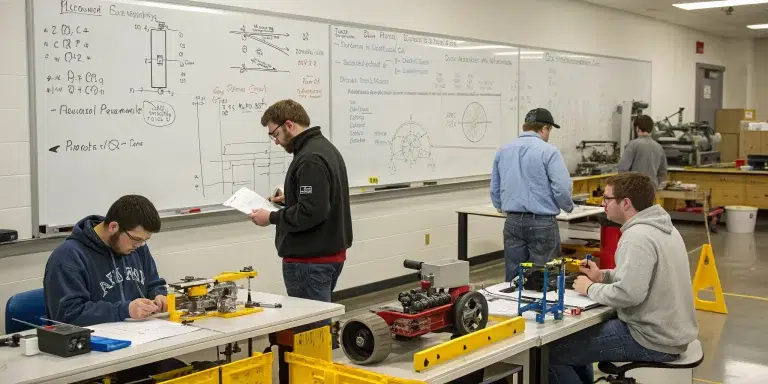
Labs, Workshops, and Internships
Practical experience is crucial in mechanical engineering education. Programs typically include:
- Laboratories
- Workshops
- Internships
Careers After Mechanical Engineering
Graduates with a degree in mechanical engineering can explore various career paths. The demand for professionals in this field remains strong, with opportunities available in diverse sectors.
- Mechanical Engineer
- Design Engineer
- Manufacturing Engineer
- Aerospace Engineer
- Quality Control Engineer
- Robotics Engineer
- Thermal Systems Engineer
- HVAC Engineer
Average Salaries
Salaries for mechanical engineering positions vary based on location, industry, and level of experience:
- USD: $60,000 – $90,000 per year
- EUR: €50,000 – €75,000 per year
- TRY: 1,500,000 – 2,200,000 TL per year
Is Mechanical Engineering Hard to Study?
Many prospective students wonder about the difficulty of studying mechanical engineering. The program is certainly challenging, but it is also rewarding for those with a passion for the field.
Common Challenges
- Mathematics and Physics Proficiency
- Complex Problem-Solving
- Time Management
Required Skills
- Analytical Skills
- Creativity
- Technical Skills
Preparation Tips
- Strengthen Mathematical Skills
- Engage in STEM Activities
- Gain Experience Through Internships
Top Certifications After Mechanical Engineering Graduation
While a degree in mechanical engineering provides a solid education, obtaining additional certifications can enhance employability and career advancement. Some important credentials include:
- Fundamentals of Engineering (FE)
- Professional Engineer (PE) License
- Certified Manufacturing Engineer (CMfgE)
Where to Study Mechanical Engineering
Pursuing a degree in mechanical engineering is a significant step towards a fulfilling career. Here are top private universities where you can study mechanical engineering:
- Medipol University – Turkiye
- Istinye University – Turkiye
- Bahcesehir University – Turkiye
- Ozyegin University – Turkiye
Each of these institutions offers strong mechanical engineering programs with various specializations, excellent faculty, and modern facilities.
Take the Next Step with Study in Turkiye
By understanding the curriculum, career paths, and additional certification requirements, students can effectively prepare for success in this dynamic engineering discipline. Explore further to find the right program for you!

