
Mechanical Engineering Programs: A Complete Guide
Overview of Mechanical Engineering
Mechanical engineering is one of the most versatile and comprehensive engineering disciplines, focusing on the design, development, analysis, manufacturing, and maintenance of mechanical systems. Whether it’s tiny components or vast machinery—mechanical engineers work at all scales to solve problems related to movement and energy transformations. This field amalgamates principles of physics, mathematics, chemistry, and materials science into practical applications that significantly impact various industries.
What Do You Study in Mechanical Engineering?
Core Curriculum
- Mechanics of Materials: Understanding material properties and their behavior under various conditions.
- Thermodynamics and Heat Transfer: Understanding energy, work, and thermal systems.
- Fluid Mechanics: The study of fluids and their behaviors in motion and at rest.
- Dynamics and Control Systems: Analysis and design of moving systems to predict and control their behavior.
- Materials Science: Studying material properties to enhance manufacturing processes and product quality.
- Design and Manufacturing Processes: Basics of engineering design and methods to incorporate manufacturing principles.
Elective Courses
- Robotics and Mechatronics
- Advanced Materials and Metallurgy
- Renewable Energy Systems
- Biomechanics
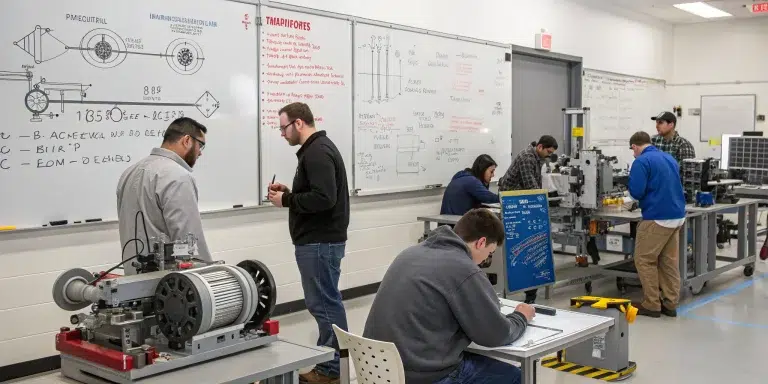
Labs, Workshops, and Internships
Practical experience is a vital part of mechanical engineering education. Most programs include:
- Laboratory Work: Hands-on experiments to reinforce theoretical knowledge in mechanics, thermodynamics, and fluid dynamics.
- Workshops: Collaborative projects where students apply learned skills in creating functional prototypes.
- Internships: Opportunities to gain real-world experience, allowing students to work with engineering firms or in specialized industries to apply their knowledge, often culminating in a capstone project.
Sample Courses
| Course Title | Focus Area |
|---|---|
| Vibration of Mechanical Systems (ME 370) | Dynamics/Systems |
| Heat Transfer (ME 410) | Thermodynamics |
| Mechanical Systems Lab (ME 435) | Experimental Methods |
| Mechatronics (ME 454) | Electronics/Automation |
| Mechanical Systems Design Project (ME 440W) | Capstone/Design |
| Physics: Mechanics (PHYS 211) | Core Science Foundation |
| Programming for Engineers (CMPSC 200) | Computational Skills |
Careers After Mechanical Engineering
Graduates of mechanical engineering have access to a wide variety of career opportunities across numerous industries, including but not limited to:
- Aerospace Engineering
- Automotive Engineering
- Energy Sector (Renewable & Non-renewable)
- Manufacturing and Robotics
- Biomedical Engineering
- Product Design and Reliability Engineering
- Instrumentation and Process Control
Sample Job Titles
- Mechanical Engineer
- Design Engineer
- Project Manager
- Quality Engineer
- Manufacturing Engineer
- Research and Development Engineer
Average Salary Ranges
- United States: $70,000 – $120,000 annually
- Europe: €50,000 – €90,000 annually
These figures may vary significantly based on factors such as location, industry sector, and individual company dynamics.
Is Mechanical Engineering Hard to Study?
Understanding whether mechanical engineering is challenging depends heavily on an individual’s aptitude for mathematics and problem-solving. The curriculum involves rigorous coursework that necessitates strong skills in calculus, physics, and analytical thinking.
Common Challenges
- Complex Problem-Solving: Courses will often involve multifaceted problems that require creative thinking and more sustained effort.
- Heavy Workload: Balancing laboratory projects, assignments, and exams can be demanding.
- Technical Proficiency: Students must be adept in various software tools for simulation and design.
Required Skills
To succeed in mechanical engineering, students need:
- Strong mathematical skills
- Analytical and critical thinking abilities
- Technical proficiency in software (e.g., CAD applications)
- Effective communication skills for collaboration in teams
Preparation Tips
- Develop a strong foundation in subjects like calculus, physics, and chemistry before starting the program.
- Engage in extracurricular activities related to engineering to build practical skills.
- Utilize resources such as tutoring services or study groups to enhance comprehension of difficult topics.
Top Certifications After Mechanical Engineering Graduation
Upon completing a mechanical engineering degree, graduates may pursue various certifications to enhance their employability and career prospects. Some of the most acknowledged certifications include:
- Certified Manufacturing Engineer (CMfgE)
- Professional Engineer (PE) – necessary for licensure in many regions
- Certified Automation Professional (CAP)
- Lean Six Sigma Green Belt
These certifications often require passing an exam and meeting certain educational and experience prerequisites.
Where to Study Mechanical Engineering
For students who are considering pursuing a degree in mechanical engineering, several esteemed private universities in Turkiye are dedicated to providing an outstanding educational experience:
Each university offers unique programs and opportunities for students to develop their mechanical engineering skills.
Take the Next Step with Study in Turkiye
Mechanical engineering is a dynamic field that equips students with the necessary skills to tackle some of the most pressing technological challenges facing society today. If you are passionate about engineering and innovation, consider exploring mechanical engineering as your academic path. For personalized assistance in navigating your academic choices, reach out to Study in Turkiye today.

