
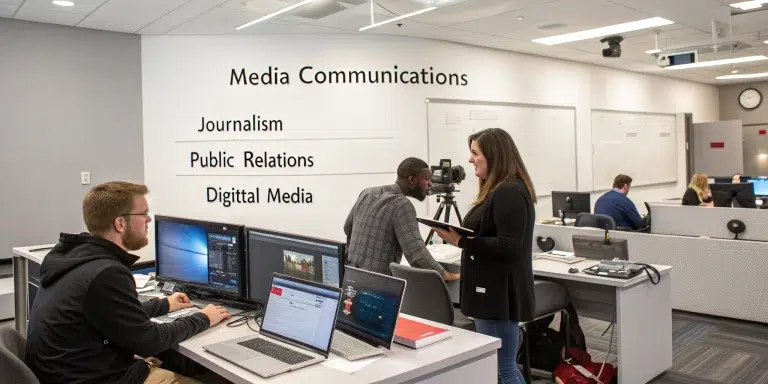
Overview of Media Communications Degrees
What is Media Communications?
Media communications is an interdisciplinary field that focuses on how media and communication systems shape our understanding of the world. This program prepares students to effectively communicate across various platforms, such as print, digital, and broadcast media. It encompasses multiple areas, including journalism, public relations, advertising, and multimedia storytelling. Students learn not only the theories behind communication but also practical skills needed for a career in a dynamic media landscape.
What Do You Study in Media Communications?
Core Knowledge Areas
- Media Theory and Communication Foundations: This includes the study of messaging, branding, and communication theories. Students analyze how media shapes societal perspectives and the impact of communication in various contexts.
- Visual and Digital Literacy: Coursework develops the ability to craft visual messages through photography, film, graphic design, and interactive media. Students learn to create effective visual content that engages audiences and communicates messages clearly.
- Media Production and Technology: Instruction covers current and emerging media technologies, emphasizing the use of innovative tools in production and dissemination of content.
Typical Courses
- Media, Culture, and Society: Analyzes the relationship between media and social dynamics.
- Foundations of Media Production: Introduces students to basic production techniques in various media forms.
- Introduction to Communication and Technology: Explores the impact of technology on communication practices.
- Media Law and Ethics: Delves into legal and ethical considerations in media production and communication.
- Social Media Content Creation and Campaign Management: Focuses on creating effective social media strategies and content.
- Public Relations Management: Teaches strategies for managing communication between organizations and the public.
- Portfolio Development: Encourages the creation of a professional portfolio consisting of multimedia and written work.
Specializations and Electives
Students may also choose to specialize in areas such as:
- Digital Media Production
- Journalism
- Strategic Communication
- Media History and Economics
- Advertising and the Attention Economy
To deepen expertise, students often select two areas of specialization, engaging in advanced coursework and elective classes.
Careers After Media Communications
Media communications graduates are equipped for diverse career paths in a variety of sectors. Some of the potential job titles include:
- Media Producer
- Public Relations Specialist
- Social Media Manager
- Digital Content Creator
- Journalist
- Communication Strategist
- Marketing Coordinator
Salary Ranges
The salary for media communications professionals can vary significantly depending on their specific roles, experience, and geographic locations. Here are average salary estimates:
- Media Producer: $45,000 – $75,000 (USD) / €40,000 – €65,000 (EUR)
- Public Relations Specialist: $50,000 – $85,000 (USD) / €45,000 – €75,000 (EUR)
- Social Media Manager: $50,000 – $80,000 (USD) / €45,000 – €70,000 (EUR)
- Digital Content Creator: $40,000 – $70,000 (USD) / €35,000 – €60,000 (EUR)
- Journalist: $35,000 – $65,000 (USD) / €30,000 – €55,000 (EUR)
- Communication Strategist: $60,000 – $100,000 (USD) / €55,000 – €90,000 (EUR)
- Marketing Coordinator: $40,000 – $70,000 (USD) / €35,000 – €60,000 (EUR)
Is Media Communications Hard to Study?
Studying media communications can be challenging due to the diverse areas of knowledge and skills required. Students often face difficulties such as:
- Keeping Up with Technology: The rapidly evolving media landscape means ongoing learning is essential to stay current with the latest tools and techniques.
- Balancing Theory and Practice: Integrating academic knowledge with practical applications can be demanding, requiring effective time management and dedication.
- Developing Critical Thinking and Creativity: Students must analyze information critically and think creatively to develop unique ideas and messages.
Preparation Tips
- Stay Informed: Regularly consume media content across various platforms to understand the landscape and trends.
- Practice Your Skills: Engage in creating content, whether through internships, freelance work, or personal projects.
- Network with Professionals: Connect with professionals through workshops, seminars, and online platforms to gain insights and advice.
Top Certifications After Media Communications Graduation
While a degree provides foundational knowledge, several certifications can enhance a graduate’s qualifications and marketability:
- Adobe Certified Expert (ACE): Validates proficiency in Adobe Creative Cloud applications used in media production.
- Google Analytics Certification: Important for understanding audience behavior and digital communication strategies.
- HubSpot Content Marketing Certification: Teaches valuable content marketing strategies, enhancing skills in digital marketing.
- Hootsuite Social Media Certification: Provides knowledge in managing social media campaigns and strategies effectively.
These certifications can significantly boost a graduate’s employability and open new career opportunities.
Where to Study Media Communications
For those interested in pursuing a degree in media communications, consider enrolling in one of the following top private universities:
These universities offer high-quality media communications programs designed to prepare students for successful careers in the field.
Conclusion
Media communications degrees offer an expansive educational journey, providing valuable skills and knowledge applicable to a variety of careers. If you are interested in starting your path in media communications, reach out to Study in Turkiye for personalized help in finding the right program for you.
Take the Next Step with Study in Turkiye
Ready to explore your options? Dive deeper into the world of media communications and discover your future!

