
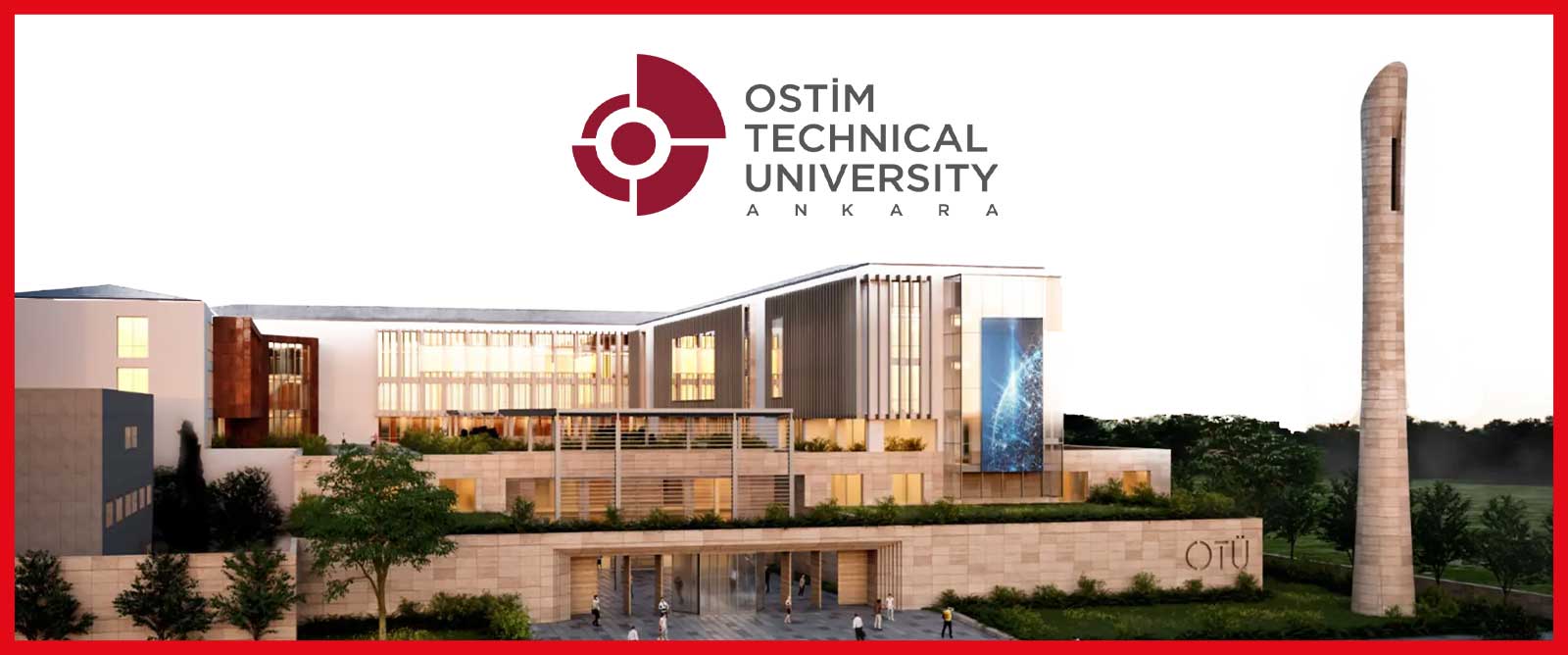
Programs in OSTiM Technical University
The Bachelor of Business Administration (BBA) in English is a globally oriented four-year undergraduate degree that equips students with advanced managerial, analytical, financial, and strategic capabilities required to lead organizations of any size in an increasingly digital, multicultural, and sustainability-driven world economy. Delivered entirely in English at Turkey’s top private and foundation universities such as Koç, Sabancı, Bilkent, Özyeğin, Boğaziçi (through its Faculty of Economics and Administrative Sciences), Bahçeşehir, İstanbul Bilgi, Kadir Has, Yaşar, TOBB, and an expanding number of state universities with international programs, the curriculum is designed and regularly refreshed through accreditations and partnerships with AACSB, EQUIS, AMBA, CFA Institute, ACCA, CIMA, Harvard Business School Online, Wharton, and leading corporations including Koç Holding, Sabancı Holding, Unilever Türkiye, PwC, Deloitte, Garanti BBVA, and Turkish Airlines. Students complete approximately 240 ECTS credits that combine rigorous core business disciplines, cutting-edge electives, double-major or minor options, mandatory internships, international exchange semesters, and a final-year capstone consulting project or thesis, while most programs integrate globally recognized professional certificates such as Bloomberg Market Concepts, Google Analytics, HubSpot Inbound Marketing, and Reuters Financial Modelling.During the program, students develop a sophisticated, integrated understanding of modern business through a progressive curriculum that begins with foundational courses in microeconomics, macroeconomics, financial accounting, management accounting, statistics, business law, and organizational behavior, then advances to specialized streams in finance, marketing, operations, strategy, entrepreneurship, and digital transformation. They master corporate finance topics including capital budgeting, cost of capital, dividend policy, mergers and acquisitions, and derivatives, while investment courses prepare them for CFA Level I examination. Marketing modules cover consumer psychology, brand management, digital and social-media strategy, customer journey mapping, and data-driven campaign analytics using tools such as Google Data Studio and Tableau. Operations and supply-chain training includes lean management, Six Sigma, blockchain in logistics, and global sourcing strategies. Strategy courses employ live case studies from Harvard, Ivey, and INSEAD, teaching competitive analysis, corporate governance, scenario planning, and blue-ocean innovation. Entrepreneurship concentrations guide students through business-plan development, pitch competitions, and incubation at university technoparks, often resulting in funded startups before graduation. Strong emphasis is placed on data analytics and technology: students learn Python, R, SQL, Power BI, and machine-learning applications in business contexts, while courses on artificial intelligence, fintech, cryptocurrency, and platform economics prepare them for Industry 4.0 leadership. Soft-skills development includes negotiation, cross-cultural management, design thinking, and executive presentation techniques, with many programs requiring a second foreign language at B2 level and mandatory international experience through Erasmus+, global exchange, or summer schools in the United States, Europe, or Asia.Graduates enjoy exceptional employability and immediate social prestige as versatile, globally minded business leaders who are actively recruited by Turkey’s largest conglomerates, multinational corporations, Big-Four consulting and audit firms, investment banks, fintech unicorns, and fast-growing startups long before commencement. First-job placements include management trainee programs at Koç Holding, Sabancı Holding, Anadolu Group, Doğuş, Zorlu, and Eczacıbaşı; analyst positions at Goldman Sachs İstanbul, J.P. Morgan, Citi, HSBC, and Turkish investment banks; strategy consulting roles at McKinsey, BCG, Bain, AT Kearney, and Turkish firms; marketing and brand-management tracks at Unilever, P&G, L’Oréal, Coca-Cola, and Turkish giants; and digital-transformation positions at Trendyol, Hepsiburada, Getir, and Peak Games. Starting monthly salaries for English-medium BBA graduates from accredited programs typically range from 80,000 to 160,000 Turkish lira plus substantial signing bonuses, stock options, and relocation packages in 2025, with rapid progression to manager and director levels within five to seven years. Many graduates pursue fully funded MBA or specialized master’s degrees at Harvard, Stanford, LBS, INSEAD, or MIT, returning to C-suite roles in Turkey or abroad. The degree also serves as a direct gateway to entrepreneurial success, with alumni founding numerous unicorns and decacorns that dominate Turkish and regional markets. Society accords these graduates considerable respect as the educated elite who drive economic growth, create employment, and represent Turkey’s modern, competitive face in global boardrooms; they are seen as articulate, cosmopolitan professionals who combine analytical rigor with ethical leadership. The combination of immediate six-figure earning potential, limitless international mobility, continuous intellectual challenge, clear pathways to executive leadership, and the profound satisfaction of shaping organizations and industries makes the English-medium Bachelor of Business Administration one of the most prestigious, versatile, and financially rewarding undergraduate degrees available today, perfectly suited for ambitious, high-achieving students determined to reach the highest levels of global business success.
Annual course fee
Duration
4 YearsStudy Mode
Full-timeIntake
September
The Master of International Business Management is a dynamic graduate program designed to equip students with advanced knowledge and skills necessary to navigate the complexities of global commerce, and it serves as a gateway to understanding how businesses operate across borders, cultures, and regulatory environments, offering a comprehensive curriculum that blends theoretical foundations with practical applications in areas such as international marketing, global finance, cross-cultural management, strategic leadership, and international trade law; throughout their studies, students develop critical competencies including analytical thinking, problem-solving, negotiation, and decision-making in multicultural contexts, as well as proficiency in evaluating international markets, managing supply chains, and designing strategies for multinational corporations, and they also gain expertise in digital transformation, sustainability practices, and corporate social responsibility, which are increasingly vital in today’s interconnected economy; the program emphasizes experiential learning through case studies, simulations, internships, and study-abroad opportunities, enabling students to apply classroom knowledge to real-world scenarios and to cultivate adaptability, resilience, and leadership qualities that are essential in global business environments; graduates of this program enjoy a wide range of career opportunities as the demand for professionals with international business expertise continues to grow, and they often secure positions in multinational corporations, consulting firms, financial institutions, government agencies, and non-governmental organizations, where they may work as international business managers, global marketing strategists, trade analysts, supply chain coordinators, or corporate development specialists; the social status of graduates is elevated by their ability to bridge cultural and economic divides, making them valuable assets in fostering international cooperation and driving business growth, and their advanced training positions them to assume leadership roles that influence corporate strategy, policy-making, and global market expansion; furthermore, many graduates pursue entrepreneurial ventures, leveraging their knowledge of international markets to establish businesses that thrive in diverse cultural and economic contexts, while others contribute to academia and research, shaping the future of international business education and policy; overall, the Master of International Business Management provides students with a holistic understanding of global commerce, empowering them to thrive in diverse professional settings and to make meaningful contributions to the advancement of international trade and cooperation, and by combining rigorous academic training with practical experience, the program ensures that graduates are not only prepared to succeed in their careers but also to lead with vision and integrity in the ever-evolving landscape of global business.
Annual course fee
Duration
1.5 YearsStudy Mode
Full-timeIntake
September
The Master of Industrial Policies and Technology Management (Thesis) (Turkish) program focuses on the intersection of industrial policies and technology management. It aims to equip students with the necessary skills to analyze, develop, and implement technology-driven strategies in industrial settings, addressing challenges in a rapidly evolving technological landscape.
Annual course fee
Duration
2 YearsStudy Mode
Full-timeIntake
September
The Master of International Business Management is a dynamic graduate program designed to equip students with advanced knowledge and skills necessary to navigate the complexities of global commerce, and it serves as a gateway to understanding how businesses operate across borders, cultures, and regulatory environments, offering a comprehensive curriculum that blends theoretical foundations with practical applications in areas such as international marketing, global finance, cross-cultural management, strategic leadership, and international trade law; throughout their studies, students develop critical competencies including analytical thinking, problem-solving, negotiation, and decision-making in multicultural contexts, as well as proficiency in evaluating international markets, managing supply chains, and designing strategies for multinational corporations, and they also gain expertise in digital transformation, sustainability practices, and corporate social responsibility, which are increasingly vital in today’s interconnected economy; the program emphasizes experiential learning through case studies, simulations, internships, and study-abroad opportunities, enabling students to apply classroom knowledge to real-world scenarios and to cultivate adaptability, resilience, and leadership qualities that are essential in global business environments; graduates of this program enjoy a wide range of career opportunities as the demand for professionals with international business expertise continues to grow, and they often secure positions in multinational corporations, consulting firms, financial institutions, government agencies, and non-governmental organizations, where they may work as international business managers, global marketing strategists, trade analysts, supply chain coordinators, or corporate development specialists; the social status of graduates is elevated by their ability to bridge cultural and economic divides, making them valuable assets in fostering international cooperation and driving business growth, and their advanced training positions them to assume leadership roles that influence corporate strategy, policy-making, and global market expansion; furthermore, many graduates pursue entrepreneurial ventures, leveraging their knowledge of international markets to establish businesses that thrive in diverse cultural and economic contexts, while others contribute to academia and research, shaping the future of international business education and policy; overall, the Master of International Business Management provides students with a holistic understanding of global commerce, empowering them to thrive in diverse professional settings and to make meaningful contributions to the advancement of international trade and cooperation, and by combining rigorous academic training with practical experience, the program ensures that graduates are not only prepared to succeed in their careers but also to lead with vision and integrity in the ever-evolving landscape of global business.
Annual course fee
Duration
1.5 YearsStudy Mode
Full-timeIntake
September
The Master of Computer Engineering is a highly competitive, research- and industry-intensive graduate program (1.5–2 years with thesis or 1 year non-thesis) offered at Turkey’s top technical universities, designed to produce world-leading computer engineers, system architects, R&D directors, cybersecurity experts, embedded AI specialists, and technology entrepreneurs who can design next-generation processors, autonomous systems, secure cloud infrastructures, 5G/6G networks, quantum-resistant cryptography, and national-scale digital platforms in one of the most vibrant and strategically critical technology ecosystems outside Silicon Valley. Throughout the program students acquire the deepest theoretical foundations combined with immediate industry impact: advanced computer architecture and multicore design, FPGA and ASIC development with Verilog/VHDL and high-level synthesis, embedded systems and real-time operating systems (FreeRTOS, Zephyr), autonomous robotics and drone swarms (ROS2, PX4), computer vision and sensor fusion, edge AI and neuromorphic computing, advanced operating systems and hypervisors, distributed systems and microservices at petabyte scale, cloud-native security and zero-trust architecture, post-quantum cryptography, blockchain consensus protocols, 5G/6G software-defined networking, high-performance computing and GPU clusters, formal verification and model checking, software-defined everything (SDN, NFV, SD-WAN), AI-driven network optimization, digital twin and Industry 5.0 systems. Every student works on real-scale national projects in collaboration with Aselsan, Havelsan, TUSAŞ, Roketsan, STM, Türksat, Turkcell, Vodafone, Huawei Turkey R&D, Siemens Turkey, Mercedes-Benz Turkey Digital Hub, Ford Otosan, TOGG, Milsoft, Netaş, Obss, Etiya, Innova, KoçDigital, and TÜBİTAK BİLGEM, completes a mandatory long-term industry or defense internship, and delivers a thesis that routinely results in patents, top-tier publications (IEEE Transactions, ACM journals, USENIX), or direct productization in flagship Turkish technologies such as Bayraktar drones, TOGG autonomous features, Anka UAVs, national 5G base stations, and quantum-safe communication networks. Graduates of the Master of Computer Engineering instantly become the most aggressively recruited and highest-paid talent in Turkey’s technology sector: they are hired as principal engineers, chief architects, cybersecurity directors, autonomous systems leads, and founding CTOs by defense giants, unicorn startups, global R&D centers (Google Turkey, Microsoft Turkey, Amazon Turkey, Intel Turkey, NVIDIA Turkey), banks building next-generation core banking systems, telecommunication operators rolling out 5G private networks, automotive companies developing Level-4 autonomy, and government strategic projects (Digital Transformation Office, National Cybersecurity Center). Many graduates launch deep-tech startups that raise eight-figure funding from 500 Istanbul, Revo Capital, or global VCs, while others secure direct PhD positions with full scholarships at MIT, Stanford, ETH Zurich, Cambridge, or Max Planck Institutes. The profession commands rock-star prestige because these engineers literally build the secure, intelligent, and autonomous digital infrastructure that powers Turkey’s defense independence, industrial competitiveness, and global technology exports. Starting salaries are the highest of any master’s program in Turkey (frequently 4–8 times the national graduate average) and escalate rapidly with security clearance, patents, and international impact, enabling graduates to reach upper-middle-class income within months and genuine wealth within a few years for those leading national critical projects or founding the next Turkish unicorn. In short, the Master of Computer Engineering is the ultimate elite credential for anyone who wants to design the core technologies that will define Turkey’s technological sovereignty and global standing for the next fifty years.
Annual course fee
Duration
2 YearsStudy Mode
Full-timeIntake
September
The Master of Software Engineering (Thesis) (Turkish) program is designed to provide students with advanced knowledge and skills in software development, methodologies, and technologies. The program emphasizes research and practical application, preparing graduates to innovate and lead in the software engineering field.
Annual course fee
Duration
2 YearsStudy Mode
Full-timeIntake
September
The Master of Business Administration (Thesis) (Turkish) program is designed to develop advanced managerial skills and theoretical knowledge in business administration. It aims to prepare students for leadership roles in various sectors by emphasizing strategic decision-making, research capabilities, and ethical practices in business.
Annual course fee
Duration
2 YearsStudy Mode
Full-timeIntake
September
The Master of Mechanical Engineering (Thesis) (Turkish) program is designed to provide students with in-depth knowledge and skills in mechanical engineering principles. The program aims to prepare graduates for advanced engineering roles by emphasizing research, design, and analysis of mechanical systems, addressing contemporary challenges in the field.
Annual course fee
Duration
2 YearsStudy Mode
Full-timeIntake
September
The Master of Electric-Electronic Engineering (Digital Microchip Design and Verification) is a highly specialized, industry-driven graduate program that trains engineers to become world-class digital IC designers, RTL architects, verification specialists, physical-design engineers, and ASIC/FPGA project leaders capable of developing the next generation of processors, AI accelerators, 5G/6G modems, automotive SoCs, IoT chips, and defense-grade integrated circuits from specification to tape-out. Offered by Turkey’s top electrical-electronics engineering departments including Middle East Technical University, Boğaziçi, Sabancı, Bilkent, Koç, İstanbul Technical, Yıldız Technical, Gebze Technical, and Özyeğin universities, the program is designed and continuously updated in direct partnership with global semiconductor leaders (Intel Türkiye R&D, NXP, Analog Devices, Microchip Türkiye Design Center), Turkish defense giants (ASELSAN, TUSAŞ, Roketsan, Havelsan), national chip initiatives (TÜBİTAK BİLGEM YTE, Yonga Türkiye), and fabless design houses to guarantee immediate employability and full alignment with the latest nodes (7 nm, 5 nm, 3 nm) and methodologies (UVM, SystemVerilog assertions, low-power design, chiplet architectures).Students acquire complete mastery of the modern digital IC design and verification flow through an intensive, project-based curriculum that mirrors real tape-out cycles. Core courses cover advanced digital design with SystemVerilog and VHDL, RTL coding for synthesis, static timing analysis, design-for-test (DFT, BIST, scan chains), physical design and place-and-route (Synopsys ICC2, Cadence Innovus), power integrity and IR-drop analysis, and formal verification. Verification training is industry-standard: students master Universal Verification Methodology (UVM), constrained-random stimulus generation, functional coverage, assertion-based verification, emulation (Palladium, Veloce), and hardware-software co-verification. Specialized tracks include AI hardware accelerators (tensor processing units, neural-network quantization), high-speed SerDes and DDR/LPDDR PHY design, RISC-V based SoC development, chiplet and 2.5D/3D integration, functional safety (ISO 26262), and radiation-hardened design for space and defense. Every student completes at least one full tape-out project on commercial or open-source PDKs (TSMC 65 nm educational, Skywater 130 nm, GF 22FDX through Europractice/MPW), uses the complete Synopsys/Cadence/Mentor tool flow in university ASIC labs, and participates in real industry projects via dual-supervision agreements. The program culminates in a silicon-proven master thesis or industrial capstone that is frequently published at ISSCC, VLSI Symposium, DAC, or DATE conferences.Graduates are immediately recognized as the elite of Turkey’s semiconductor ecosystem and enjoy extraordinary demand both domestically and globally. ASELSAN, TUSAŞ, and TÜBİTAK BİLGEM recruit directly for senior digital design and verification engineer positions with starting monthly salaries ranging from 140,000 to 250,000 Turkish lira plus critical-skill bonuses and security clearance premiums in 2025. Global design centers of Intel, NXP, Arm Türkiye, and Qualcomm actively hire for RTL, verification, and physical-design roles in İstanbul, Ankara, and Kocaeli campuses, while European and U.S. sites offer relocation packages. Turkish fabless startups and the national Yonga Türkiye initiative absorb dozens of graduates annually to develop sovereign processors and AI chips. Many continue to fully funded PhD programs at IMEC, ETH Zurich, Stanford, or UC Berkeley, returning as chief architects or professors. Society increasingly views these specialists with the same prestige accorded to fighter-jet engineers, because they create the silicon brains that power Turkey’s drones, satellites, 5G networks, and future autonomous systems. The combination of immediate six-to-seven-figure income, opportunity to sign one’s name on real chips that fly or defend the nation, continuous cutting-edge challenge, global recognition, and the pride of building Turkey’s semiconductor independence makes the Master of Electric-Electronic Engineering (Digital Microchip Design and Verification) one of the most strategic, prestigious, and future-defining graduate specializations available today, reserved for the brightest engineers who want to literally design the future at the transistor level.
Annual course fee
Duration
2 YearsStudy Mode
Full-timeIntake
September
The Bachelor of Electrical and Electronics Engineering in English is a rigorous, internationally accredited four-year undergraduate degree that trains students to become innovative engineers capable of designing, analyzing, implementing, and leading projects in power systems, telecommunications, control and automation, microelectronics, biomedical devices, artificial intelligence hardware, renewable energy, and defense electronics sectors worldwide. Delivered entirely in English at Turkey’s flagship universities including Middle East Technical University, Boğaziçi, Bilkent, Sabancı, Koç, İTÜ, Yıldız Technical, Özyeğin, TOBB ETÜ, İzmir Institute of Technology, and an increasing number of state universities with fully English-medium programs, the curriculum is designed and continuously updated through ABET Substantial Equivalency accreditation (or direct ABET accreditation at METU, Bilkent, and Sabancı), EUR-ACE labeling, IEEE partnerships, and long-term collaborations with Siemens Türkiye, ASELSAN, TUSAŞ, TÜBİTAK, Vestel, Arçelik, Türk Telekom, Vodafone, Ericsson Türkiye, Huawei Türkiye, and global giants such as General Electric, Texas Instruments, and NXP. Students complete 240–250 ECTS credits that combine advanced mathematics and physics, core engineering sciences, intensive laboratory work, two mandatory summer internships, an industrial or research-oriented graduation project, and extensive elective tracks in emerging fields such as 5G/6G communications, power electronics for electric vehicles, embedded AI, and quantum computing hardware.Throughout the program, students acquire a deep, integrated mastery of both theoretical foundations and cutting-edge applications that employers demand immediately. The first two years build solid grounding in calculus, linear algebra, differential equations, probability, physics (electromagnetics, quantum mechanics basics), circuit theory, digital logic design, signals and systems, and programming (C, Python, MATLAB). From the third year onward, students dive into specialized tracks: electrical power engineering (smart grids, renewable integration, high-voltage engineering), electronics (analog and digital IC design, RF circuits, MEMS), control and automation (modern control theory, robotics, PLC programming), telecommunications (digital communication, wireless networks, optical fiber systems), and biomedical engineering (medical imaging systems, bioinstrumentation). Hands-on training is intensive: students design and fabricate printed circuit boards, program FPGA and ARM processors, implement machine-learning models on edge devices, build autonomous robots, simulate power systems with PSS/E and DIgSILENT, and test 5G antenna arrays in anechoic chambers. All programs feature state-of-the-art laboratories (Keysight, Rohde & Schwarz, National Instruments equipment) and require at least one full-semester graduation project, often funded by TÜBİTAK or industry, that results in patent applications, conference papers, or commercial prototypes. Strong emphasis is placed on professional English (technical writing, presentation skills), ethics, project management, and entrepreneurship, with many students completing double-major or minor programs in computer engineering, physics, management, or mechatronics.Graduates enjoy immediate global employability and exceptional social prestige as the architects of Turkey’s technological and energy future. Leading Turkish companies recruit aggressively on campus: ASELSAN, TUSAŞ, Roketsan, Havelsan, and TÜBİTAK for defense electronics and radar systems; Siemens, Schneider Electric, and ABB for smart-grid and industrial automation projects; Vestel, Arçelik, and Bosch Türkiye for consumer electronics and white-goods innovation; Türk Telekom, Vodafone, and Turkcell for 5G/6G network deployment; and global design centers of NXP, Analog Devices, and Huawei for chip design. Starting monthly salaries for English-medium graduates from accredited programs range from 95,000 to 170,000 Turkish lira plus signing bonuses and stock options in 2025, with rapid progression to senior engineer, project leader, and chief technology officer roles. International opportunities abound: graduates are directly accepted into master’s and PhD programs at MIT, Stanford, ETH Zurich, TU Delft, and Imperial College with full funding, while multinational corporations and research laboratories in Germany, the Netherlands, the United States, and Singapore actively recruit through university career fairs. Many alumni found successful deep-tech startups supported by TÜBİTAK 1512 and KOSGEB grants, several reaching unicorn valuation within a decade. Society accords these engineers extraordinary respect as the highly educated professionals who power the nation, defend its security, and drive its digital transformation; they are among the most visible and highest-earning graduates in the country. The combination of immediate six-figure income, global career mobility, continuous intellectual challenge, opportunity to work on projects of national importance, and the profound satisfaction of turning mathematical models into functioning systems that change millions of lives makes the English-medium Bachelor of Electrical and Electronics Engineering one of the most prestigious, versatile, and future-proof degrees available today, perfectly suited for analytically gifted students who aspire to lead the technological revolutions of the twenty-first century.
Annual course fee
Duration
4 YearsStudy Mode
Full-timeIntake
September
The Bachelor of Electrical and Electronics Engineering in English is a rigorous, internationally accredited four-year undergraduate degree that trains students to become innovative engineers capable of designing, analyzing, implementing, and leading projects in power systems, telecommunications, control and automation, microelectronics, biomedical devices, artificial intelligence hardware, renewable energy, and defense electronics sectors worldwide. Delivered entirely in English at Turkey’s flagship universities including Middle East Technical University, Boğaziçi, Bilkent, Sabancı, Koç, İTÜ, Yıldız Technical, Özyeğin, TOBB ETÜ, İzmir Institute of Technology, and an increasing number of state universities with fully English-medium programs, the curriculum is designed and continuously updated through ABET Substantial Equivalency accreditation (or direct ABET accreditation at METU, Bilkent, and Sabancı), EUR-ACE labeling, IEEE partnerships, and long-term collaborations with Siemens Türkiye, ASELSAN, TUSAŞ, TÜBİTAK, Vestel, Arçelik, Türk Telekom, Vodafone, Ericsson Türkiye, Huawei Türkiye, and global giants such as General Electric, Texas Instruments, and NXP. Students complete 240–250 ECTS credits that combine advanced mathematics and physics, core engineering sciences, intensive laboratory work, two mandatory summer internships, an industrial or research-oriented graduation project, and extensive elective tracks in emerging fields such as 5G/6G communications, power electronics for electric vehicles, embedded AI, and quantum computing hardware.Throughout the program, students acquire a deep, integrated mastery of both theoretical foundations and cutting-edge applications that employers demand immediately. The first two years build solid grounding in calculus, linear algebra, differential equations, probability, physics (electromagnetics, quantum mechanics basics), circuit theory, digital logic design, signals and systems, and programming (C, Python, MATLAB). From the third year onward, students dive into specialized tracks: electrical power engineering (smart grids, renewable integration, high-voltage engineering), electronics (analog and digital IC design, RF circuits, MEMS), control and automation (modern control theory, robotics, PLC programming), telecommunications (digital communication, wireless networks, optical fiber systems), and biomedical engineering (medical imaging systems, bioinstrumentation). Hands-on training is intensive: students design and fabricate printed circuit boards, program FPGA and ARM processors, implement machine-learning models on edge devices, build autonomous robots, simulate power systems with PSS/E and DIgSILENT, and test 5G antenna arrays in anechoic chambers. All programs feature state-of-the-art laboratories (Keysight, Rohde & Schwarz, National Instruments equipment) and require at least one full-semester graduation project, often funded by TÜBİTAK or industry, that results in patent applications, conference papers, or commercial prototypes. Strong emphasis is placed on professional English (technical writing, presentation skills), ethics, project management, and entrepreneurship, with many students completing double-major or minor programs in computer engineering, physics, management, or mechatronics.Graduates enjoy immediate global employability and exceptional social prestige as the architects of Turkey’s technological and energy future. Leading Turkish companies recruit aggressively on campus: ASELSAN, TUSAŞ, Roketsan, Havelsan, and TÜBİTAK for defense electronics and radar systems; Siemens, Schneider Electric, and ABB for smart-grid and industrial automation projects; Vestel, Arçelik, and Bosch Türkiye for consumer electronics and white-goods innovation; Türk Telekom, Vodafone, and Turkcell for 5G/6G network deployment; and global design centers of NXP, Analog Devices, and Huawei for chip design. Starting monthly salaries for English-medium graduates from accredited programs range from 95,000 to 170,000 Turkish lira plus signing bonuses and stock options in 2025, with rapid progression to senior engineer, project leader, and chief technology officer roles. International opportunities abound: graduates are directly accepted into master’s and PhD programs at MIT, Stanford, ETH Zurich, TU Delft, and Imperial College with full funding, while multinational corporations and research laboratories in Germany, the Netherlands, the United States, and Singapore actively recruit through university career fairs. Many alumni found successful deep-tech startups supported by TÜBİTAK 1512 and KOSGEB grants, several reaching unicorn valuation within a decade. Society accords these engineers extraordinary respect as the highly educated professionals who power the nation, defend its security, and drive its digital transformation; they are among the most visible and highest-earning graduates in the country. The combination of immediate six-figure income, global career mobility, continuous intellectual challenge, opportunity to work on projects of national importance, and the profound satisfaction of turning mathematical models into functioning systems that change millions of lives makes the English-medium Bachelor of Electrical and Electronics Engineering one of the most prestigious, versatile, and future-proof degrees available today, perfectly suited for analytically gifted students who aspire to lead the technological revolutions of the twenty-first century.
Annual course fee
Duration
4 YearsStudy Mode
Full-timeIntake
September
The Bachelor of Mechanical Engineering (English) is a four-year, fully English-medium undergraduate program offered at Turkey’s top technical universities, accredited by YÖK and holding MÜDEK (ABET substantial equivalent) certification that ensures global recognition through the Washington Accord. This elite degree produces highly skilled mechanical engineers capable of designing, analyzing, manufacturing, and optimizing complex mechanical systems, machines, energy conversion devices, vehicles, and advanced manufacturing processes in one of the world’s largest automotive, defense, aerospace, white goods, and shipbuilding industries.Throughout the program students acquire a world-class, industry-aligned skill set that combines deep theoretical foundations with intensive hands-on and digital engineering practice. They master statics, dynamics, mechanics of materials, machine design, thermodynamics, heat transfer, fluid mechanics, control systems, vibrations, finite element analysis with ANSYS and Abaqus, computational fluid dynamics using Fluent and OpenFOAM, computer-aided design and manufacturing with SolidWorks, CATIA, Siemens NX, and Mastercam, additive manufacturing and 3D printing technologies, mechatronics and robotics, internal combustion engines, electric and hybrid powertrains, turbomachinery, renewable energy systems (wind turbines, solar thermal), HVAC and building energy systems, materials selection and failure analysis, advanced manufacturing processes including CNC, laser cutting, and Industry 4.0 integration. Students work in state-of-the-art laboratories for materials testing, internal combustion engines, wind tunnels, robotics, robotics, and rapid prototyping, complete mandatory 60+ workday summer internships at Turkey’s mechanical engineering powerhouses (TOGG, Ford Otosan, Toyota, Mercedes-Benz Turkey, Hyundai Assan, BMC, Otokar, FNSS, Aselsan, Roketsan, TUSAŞ, Arçelik, Beko, Vestel, Bosch, Siemens, MAN, Türk Traktör, Ereğli and İskenderun steel plants, shipyards in Tuzla and Yalova, Zorlu and Kalyon renewable energy projects), and finish with a year-long capstone design project that often results in functional prototypes, patents, or direct adoption by sponsoring companies.Graduates of the English-medium Bachelor of Mechanical Engineering enjoy near-perfect employment rates and belong to the most universally demanded engineering discipline both in Turkey and worldwide. They are immediately recruited as design engineers, R&D engineers, manufacturing engineers, project engineers, system integration specialists, testing and validation engineers, and field service engineers by automotive giants (TOGG, Ford Otosan, Toyota, Mercedes-Benz, Hyundai, Renault, Fiat Tofaş), defense and aerospace leaders (TUSAŞ, Aselsan, Roketsan, Havelsan, Baykar), white goods manufacturers (Arçelik, Beko, Vestel), energy companies (Zorlu Enerji, Polat Enerji, Siemens Gamesa, GE Renewable), shipyards, steel producers, heavy machinery firms (Hidromek, Çukurova Makina), and global engineering consultancies. Many graduates join international projects in Germany, the USA, South Korea, and the Gulf countries or continue directly into fully funded master’s and PhD programs at MIT, Stanford, ETH Zurich, TU Munich, or Imperial College London. The profession commands profound social respect because mechanical engineers literally build the machines, vehicles, and energy systems that power modern civilization and drive Turkey’s industrial strength. Starting salaries rank among the highest of all engineering disciplines in Turkey and rise rapidly with site allowances, international postings, and rapid promotion to chief engineer or technical director positions, enabling most graduates to reach solid upper-middle-class income within five years and elite status for those leading flagship national projects such as TOGG, TF-X fighter jet, or offshore wind farms. In short, the English-medium Bachelor of Mechanical Engineering offers a globally recognized, technically rigorous, and immensely rewarding education that places its graduates at the very heart of designing and manufacturing the physical world of tomorrow.
Annual course fee
Duration
4 YearsStudy Mode
Full-timeIntake
September
The Bachelor of Industrial Engineering program provides students with the knowledge and skills necessary to analyze and improve industrial systems and processes. The program emphasizes the integration of engineering and management principles to enhance productivity and efficiency in various sectors, preparing graduates for challenges in the workplace.
Annual course fee
Duration
4 YearsStudy Mode
Full-timeIntake
September
The Bachelor of Industrial Engineering (English) is a four-year, fully English-medium undergraduate program offered at Turkey’s top technical universities, accredited by YÖK and holding MÜDEK (ABET substantial equivalent) certification that guarantees worldwide recognition through the Washington Accord. This elite degree produces versatile engineers who can design, improve and manage integrated systems of people, technology, materials, information, and energy in manufacturing, logistics, retail, healthcare, finance, e-commerce, and defense sectors, making them the most sought-after optimization experts in Turkey’s $200-billion-plus manufacturing economy, the world’s second-largest automotive production base after China in Europe, and the fastest-growing e-commerce and logistics market on the continent.Throughout the program students develop an extraordinarily powerful, data-driven, and industry-ready skill set that combines advanced mathematics, operations research, and digital transformation tools with real-world system design experience. They master linear and nonlinear optimization, stochastic modeling, simulation with Arena and AnyLogic, supply chain design and blockchain integration, lean six-sigma and Toyota Production System implementation, facility layout and material handling systems, production planning and scheduling with SAP APO and Oracle, quality engineering and statistical process control, ergonomics and human factors engineering, data analytics and machine learning for industry using Python, R, and TensorFlow, digital twin and Industry 4.0 technologies, revenue management and dynamic pricing, project management with PMP and Agile frameworks, big data platforms (Hadoop, Spark), warehouse automation and robotics integration, healthcare operations and revenue cycle optimization, and sustainability modeling for net-zero manufacturing. The curriculum includes intensive laboratory work in simulation centers and mandatory 60+ workday summer internships at Turkey’s industrial giants (Toyota, Ford Otosan, TOGG, Mercedes-Benz Turkey, Hyundai, Renault, Bosch, Siemens, Arçelik, Vestel, Türk Traktör, Kocaeli and Sakarya automotive clusters, LC Waikiki, Trendyol, Hepsiburada, Getir logistics, Migros, BIM, Turkish Aerospace Industries (TUSAŞ), Aselsan, Roketsan, Iskenderun and Ereğli steel plants, Tüpraş refineries, Zorlu, Kalyon, Enerjisa), plus year-long capstone projects that solve real optimization problems for sponsoring companies and frequently result in implemented solutions, published papers, or startup creation.Graduates of the English-medium Bachelor of Industrial Engineering enjoy virtually perfect employment rates and belong to the most competitively recruited engineering talent pool in Turkey. They are instantly hired as industrial engineers, supply chain analysts, logistics optimization specialists, data scientists, lean six-sigma black belts, operations managers, digital transformation consultants, and production planning experts by global manufacturers (Toyota, Ford, Mercedes, BMW, Renault, MAN, Bosch, Siemens, Schneider Electric, automotive OEMs and Tier-1 suppliers, consumer goods giants (Unilever, P&G, Nestlé, Coca-Cola İçecek, e-commerce and logistics unicorns (Trendyol, Getir, Hepsiburada, Sürat Kargo, defense and aerospace leaders (TUSAŞ, Aselsan, Roketsan, Havelsan, retail chains (Migros, BIM, LC Waikiki, healthcare groups (Acıbadem, Memorial), and consulting powerhouses (McKinsey, BCG, Bain, Deloitte, PwC, Accenture) with Istanbul, Ankara, Izmir, Bursa, Kocaeli, and Sakarya offices. Many graduates receive multiple offers with signing bonuses and fast-track management programs, while others launch high-impact startups in logistics tech, warehouse automation, or sustainable manufacturing, or continue directly into fully funded master’s/PhD programs at MIT, Stanford, Georgia Tech, ETH Zurich, or TU Eindhoven. The profession commands enormous social prestige because industrial engineers directly create billions of liras in annual efficiency gains, enable Turkey’s export competitiveness, and orchestrate the flawless flow of goods that powers modern life. Starting salaries rank among the absolute highest of all engineering disciplines in Turkey and rise exponentially with international certifications (Lean Six Sigma, CPIM, CSCP, PMI), overseas projects, and rapid promotion to plant manager, supply chain director, or chief operations officer positions, allowing most graduates to reach solid upper-middle-class income within three years and elite status before age thirty-five for those leading digital transformation at unicorn-scale companies or global manufacturers. In short, the English-medium Bachelor of Industrial Engineering offers the single most versatile, globally mobile, and lucrative engineering education available in Turkey today, transforming analytical minds into the master optimizers who quietly run the modern world.
Annual course fee
Duration
4 YearsStudy Mode
Full-timeIntake
September
The Bachelor of Nanotechnology Engineering (English) is a four-year, fully English-medium undergraduate program offered at Turkey’s most advanced technical universities, accredited by YÖK and holding MÜDEK (ABET substantial equivalent) certification that ensures worldwide recognition through the Washington Accord. This cutting-edge degree trains pioneering engineers who can design, synthesize, characterize, and apply materials, devices, and systems at the nanoscale (1–100 nm) to create revolutionary solutions in medicine, energy, electronics, environment, defense, and advanced manufacturing, perfectly positioned to lead Turkey’s fast-growing nanotechnology ecosystem supported by TÜBİTAK Marmara Research Center, Sabancı University Nanotechnology Research Center (SUNUM), Bilkent UNAM, and dozens of national nanotechnology laboratories.Throughout the program students acquire a uniquely powerful and interdisciplinary skill set that places them at the absolute frontier of modern engineering. They master quantum mechanics, solid-state physics, surface science, organic and inorganic chemistry for nanomaterials, synthesis and functionalization of nanoparticles, carbon nanotubes, graphene, quantum dots, metal-organic frameworks (MOFs), and 2D materials, top-down and bottom-up nanofabrication techniques including photolithography, electron-beam lithography, focused ion beam milling, atomic layer deposition (ALD), and self-assembly, advanced characterization tools such as SEM, TEM, AFM, STM, XPS, Raman spectroscopy, XRD, and ellipsometry, nanophotonics and plasmonics, nanoelectronics and spintronics, molecular electronics and single-electron devices, nanomedicine and targeted drug delivery systems, nanobiotechnology and biosensors, energy nanomaterials (perovskite solar cells, supercapacitors, hydrogen storage), nanofiltration and environmental remediation, computational nanotechnology using LAMMPS, COMSOL Multiphysics, and density functional theory (DFT) packages, cleanroom protocols, and safety standards for nanomaterials. Students work daily in ISO 5–7 cleanrooms and state-of-the-art characterization facilities, complete mandatory research-oriented internships at leading centers (SUNUM, UNAM, TÜBİTAK MAM, Aselsan Nanotechnology, Nanovak, Nanomagnetics Instruments) and global companies (Huawei Turkey R&D, Vestel, Arçelik, TOGG battery division, Siemens Healthineers, Merck Turkey), and finish with a year-long thesis project that routinely results in international journal publications, conference presentations, or patent applications.Graduates of the English-medium Bachelor of Nanotechnology Engineering enjoy exceptional employment prospects and belong to the most strategically valuable and highest-paid engineering talent pool in the country. They are immediately recruited as nanotechnology R&D engineers, process development engineers, characterization specialists, product engineers, and materials scientists by defense giants (Aselsan, Roketsan, TUSAŞ), automotive and battery companies (TOGG, Aspilsan, Kontrolmatik), electronics and display manufacturers (Vestel, Arçelik), pharmaceutical and biotechnology firms (Abdi İbrahim, Koçak Farma, Nanografi), medical device companies, national research institutions, and multinational corporations establishing nanotechnology centers in Turkey. Many graduates continue directly into fully funded master’s and PhD programs at MIT, Stanford, ETH Zurich, Cambridge, NUS, or Max Planck Institutes, while others launch deep-tech startups supported by TÜBİTAK 1512 and KOSGEB programs. The profession commands extraordinary social prestige because these engineers create the materials and devices that will define the next industrial revolution, from cancer-killing nanoparticles to ultra-efficient solar cells and quantum sensors. Starting salaries rank among the absolute highest of all engineering disciplines in Turkey and rise rapidly with cleanroom expertise, publication record, and international projects, enabling most graduates to reach solid upper-middle-class income within three years and elite status for those leading national nanotechnology initiatives or joining global research teams before age thirty. In essence, the English-medium Bachelor of Nanotechnology Engineering offers the single most future-oriented, intellectually thrilling, and professionally rewarding engineering education available today, producing the visionary engineers who will literally build the world atom by atom.
Annual course fee
Duration
4 YearsStudy Mode
Full-timeIntake
September
The Bachelor of Computer Engineering in English is a four-year, globally-oriented undergraduate engineering program that educates architects of the digital world who can design, develop, verify, and optimize both the hardware and the low-level software of computers, embedded systems, Internet-of-Things devices, supercomputers, autonomous vehicles, and next-generation communication networks that power every aspect of modern life in Turkey and beyond. Offered at the most prestigious technical universities (Middle East Technical University, Boğaziçi University, Sabancı University, Koç University, Bilkent University, Istanbul Technical University, Özyeğin University, TOBB University of Economics and Technology, Yıldız Technical University, and dozens more), the English-medium tracks have become the most competitive programs in the country because graduates are immediately recruited by global technology giants, defense contractors, unicorn startups, and the highest-paying R&D centers in Turkey.Students follow a challenging, mathematics-intensive, and project-centered curriculum that perfectly merges electrical-electronics engineering fundamentals with advanced computer science. The first two years establish a rock-solid foundation through calculus, linear algebra, differential equations, physics, chemistry, introduction to programming (C, Python), data structures and algorithms, digital system design, computer organization and assembly, logic design with VHDL/Verilog, electronics and circuit theory, signals and systems, probability and random processes, and object-oriented programming. The final two years focus on cutting-edge specialization with courses such as embedded systems and real-time operating systems, computer architecture and multicore processors, operating systems design, parallel and distributed computing, computer networks and protocols, cybersecurity and cryptography, digital signal processing, VLSI design and FPGA prototyping, machine learning hardware accelerators, Internet of Things and edge computing, autonomous systems and robotics, cloud computing and virtualization, quantum computing fundamentals, software engineering and DevOps practices, artificial intelligence systems, compiler design, database systems, mobile and web application development, and capstone projects that usually involve building complete systems (autonomous drones, 5G baseband processors, AI accelerators, secure IoT platforms, or high-performance computing clusters) in collaboration with industry partners or defense projects.Every semester includes intensive laboratory work on industry-grade equipment (Xilinx and Intel FPGA boards, ARM Cortex development kits, GPU clusters, network emulators, oscilloscopes, logic analyzers) and mandatory team projects that are regularly presented at national and international competitions (IEEE contests, Teknofest, embedded systems championships). All programs require at least one sixty-day summer internship at companies such as ASELSAN, TUSAŞ, Havelsan, Roketsan, Turkcell, Vodafone, Microsoft Turkey, Google Istanbul, Mercedes-Benz Türk R&D, Ford Otosan, Siemens, Huawei Turkey Research Center, or fast-growing startups, and many students co-author scientific papers or file patents before graduation.Graduates receive the title of Computer Engineer and command the highest starting salaries of all undergraduate degrees in Turkey, often beginning at two to three times the national average with signing bonuses and stock options at top firms. They are employed by defense and aerospace giants (ASELSAN, TUSAŞ, Roketsan, STM) developing mission-critical embedded systems, global technology companies with large Turkish R&D centers (Microsoft, Google, Amazon, Intel, NVIDIA, Siemens, Ericsson, Huawei), automotive firms transitioning to software-defined vehicles (Ford Otosan, TOFAŞ, Mercedes-Benz Türk, BMC), telecommunication operators building 5G/6G infrastructure (Turkcell, Vodafone, Türk Telekom), fintech unicorns and banks (Trendyol Tech, Getir, Papara, İş Bankası MaxiTech), gaming and simulation companies (Peak Games, Dream Games, Taleworlds), cybersecurity firms, national research institutions (TÜBİTAK BİLGEM, TÜBİTAK ULAKBİM), and hundreds of innovative startups in Istanbul and Ankara technoparks. Many graduates are hired directly abroad (Silicon Valley, Germany, UK, Netherlands) or launch their own deep-tech companies supported by massive TÜBİTAK and KOSGEB grants.Within three to five years, outstanding graduates rise to senior architect, system design lead, R&D director, or chief technology officer positions with compensation packages that rapidly exceed most medical specialists. The social prestige of English-medium computer engineers is unmatched among technical professions: they are seen as the masterminds behind Turkey’s digital transformation, national cyber-defense capabilities, and global technological competitiveness. Some pursue master’s and PhD degrees at Stanford, MIT, ETH Zurich, or Cambridge with full scholarships, while the majority prefer the explosive industry career tracks where practical impact and stock options far outweigh additional academicyears.Inn short, the Bachelor of Computer Engineering in English produces world-class system thinkers who design the invisible infrastructure of the twenty-first century, enjoy limitless career options, extraordinary financial rewards, and immense societal respect as the primary drivers of Turkey’s ambition to become one of the world’s top ten digital economies.
Annual course fee
Duration
4 YearsStudy Mode
Full-timeIntake
September
The Bachelor of Computer Engineering in English is a four-year, globally-oriented undergraduate engineering program that educates architects of the digital world who can design, develop, verify, and optimize both the hardware and the low-level software of computers, embedded systems, Internet-of-Things devices, supercomputers, autonomous vehicles, and next-generation communication networks that power every aspect of modern life in Turkey and beyond. Offered at the most prestigious technical universities (Middle East Technical University, Boğaziçi University, Sabancı University, Koç University, Bilkent University, Istanbul Technical University, Özyeğin University, TOBB University of Economics and Technology, Yıldız Technical University, and dozens more), the English-medium tracks have become the most competitive programs in the country because graduates are immediately recruited by global technology giants, defense contractors, unicorn startups, and the highest-paying R&D centers in Turkey.Students follow a challenging, mathematics-intensive, and project-centered curriculum that perfectly merges electrical-electronics engineering fundamentals with advanced computer science. The first two years establish a rock-solid foundation through calculus, linear algebra, differential equations, physics, chemistry, introduction to programming (C, Python), data structures and algorithms, digital system design, computer organization and assembly, logic design with VHDL/Verilog, electronics and circuit theory, signals and systems, probability and random processes, and object-oriented programming. The final two years focus on cutting-edge specialization with courses such as embedded systems and real-time operating systems, computer architecture and multicore processors, operating systems design, parallel and distributed computing, computer networks and protocols, cybersecurity and cryptography, digital signal processing, VLSI design and FPGA prototyping, machine learning hardware accelerators, Internet of Things and edge computing, autonomous systems and robotics, cloud computing and virtualization, quantum computing fundamentals, software engineering and DevOps practices, artificial intelligence systems, compiler design, database systems, mobile and web application development, and capstone projects that usually involve building complete systems (autonomous drones, 5G baseband processors, AI accelerators, secure IoT platforms, or high-performance computing clusters) in collaboration with industry partners or defense projects.Every semester includes intensive laboratory work on industry-grade equipment (Xilinx and Intel FPGA boards, ARM Cortex development kits, GPU clusters, network emulators, oscilloscopes, logic analyzers) and mandatory team projects that are regularly presented at national and international competitions (IEEE contests, Teknofest, embedded systems championships). All programs require at least one sixty-day summer internship at companies such as ASELSAN, TUSAŞ, Havelsan, Roketsan, Turkcell, Vodafone, Microsoft Turkey, Google Istanbul, Mercedes-Benz Türk R&D, Ford Otosan, Siemens, Huawei Turkey Research Center, or fast-growing startups, and many students co-author scientific papers or file patents before graduation.Graduates receive the title of Computer Engineer and command the highest starting salaries of all undergraduate degrees in Turkey, often beginning at two to three times the national average with signing bonuses and stock options at top firms. They are employed by defense and aerospace giants (ASELSAN, TUSAŞ, Roketsan, STM) developing mission-critical embedded systems, global technology companies with large Turkish R&D centers (Microsoft, Google, Amazon, Intel, NVIDIA, Siemens, Ericsson, Huawei), automotive firms transitioning to software-defined vehicles (Ford Otosan, TOFAŞ, Mercedes-Benz Türk, BMC), telecommunication operators building 5G/6G infrastructure (Turkcell, Vodafone, Türk Telekom), fintech unicorns and banks (Trendyol Tech, Getir, Papara, İş Bankası MaxiTech), gaming and simulation companies (Peak Games, Dream Games, Taleworlds), cybersecurity firms, national research institutions (TÜBİTAK BİLGEM, TÜBİTAK ULAKBİM), and hundreds of innovative startups in Istanbul and Ankara technoparks. Many graduates are hired directly abroad (Silicon Valley, Germany, UK, Netherlands) or launch their own deep-tech companies supported by massive TÜBİTAK and KOSGEB grants.Within three to five years, outstanding graduates rise to senior architect, system design lead, R&D director, or chief technology officer positions with compensation packages that rapidly exceed most medical specialists. The social prestige of English-medium computer engineers is unmatched among technical professions: they are seen as the masterminds behind Turkey’s digital transformation, national cyber-defense capabilities, and global technological competitiveness. Some pursue master’s and PhD degrees at Stanford, MIT, ETH Zurich, or Cambridge with full scholarships, while the majority prefer the explosive industry career tracks where practical impact and stock options far outweigh additional academicyears.Inn short, the Bachelor of Computer Engineering in English produces world-class system thinkers who design the invisible infrastructure of the twenty-first century, enjoy limitless career options, extraordinary financial rewards, and immense societal respect as the primary drivers of Turkey’s ambition to become one of the world’s top ten digital economies.
Annual course fee
Duration
4 YearsStudy Mode
Full-timeIntake
September
The Bachelor of Artificial Intelligence Engineering is a four-year, English-medium undergraduate engineering program specifically created to educate the new generation of engineers who design, develop, train, deploy, and maintain intelligent systems that perceive, learn, reason, and act autonomously in real-world applications ranging from smart cities and autonomous vehicles to personalized medicine and advanced industrial automation. Launched in recent years by Turkey’s leading technical universities (Middle East Technical University, Boğaziçi University, Sabancı University, Özyeğin University, Koç University, Bilkent University, TOBB University of Economics and Technology, Istanbul Technical University, and others), the program has rapidly become one of the most competitive and sought-after degrees because Turkey is investing heavily in becoming a regional AI powerhouse through national strategies, large-scale public-private R&D projects, and the establishment of AI-focused technology development zones. Students receive a rigorous, mathematics-heavy, and project-based education that fuses classical computer engineering and electrical-electronics engineering fundamentals with cutting-edge artificial intelligence theory and practice. The curriculum typically begins with a strong first-year foundation of calculus, linear algebra, physics, introduction to programming (Python and C++), discrete mathematics, and data structures. Second-year courses deepen core engineering knowledge through probability and statistics, signals and systems, digital design, algorithms, databases, computer architecture, and object-oriented programming. From the third year onward, students dive into specialized AI engineering sequences including machine learning theory and algorithms, deep learning and neural networks (CNNs, RNNs, transformers, GANs), reinforcement learning, natural language processing, computer vision and image processing, speech recognition and synthesis, knowledge representation and reasoning, probabilistic graphical models, optimization for machine learning, big data engineering (Spark, Hadoop, Kafka), cloud-based AI deployment (AWS SageMaker, Azure ML, Google Vertex AI), MLOps and model lifecycle management, robotics and embodied AI, ethical AI and algorithmic fairness, explainable AI, AI security and adversarial attacks, edge AI and tinyML, generative AI systems, and domain-specific applications such as autonomous driving, medical image analysis, financial forecasting, and smart manufacturing. Every semester includes intensive laboratory work and team projects where students implement algorithms from scratch, train large models on university GPU clusters, participate in international competitions (Kaggle, ImageNet, RoboCup, autonomous drone racing leagues), develop complete end-to-end AI solutions (from data collection to mobile/web deployment), and collaborate with industry partners on real commercial problems through capstone projects in the final year. Most programs mandate a thirty to sixty-day summer internship at AI labs of major Turkish technology companies or global firms with R&D centers in Turkey, and many students publish papers or present at conferences before graduation. Graduates, titled Artificial Intelligence Engineer, immediately command the highest starting salaries among all engineering disciplines in Turkey and enjoy virtually unlimited career options because every sector is racing to integrate AI solutions. They are recruited by global technology giants with large Istanbul and Ankara R&D offices (Google, Microsoft, Amazon, Huawei, Siemens, Mercedes-Benz, Ford Otosan AI labs), leading Turkish defense and aerospace companies developing autonomous systems (ASELSAN, TUSAŞ, Baykar, Roketsan), fast-growing AI startups and unicorn companies (Insider, Trendyol Tech, Getir, Dream Games, Peak Games), financial institutions building next-generation fraud detection and algorithmic trading platforms (Garanti BBVA Technology, İş Bankası MaxiTech, Akbank), telecommunication operators implementing 5G/6G network intelligence (Turkcell, Vodafone, Türk Telekom), automotive firms transitioning to software-defined and autonomous vehicles (TOFAŞ, BMC, Karsan), smart-city and energy companies (İBB iSpark, Enerjisa), health-tech firms using AI for diagnostics and drug discovery, and an increasing number of government institutions under the Digital Transformation Office and TÜBİTAK Artificial Intelligence Institute. Many graduates are hired abroad directly from campus by companies in the United States, Germany, United Kingdom, and the Gulf countries, while others launch their own AI startups supported by TÜBİTAK grants and techno-parks. Within three to five years, high-performing graduates advance to senior AI engineer, machine learning research scientist, AI solutions architect, or chief AI officer roles with compensation packages that rapidly reach upper six figures in Turkish lira equivalents plus significant stock options in technology firms. The social prestige of AI engineers has reached extraordinary levels among younger generations, who view them as the architects of the future and key contributors to both national technological sovereignty and global scientific progress. Some graduates pursue master’s and PhD degrees at top universities worldwide (Stanford, MIT, Oxford, ETH Zurich) with full scholarships, while others prefer the explosive professional growth available in industry. In summary, the English-medium Bachelor of Artificial Intelligence Engineering produces world-class, innovation-ready engineers who stand at the very center of the fourth industrial revolution, enjoy unmatched employment prospects, exceptional financial rewards, and immense societal respect in a country that has decisively chosen artificial intelligence as one of its primary paths to economic and technological leadership in the twenty-first century.
Annual course fee
Duration
4 YearsStudy Mode
Full-timeIntake
September
The Bachelor of Software Engineering (English) is a four-year, fully English-medium undergraduate program offered at Turkey’s top technical universities, accredited by YÖK and holding MÜDEK (ABET substantial equivalent) certification that guarantees global recognition through the Washington Accord. This elite degree produces world-class software engineers who can architect, develop, test, deploy, and maintain large-scale, secure, and high-performance software systems for global technology companies, unicorn startups, defense projects, fintech giants, and digital transformation initiatives in a country that has become one of the world’s fastest-growing software export hubs with more than 2,000 tech companies and multiple billion-dollar exits.Throughout the program students acquire an extraordinarily comprehensive, industry-aligned, and future-proof skill set that places them among the most recruited graduates worldwide. They master software development life cycles (Agile, Scrum, DevOps), advanced programming paradigms in Java, Python, C#, Go, Rust, and JavaScript/TypeScript, full-stack web and mobile development (React, Angular, Vue, Node.js, Flutter, React Native), cloud-native architectures on AWS, Azure, and Google Cloud, microservices and containerization with Docker and Kubernetes, database design and optimization (PostgreSQL, MongoDB, Redis), software security and secure coding practices, automated testing and CI/CD pipelines (Jenkins, GitHub Actions, GitLab CI), big data processing with Spark and Kafka, artificial intelligence integration (TensorFlow, PyTorch, LangChain), blockchain and smart contract development, game engine programming (Unity, Unreal Engine 5), embedded and real-time systems, formal methods and software verification, requirements engineering, and UI/UX principles, and technical project management. Students work on real industry projects from the first year, contribute to open-source repositories, participate in global hackathons, complete mandatory 60+ workday internships at Turkey’s leading software powerhouses (Huawei Turkey R&D, Siemens Turkey, Ericsson, Vodafone, Turkcell Tech, Trendyol Tech, Getir, Hepsiburada, Insider, Peak Games, Dream Games, Papara, Iyzico, Param, Aselsan, Havelsan, STM, Milsoft, Netaş, KoçDigital, Softtech, Figensoft), and graduate with a professional GitHub portfolio that typically includes several production-grade applications, published packages, and direct job offers.Graduates of the English-medium Bachelor of Software Engineering enjoy virtually 100% employment within three months and command the highest starting salaries of any undergraduate program in Turkey. They are aggressively recruited as software engineers, full-stack developers, cloud architects, DevOps engineers, mobile developers, backend specialists, AI engineers, blockchain developers, and technical leads by global giants with massive Istanbul and Ankara R&D centers (Google Turkey, Amazon Turkey, Microsoft Turkey, Meta, NVIDIA, Intel, SAP, Oracle, IBM, Cisco, Dell Technologies), Turkish unicorns and scale-ups (Trendyol, Getir, Hepsiburada, Insider, Dream, Peak), defense and aerospace software divisions (Aselsan, Havelsan, TUSAŞ, Roketsan), fintech leaders (Papara, Iyzico, Param, Tosla), banks (Garanti BBVA Tech, Akbank Lab, İşbank Soft), and international remote-first companies. Many graduates receive multiple offers with signing bonuses, stock options, and fully remote work options, while others launch their own SaaS startups backed by 500 Istanbul, Sabancı Ventures, or global accelerators. The profession commands massive social prestige because these engineers build the digital infrastructure that powers Turkey’s economy, security, and global competitiveness. Starting salaries consistently rank at the very top nationwide and rise exponentially with expertise in cloud, AI, or cybersecurity, enabling most graduates to reach solid upper-middle-class income within two years and millionaire status for top performers at global tech companies or successful startup exits before age thirty. In short, the English-medium Bachelor of Software Engineering offers the single most powerful, globally mobile, and financially rewarding education in Turkey today, transforming talented coders into the architects of tomorrow’s digital world.
Annual course fee
Duration
4 YearsStudy Mode
Full-timeIntake
September
The Bachelor of Software Engineering (English) is a four-year, fully English-medium undergraduate program offered at Turkey’s top technical universities, accredited by YÖK and holding MÜDEK (ABET substantial equivalent) certification that guarantees global recognition through the Washington Accord. This elite degree produces world-class software engineers who can architect, develop, test, deploy, and maintain large-scale, secure, and high-performance software systems for global technology companies, unicorn startups, defense projects, fintech giants, and digital transformation initiatives in a country that has become one of the world’s fastest-growing software export hubs with more than 2,000 tech companies and multiple billion-dollar exits.Throughout the program students acquire an extraordinarily comprehensive, industry-aligned, and future-proof skill set that places them among the most recruited graduates worldwide. They master software development life cycles (Agile, Scrum, DevOps), advanced programming paradigms in Java, Python, C#, Go, Rust, and JavaScript/TypeScript, full-stack web and mobile development (React, Angular, Vue, Node.js, Flutter, React Native), cloud-native architectures on AWS, Azure, and Google Cloud, microservices and containerization with Docker and Kubernetes, database design and optimization (PostgreSQL, MongoDB, Redis), software security and secure coding practices, automated testing and CI/CD pipelines (Jenkins, GitHub Actions, GitLab CI), big data processing with Spark and Kafka, artificial intelligence integration (TensorFlow, PyTorch, LangChain), blockchain and smart contract development, game engine programming (Unity, Unreal Engine 5), embedded and real-time systems, formal methods and software verification, requirements engineering, and UI/UX principles, and technical project management. Students work on real industry projects from the first year, contribute to open-source repositories, participate in global hackathons, complete mandatory 60+ workday internships at Turkey’s leading software powerhouses (Huawei Turkey R&D, Siemens Turkey, Ericsson, Vodafone, Turkcell Tech, Trendyol Tech, Getir, Hepsiburada, Insider, Peak Games, Dream Games, Papara, Iyzico, Param, Aselsan, Havelsan, STM, Milsoft, Netaş, KoçDigital, Softtech, Figensoft), and graduate with a professional GitHub portfolio that typically includes several production-grade applications, published packages, and direct job offers.Graduates of the English-medium Bachelor of Software Engineering enjoy virtually 100% employment within three months and command the highest starting salaries of any undergraduate program in Turkey. They are aggressively recruited as software engineers, full-stack developers, cloud architects, DevOps engineers, mobile developers, backend specialists, AI engineers, blockchain developers, and technical leads by global giants with massive Istanbul and Ankara R&D centers (Google Turkey, Amazon Turkey, Microsoft Turkey, Meta, NVIDIA, Intel, SAP, Oracle, IBM, Cisco, Dell Technologies), Turkish unicorns and scale-ups (Trendyol, Getir, Hepsiburada, Insider, Dream, Peak), defense and aerospace software divisions (Aselsan, Havelsan, TUSAŞ, Roketsan), fintech leaders (Papara, Iyzico, Param, Tosla), banks (Garanti BBVA Tech, Akbank Lab, İşbank Soft), and international remote-first companies. Many graduates receive multiple offers with signing bonuses, stock options, and fully remote work options, while others launch their own SaaS startups backed by 500 Istanbul, Sabancı Ventures, or global accelerators. The profession commands massive social prestige because these engineers build the digital infrastructure that powers Turkey’s economy, security, and global competitiveness. Starting salaries consistently rank at the very top nationwide and rise exponentially with expertise in cloud, AI, or cybersecurity, enabling most graduates to reach solid upper-middle-class income within two years and millionaire status for top performers at global tech companies or successful startup exits before age thirty. In short, the English-medium Bachelor of Software Engineering offers the single most powerful, globally mobile, and financially rewarding education in Turkey today, transforming talented coders into the architects of tomorrow’s digital world.
Annual course fee
Duration
4 YearsStudy Mode
Full-timeIntake
September
The Bachelor of Economics in English is a four-year, internationally benchmarked undergraduate program that trains analytical economists, policy designers, financial market specialists, data-driven researchers, and strategic consultants who can model complex economic systems, forecast trends, evaluate policies, and create value in an increasingly globalized and volatile world. Offered at Turkey’s most prestigious universities (Boğaziçi University, Middle East Technical University, Koç University, Sabancı University, Bilkent University, Özyeğin University, TOBB University of Economics and Technology, Istanbul Bilgi University, Kadir Has University, and several others), the English-medium track has become the gold standard for students who aim to work at central banks, international organizations, global investment banks, consulting giants, or top graduate programs abroad.Students follow a rigorous, mathematics- and statistics-heavy curriculum that meets or exceeds the standards of the best American and British economics departments. The first two years establish an unbreakable analytical foundation through courses in microeconomics, macroeconomics, calculus, linear algebra, probability and statistics, econometric theory, mathematical economics, economic history, introduction to programming for economists (Python, R, Stata, MATLAB), academic writing and research methods, and electives in political economy, law, and history. The final two years offer advanced specialization with required and elective courses such as advanced microeconomic theory (game theory, contract theory, general equilibrium), advanced macroeconomics (dynamic stochastic general equilibrium models, monetary and fiscal policy), advanced econometrics (time series, panel data, causal inference, machine learning for economics), international economics and open-economy macroeconomics, public finance and taxation, development economics, behavioral and experimental economics, labor economics, industrial organization and competition policy, financial economics and asset pricing, monetary theory and central banking, environmental and energy economics, health economics, economic growth, political economy and institutions, and Turkish economy in global context. Every student completes an original senior thesis based on real data analysis or theoretical modeling, often co-supervised with faculty who publish in top journals (American Economic Review, Quarterly Journal of Economics, Journal of Political Economy, etc.).Practical and professional development is integrated throughout: students participate in economic forecasting competitions, manage real-money student investment funds, complete mandatory internships at the Central Bank of the Republic of Turkey, Ministry of Treasury and Finance, BRSA, Capital Markets Board, Turkish Statistical Institute, World Bank Turkey office, IMF and OECD country desks, or major banks and consultancies, and many spend a semester abroad at partner universities (LSE, UCL, Bocconi, Sciences Po, NYU, UC Berkeley) through Erasmus+ or bilateral agreements.Graduates are immediately recognized as among the most employable and highest-paid undergraduates in Turkey. They are recruited by the Central Bank (economist and expert assistant positions with fast-track career paths), Ministry of Treasury and Finance and Strategy and Budget Directorate, Banking Regulation and Supervision Agency (BDDK), Capital Markets Board (SPK), Competition Authority, Turkish Statistical Institute, international organizations (World Bank, IMF, EBRD, OECD, UN agencies in Ankara and Istanbul), global investment banks and asset managers (Goldman Sachs, J.P. Morgan, Citi, HSBC, UBS, Akbank-Garanti-Yapı Kredi investment banking divisions), management consulting giants (McKinsey, BCG, Bain, AT Kearney, Roland Berger), economic research departments of major holdings (Koç, Sabancı, Doğuş, Anadolu), rating agencies (Moody’s, S&P, Fitch), fintech and big-data companies, and top PhD programs worldwide (Harvard, MIT, Stanford, Princeton, Chicago, LSE, Oxford, Cambridge) where Turkish graduates regularly receive full funding.Within five years many rise to senior economist, chief economist, director of strategy, or partner-level positions with compensation packages that quickly reach the top percentile of the country. Some establish influential economic think-tanks or become prominent columnists and television commentators shaping public policy debate. The social prestige of English-medium economics graduates is extraordinary: they are seen as the intellectual elite who understand the forces driving Turkey’s growth, inflation battles, currency policy, and integration with global markets, and their opinions carry weight in both government corridors and corporateboardrooms.Inn short, the Bachelor of Economics in English produces world-class analytical minds who occupy the most strategic and respected positions across finance, public policy, international institutions, and academia, enjoying unmatched career flexibility, intellectual challenge, financial reward, and societal influence in a country whose economic trajectory increasingly depends on sophisticated, globally-trained economists.
Annual course fee
Duration
4 YearsStudy Mode
Full-timeIntake
September

Academic Programs in Turkey
Generated on: 2026-05-14
Total Programs:0
This document provides a comprehensive list of programs degrees in OSTiM Technical University. Each program includes details about duration, tuition fees, language requirements, application deadlines, and more.
Program Listing
| Program | University | Duration | Language | Deadline | Tuition |
|---|
Contact Information
For more information about these programs or assistance with your application, please contact our support team.
Email: support@studyinturkey.com
Website: www.studyinturkey.com