
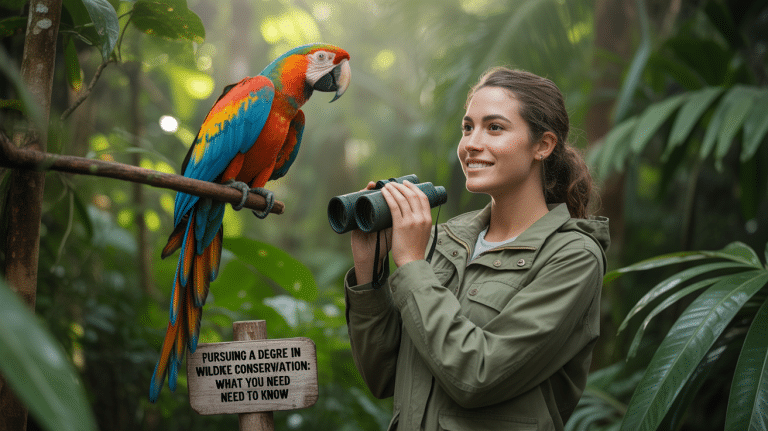
Pursuing a Degree in Wildlife Conservation: What You Need to Know
What is Wildlife Conservation?
Wildlife Conservation is a vital field dedicated to protecting and preserving biodiversity through the sustainable management of wildlife populations and their habitats. This interdisciplinary program appeals to individuals passionate about nature, ecology, and the challenges posed by human impacts on the environment. Students drawn to this field are typically those who want to make a difference in preserving our planet’s biodiversity and ensuring the survival of various species.
The primary aim is to equip students with the knowledge and skills to effectively engage in research and practical applications that contribute to wildlife preservation. This program is ideal for students looking to pursue careers in environmental stewardship, conservation policy, field research, and related scientific fields.
What Do You Study in Wildlife Conservation?
Pursuing a degree in Wildlife Conservation typically involves a comprehensive curriculum that combines theoretical knowledge with practical experiences. The following sections break down the core subjects and opportunities that students will encounter.
Core Subjects
- Ecology and Habitat Management
This subject focuses on the dynamics of ecosystems and the relationships between species. - Biology and Evolution
Understanding species biology is crucial in wildlife conservation. - Conservation Principles
Students will examine strategies for effective conservation. - Human Dimensions
This area of study explores the interactions between humans and wildlife. - Applied Science
Proficiency in analytical tools is essential. - Specialized Topics
Specialized courses may include disease ecology and the impact of climate change.
Labs, Workshops, and Internships
Hands-on experiences are integral to the Wildlife Conservation program. Students typically participate in:
- Fieldwork and Surveys: Engaging in research that requires field data collection.
- Laboratory Research: Conducting experiments that provide insights into species health.
- Internship Opportunities: Collaborating with organizations to gain practical experience.
Careers After Wildlife Conservation
Graduating with a Wildlife Conservation degree opens doors to numerous career paths across various sectors, including government agencies, non-profit organizations, and educational institutions.
- Wildlife Biologist or Technician
- Conservation Educator/Specialist
- Wildlife/Environmental Consultant
- Wildlife Refuge Manager
- Game Warden or Urban Wildlife Specialist
- GIS Programmer/Mapping Specialist
- Zookeeper
- Environmental Policy and Public Affairs Specialist
- Field Guide or Outdoor Educator
Average Salaries
Salary expectations vary based on role, experience, and location. Below are approximate salary ranges for key careers:
- Wildlife Biologist: $45,000 – $75,000 (USD)
- Conservation Educator: $40,000 – $65,000 (USD)
- Wildlife Consultant: $50,000 – $80,000 (USD)
- Wildlife Refuge Manager: $50,000 – $90,000 (USD)
- Game Warden: $45,000 – $70,000 (USD)
Is Wildlife Conservation Hard to Study?
Common Challenges
- Complex Scientific Concepts
- Fieldwork Expectations
- Interdisciplinary Knowledge
Required Skills
To excel in Wildlife Conservation, students should develop strong analytical and communication abilities, alongside technical skills in GIS.
Preparation Tips
- Engage in Related Extracurricular Activities
- Take Relevant Courses
- Stay Informed
Top Certifications After Wildlife Conservation Graduation
Upon graduation, students might consider pursuing additional certifications to enhance their qualifications:
- Certified Wildlife Biologist (CWB)
- Certified Ecologist
- National Wildlife Federation’s Wildlife Conservation Professional Certification
- GIS Certification
Where to Study Wildlife Conservation
Several reputable universities offer specialized programs in Wildlife Conservation. Here are notable institutions:
Take the Next Step with Study in Turkiye
Pursuing a degree in Wildlife Conservation provides students with the essential skills and knowledge needed to tackle pressing challenges facing wildlife today. For personalized guidance in finding the right academic program, reach out to Study in Turkiye today for tailored assistance.

