
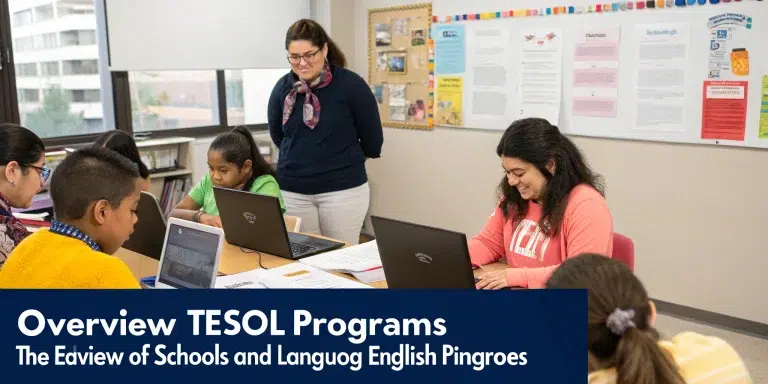
Overview of TESOL Programs
What is TESOL?
TESOL programs cater to those looking to engage with diverse populations, particularly in educational environments.
They offer comprehensive training that encompasses not only language instruction but also cultural sensitivity, learner engagement, and instructional methodologies. TESOL graduates are well-positioned to advance the competence and confidence of learners in speaking, reading, and writing English.
What Do You Study in TESOL?
TESOL curricula typically blend theoretical coursework with practical experiences. Here are the key areas of focus:
English Language Teaching Theory
Students will deeply explore foundational principles and approaches to English language instruction. This includes understanding how to deliver effective lessons tailored to diverse groups.
Second Language Acquisition
This subject examines how non-native speakers acquire English, focusing on challenges and strategies that support language development.
Instructional Methods
This course trains students in a variety of classroom techniques, lesson planning, and curriculum design specifically geared towards ELLs.
Cultural Competency
Understanding and addressing cultural and linguistic diversity is crucial in teaching. This segment prepares students to create inclusive learning environments.
Assessment and Evaluation
Students learn methods for measuring English proficiency and academic progress among ELLs.
Practicum or Clinical Experience
A vital component of TESOL programs is the supervised teaching practice, or practicum. This hands-on experience allows students to apply their theoretical knowledge in real-world classrooms.
Careers After TESOL
Graduates of TESOL programs are prepared for a wide range of careers in education and language services. Here are some common job titles and career paths:
- TESOL/ESOL Teacher: Instructing English learners in elementary, secondary, or adult education settings.
- Language Program Coordinator: Managing English language programs in schools, universities, or community organizations.
- Curriculum Developer: Designing instructional materials specifically for English language programs.
- Corporate or Workplace Trainer: Teaching English to employees in professional environments.
- International English Teacher: Working in overseas educational institutions or language institutes.
- Academic Support Specialist: Providing tutoring and individualized English language support to students.
Is TESOL Hard to Study?
The difficulty of studying for a TESOL program can vary depending on your background, experience, and aptitude for language learning and teaching. Here are some common challenges faced by students:
- Language Proficiency: Non-native English speakers may find the language demands challenging.
- Cultural Sensitivity: Understanding the diversity in learning needs and cultural backgrounds requires empathy and adaptability.
- Time Management: Balancing coursework, practicum experiences, and personal commitments can be demanding.
- Theoretical Complexity: Grasping the intricate theories behind language acquisition and instructional methods takes time and dedication.
Required Skills
To succeed in a TESOL program, students should possess:
- Strong communication skills, particularly in English.
- Empathy and cultural awareness to connect with diverse learners.
- Organizational skills to manage lesson planning and assessments effectively.
- A willingness to adapt and learn continuously.
Top Certifications After TESOL Graduation
After completing a TESOL program, graduates may want to pursue additional certifications to enhance their qualifications. Some commonly sought-after certifications include:
- TESOL Certificate: Validates your qualification to teach English as a second language.
- State Teaching Certification: Allows graduates to teach in public schools.
- CELTA: A widely recognized qualification for teaching English to adults.
- DELTA: An advanced qualification for experienced teachers looking to deepen their expertise.
Where to Study TESOL
For those considering a TESOL program, there are several reputable institutions in Turkiye offering these courses:
These universities provide diverse TESOL scope and resources, ensuring that students receive high-quality education and practical training essential for their future careers.
Take the Next Step with Study in Turkiye
Ready to embark on your journey to teach English? Explore the many opportunities available to you with TESOL programs in Turkiye.

