
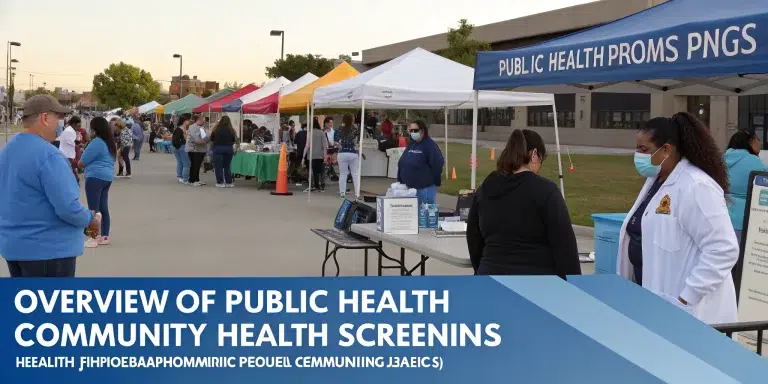
Overview of Public Health Programs
What Do You Study in Public Health?
Careers After Public Health
Is Public Health Hard to Study?
Top Certifications After Public Health Graduation
Where to Study Public Health
Conclusion
What is Public Health?
Public health is a field focused on protecting and improving the health of populations through education, research, and the promotion of healthy lifestyles. It encompasses a broad set of activities including disease prevention, health policy formulation, and community health initiatives. Public health professionals work at various organizational levels—local, national, and international—aiming to safeguard the well-being of communities and populations.
Public health programs are particularly suited for students who are motivated by social justice, community engagement, and the science of health. They prepare individuals to tackle some of the most pressing health issues facing societies today, such as pandemics, chronic diseases, health inequities, and environmental health concerns.
What Do You Study in Public Health?
Core Curriculum Structure
Most Master of Public Health (MPH) programs share foundational elements, structured to ensure students gain a broad and rigorous understanding of public health principles. The curriculum typically includes:
- Foundational Core Courses: Essential disciplines include biostatistics, epidemiology, environmental health sciences, health services, social and behavioral determinants of health, management sciences, demography, biological sciences, and public health policy.
Course Breakdown
- Biostatistics: Understanding statistical methods and their application in health research.
- Epidemiology: Study of disease occurrence and transmission in populations.
- Environmental Health: Examination of environmental factors affecting health, including air and water quality.
- Health Services Management: Exploration of healthcare systems, policy, and administration.
- Social and Behavioral Health: Insights into the influence of social structures and behavior on health outcomes.
Elective Courses
Public health programs often offer a range of elective courses to allow students to specialize in areas of interest. Examples of electives may include:
- Public Health Analytics
- Qualitative Research Methods
- Geographic Information System (GIS) Mapping
Applied Practice Experiences
Students engage in real-world community settings through applied practice experiences. These might include internships, field placements, or community projects where students can apply their academic knowledge and gain practical skills.
Capstone Projects
A culminating experience for students is the capstone project, which often involves a comprehensive research project, promoting the integration of learned knowledge in addressing real public health issues.
Specializations
Many programs provide options for specialization, such as:
- Public Health Practice
- Global Health
- Health Informatics
- Maternal and Child Health
Careers After Public Health
Graduates of public health programs are prepared for diverse professional roles across various sectors, including government agencies, non-profit organizations, healthcare institutions, and academic institutions. Below are potential job titles and average salary ranges for public health professionals:
- Epidemiologist
- Public Health Administrator
- Health Educator
- Environmental Health Specialist
- Global Health Consultant
- Health Policy Analyst
- Biostatistician
- Community Health Worker
Salary Ranges
The salaries of public health professionals can vary significantly based on the role, location, and level of experience. Here are some average salary ranges:
- Epidemiologist: $70,000 – $100,000 (USD), €60,000 – €90,000
- Public Health Administrator: $80,000 – $120,000 (USD), €70,000 – €100,000
- Health Educator: $50,000 – $75,000 (USD), €45,000 – €65,000
- Environmental Health Specialist: $60,000 – $90,000 (USD), €50,000 – €80,000
- Health Policy Analyst: $70,000 – $110,000 (USD), €60,000 – €95,000
Is Public Health Hard to Study?
Studying public health can be challenging due to the breadth of topics covered and the need for strong analytical skills. Common challenges include:
- Complexity of Health Data: Interpreting and analyzing large datasets can be overwhelming for some students.
- Multidisciplinary Nature: Courses often require knowledge from various fields such as biology, sociology, and economics.
- Fieldwork: Applied experiences can be demanding, requiring significant time and commitment.
Required Skills
To succeed in public health, students should develop the following skills:
- Analytical and Critical Thinking
- Research and Data Interpretation
- Communication and Interpersonal Skills
- Understanding of Health Policies and Regulations
Preparation Tips
- Engage in internships or volunteer opportunities to gain practical experience.
- Take courses in statistics or data analysis to prepare for biostatistics and research methodologies.
- Stay updated on current public health issues through relevant literature and news.
Top Certifications After Public Health Graduation
After earning a degree in public health, graduates may consider acquiring additional certifications to enhance their qualifications. Here are some essential certifications:
- Certified in Public Health (CPH): Offered by the National Board of Public Health Examiners, this certification demonstrates a mastery of public health knowledge.
- Certified Health Education Specialist (CHES): Provided by the National Commission for Health Education Credentialing, it indicates proficiency in health education.
- Registered Environmental Health Specialist (REHS): Certification for those focusing on environmental health practices.
Where to Study Public Health
Students interested in pursuing a public health degree can find several prestigious universities that offer programs in this field:
: Offers comprehensive public health courses with a focus on practical applications.
: Provides a multidisciplinary curriculum with strong community engagement initiatives.
Conclusion
Public health programs are rigorous, multidisciplinary, and practical-oriented, emphasizing foundational knowledge, real-world application, and preparation for various impactful public health careers. Students gain competencies in core areas and participate in applied practice, often specializing or tailoring their studies to specific interests. This comprehensive training equips graduates to face current and future public health challenges.
Take the Next Step with Study in Turkiye
For more personalized assistance with your academic path in public health, reach out to Study in Turkiye today. We are here to help guide you in your journey toward a meaningful career in public health.

