
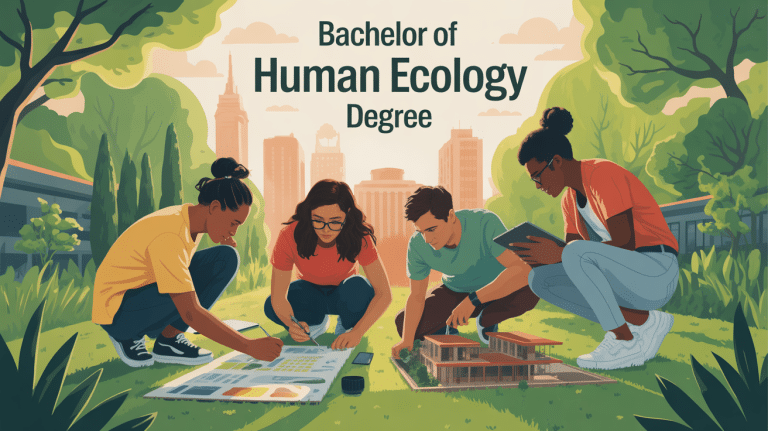
Overview of the Bachelor of Human Ecology
What is the Bachelor of Human Ecology?
The Bachelor of Human Ecology is an interdisciplinary undergraduate degree focused on the relationships between humans and their environments—both natural and social. This program explores how individuals, families, communities, and organizations develop and interact within broader ecological and societal contexts.
As a field of study, Human Ecology emphasizes sustainability and the effect of lifestyle choices on overall human health and community well-being.
What Do You Study in the Bachelor of Human Ecology?
In this program, students engage in a broad spectrum of subjects that form the foundation of human ecological knowledge.
Core Areas of Study
Human Development
This subject focuses on how individuals grow and change through their lives, taking into account biological, psychological, and social factors.
Community and Regional Development
This area examines community dynamics, social change, and resource management.
Design, Innovation, and Society
Students explore how design can fulfill human needs and address societal challenges.
Consumer Behavior and Marketplace Studies
This course investigates decision-making around consumption, influenced by economic, cultural, and psychological factors.
Education and Human Ecology
Students focus on educational systems and their impact on human development.
Elective Courses
Students may choose from a variety of electives that complement their core studies, enhancing their education.
Labs, Workshops, and Internships
Many programs incorporate practical experiences where students apply theoretical knowledge to real-world situations.
Graduation Requirements
Typically, students must complete a minimum of 120 credits and maintain a minimum GPA of 2.0.
Careers After Bachelor of Human Ecology
Graduates have a wide array of career options across several sectors. Some sample job titles include:
- Community Development Coordinator
- Social Worker
- Urban Planner
- Educational Policy Analyst
- Market Research Analyst
Industries include government, non-profit organizations, education, and healthcare.
Is the Bachelor of Human Ecology Hard to Study?
The program can present challenges because of its multidisciplinary nature. Key challenges may include:
- Interdisciplinary coursework
- Fieldwork requirements
- Research projects
Students must develop strong analytical, communication, and problem-solving skills.
Top Certifications After Graduation
Graduates may pursue certifications such as:
- Certified Community Development Practitioner (CCDP)
- Certified Health Education Specialist (CHES)
- Project Management Professional (PMP)
Where to Study Bachelor of Human Ecology
If you are considering pursuing this degree, several prestigious universities offer robust programs:
Take the Next Step with Study in Turkiye
Explore further and start your journey towards a fulfilling career in Human Ecology.

