
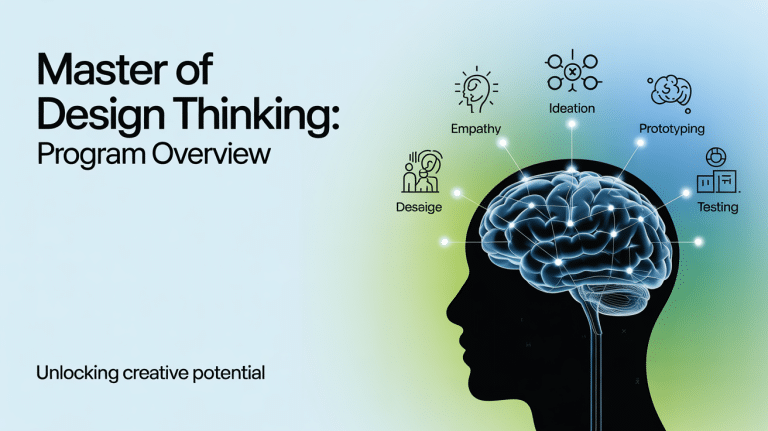
Master of Design Thinking: Program Overview
What is Master of Design Thinking?
The Master of Design Thinking focuses on developing expertise in user-centered design approaches. By marrying creativity with analytical skills, students learn to navigate the challenges of modern problem-solving effectively. The overarching goal is to prepare graduates to lead innovation in their workplaces, leveraging design thinking processes to drive success in various industries.
What Do You Study in Master of Design Thinking?
Core Curriculum and Learning Outcomes
Students pursuing this master’s degree will delve into subjects that teach the foundational elements of design thinking, including:
- Design Thinking Processes: Learning to combine creative approaches with analytical rigor to develop effective, user-centered solutions.
- Creative Problem Solving: Engaging in multifaceted design challenges and honing critical thinking skills.
- Collaboration and Teamwork: Emphasizing the importance of interdisciplinary collaboration to innovate solutions for both local and global issues.
- Business Model Design: Understanding how to create viable business models that deliver customer value.
Specific learning outcomes include:
- Applying various business models to evaluate the scalability and financial performance of ventures.
- Framing problems from multifaceted perspectives and using analogical reasoning to transfer solutions across domains.
- Implementing hypothesis-driven analysis and mental simulations for better forecasting outcomes.
Electives and Specializations
Students typically have the option to select from a range of elective courses which may cover topics such as:
- User Experience Design: Focusing on the desirability aspect through understanding user needs.
- Managing Business Innovation: Exploring frameworks that support innovative thinking within organizations.
- Product Management and Entrepreneurship: Developing skills to launch and manage new products successfully.
Careers After Master of Design Thinking
Graduates of a Master of Design Thinking program are well-suited for leadership positions across various fields. Possible career pathways include:
- Team Leader
- Innovation Manager or Director
- Organizational Transformation Specialist
- Trainer in Design Thinking Methodologies
- Strategist or Consultant in Innovation
- Policymaker
- Professor in academia
- Entrepreneur or Venture Founder
- Roles in sectors such as marketing, technology, and consulting
The average salaries for positions acquired by design thinking graduates can vary greatly based on location, experience, and industry sector. Global salary ranges (in USD and EUR) for relevant job titles include:
- Design Thinking Consultant: $70,000 – $120,000 (USD) / €65,000 – €110,000
- Product Manager: $90,000 – $150,000 (USD) / €75,000 – €125,000
- Innovation Director: $100,000 – $180,000 (USD) / €90,000 – €160,000
- User Experience Researcher: $75,000 – $110,000 (USD) / €70,000 – €100,000
Top Certifications After Master of Design Thinking Graduation
Upon completion of the Master of Design Thinking, graduates may choose to pursue various certifications that validate their skills and knowledge:
- BCI (Business Model Innovation Certification): Validates competencies in creating and executing innovative business models.
- CMI (Certified Management Innovator): Recognizes proficiency in managing innovation processes effectively.
- UX Certification from the Nielsen Norman Group: Offers recognition in user experience design practices.
- Design Thinker Certification from IDEO: A respected designation in design thinking methodologies.
Where to Study Master of Design Thinking
Several universities offer strong programs in Design Thinking and related fields. Here are some recommendations:
These institutions provide excellent resources, experienced faculty, and opportunities for hands-on projects in design thinking.
FAQs
Is Master of Design Thinking Hard to Study?
Like most advanced degrees, studying for a Master of Design Thinking can present challenges. Students may need to develop a comfort level with ambiguity and iterative processes, which are inherent in design thinking. Common challenges include:
- Time Management: Balancing project deadlines, readings, and collaborative work can be demanding.
- Creative and Analytical Rigor: Students must cultivate both the imaginative and problem-solving aspects of design thinking, often requiring a shift in mindset.
- Collaboration and Feedback: Working closely in teams can be rewarding yet challenging, as it requires openness to feedback and adaptability in group settings.
Preparation Tips:
- Familiarize Yourself with Design Principles.
- Develop Strong Critical Thinking Skills.
- Build Your Portfolio.
Take the Next Step with Study in Turkiye
Explore your options and take steps towards pursuing a Master’s degree that can reshape your career and position you as a leader in innovation. For personalized assistance, reach out to Study in Turkiye.

