
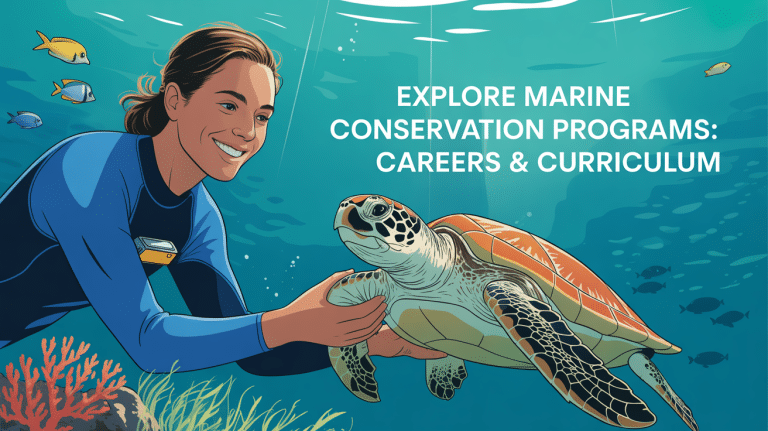
Marine Conservation Programs: Curriculum & Job Opportunities
Quick Navigation
Overview of Marine Conservation Academic Programs
Marine conservation programs are designed to equip students with the scientific knowledge, practical skills, and interdisciplinary perspective necessary to understand, protect, and manage marine ecosystems. These programs combine coursework in biology, ecology, policy, and communication with applied research and field experiences, making them ideal for individuals passionate about environmental stewardship and marine life sustainability.
What is Marine Conservation?
Marine conservation is the protection and preservation of ecosystems in oceans and seas through planned management practices. This discipline encompasses a variety of subfields, including marine biology, ecology, and conservation policy. Students engaged in marine conservation studies learn about the intricacies of aquatic life, the relationships among species, the effects of human activities on marine environments, and strategies for sustainable resource management.
By pursuing a marine conservation program, students prepare to address pressing environmental challenges, advocate for policies that benefit marine ecosystems, and facilitate community engagement in conservation efforts.
What Do You Study in Marine Conservation?
Core Subject Areas
- Marine Biology and Ecology: This area provides foundational knowledge about marine organisms, their adaptations, ecological interactions, and biodiversity.
- Conservation Science and Policy: Courses in this subject help students understand the scientific and social challenges that come with managing marine biodiversity.
- Oceanography: Many programs include coursework focused on physical and biological oceanography.
- Social, Economic, and Legal Aspects: To understand the broader context of marine conservation, students study environmental law, economic impacts, and social dimensions.
- Communication and Collaboration: Developing effective communication skills is crucial in this field.
Typical Courses and Program Features
| Course or Component | Description |
|---|---|
| Introduction to Marine Biodiversity and Conservation | This course covers biology, ecology, policy, and effective communication strategies relevant to marine conservation. |
| Marine Conservation and Communication Practicum | This practicum focuses on training students to convey conservation science to various audiences effectively. |
| Ocean and Coastal Law and Policy | This course examines legal frameworks and policies impacting marine and coastal environments. |
| Economics of Conservation | Students explore economic analyses and tools used for managing marine resources sustainably. |
| Capstone Independent Study Project | A research project allowing students to apply their knowledge and practical skills in collaboration with conservation organizations. |
| Field Trips and Laboratory Work | Students gain hands-on experiences through field trips, laboratory work, and marine investigations. |
Experiential Learning
- Field research and data collection in diverse marine ecosystems.
- Applied projects such as independent studies or capstone experiences.
- Collaboration with experts from academia, governmental agencies, and non-profit organizations during intensive courses and seminars.
Careers After Marine Conservation
Graduates of marine conservation programs have a wide range of career opportunities in various sectors. Potential job outcomes include:
- Marine Resource Manager
- Marine Policy Analyst
- Ecological Consultant
- Conservation Scientist
- Environmental Educator
- Research Scientist
Salary Ranges
The financial outlook for graduates can vary significantly based on location and specific job roles. Below are approximate global salary ranges for marine conservation professionals:
- Marine Resource Manager: $55,000 – $90,000 USD (52,000 – 85,000 EUR)
- Marine Policy Analyst: $60,000 – $100,000 USD (57,000 – 95,000 EUR)
- Ecological Consultant: $50,000 – $85,000 USD (48,000 – 80,000 EUR)
- Conservation Scientist: $50,000 – $88,000 USD (48,000 – 83,000 EUR)
- Environmental Educator: $40,000 – $70,000 USD (38,000 – 66,000 EUR)
- Research Scientist: $55,000 – $110,000 USD (52,000 – 104,000 EUR)
Top Certifications After Marine Conservation Graduation
Upon graduation, several certifications or licenses may enhance employability in marine conservation:
- Certified Marine Biologist (CMB) – provides validation of marine biology knowledge and skills.
- Marine Conservation Manager Certification – focused on management strategies and policy development for marine environments.
- Environmental Impact Assessment (EIA) Certification – crucial for roles in environmental consultancy and project management.
- Project Management Professional (PMP) Certification – beneficial for managing conservation projects effectively.
Where to Study Marine Conservation
Students interested in pursuing marine conservation programs may consider the following universities that offer robust academic curriculums:
When choosing a university, consider the institution’s focus on marine studies, available research opportunities, and connections with conservation organizations.
Take the Next Step with Study in Turkiye
Explore further to find the ideal academic program that aligns with your passion for marine conservation.

