
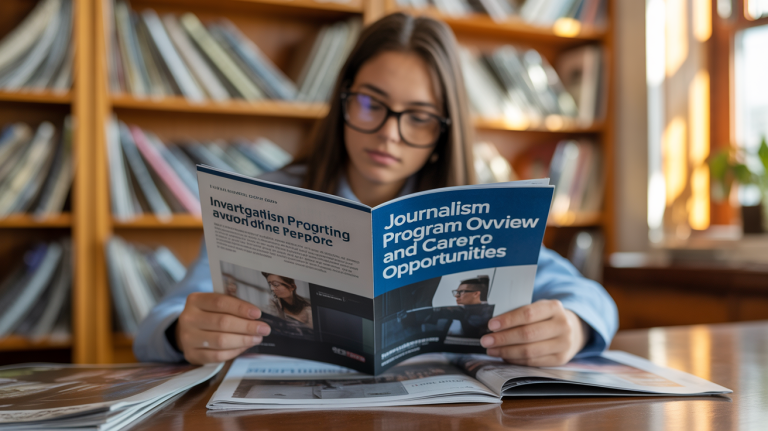
Journalism Program Overview and Career Opportunities
What is Journalism?
Journalism is the practice of gathering, assessing, creating, and presenting news and information. This program empowers students to become competent communicators who can critically evaluate information, conduct interviews, and report on events and issues of public interest. Moreover, it lays the groundwork for ethical reporting, ensuring that graduates understand the responsibilities that come with disseminating news.
The curriculum includes foundational topics such as the history of journalism, its legal aspects, ethical standards, and contemporary practices. As students progress, they engage in more specialized studies, including multimedia production and investigative reporting, providing them with a robust skill set for today’s media landscape.
What Do You Study in Journalism?
The journalism program typically covers a breadth of topics designed to provide students with both a theoretical framework and practical skills. Here’s a deeper look into the courses and learning methods typically involved:
Core Subjects
- Introduction to Journalism
Basics of newswriting, communication theory, and the role of media in society.
- History, Laws, and Ethics of Journalism
Exploration of the historical context of journalism, key legal issues, and ethical considerations in reporting.
- Interviewing Techniques
Skills in preparation and execution of interviews, focusing on effective questioning and ethical considerations.
Elective Courses
- Multimedia Journalism
Focus on creating content across various platforms such as audio, video, and digital media.
- Feature Writing
Techniques for constructing compelling feature articles that go beyond standard news reporting.
- Sports Journalism
Specialized reporting skills, including covering sporting events and understanding sports culture.
Labs, Workshops, and Internships
- Hands-On Workshops
Students may participate in workshops focusing on skills like scriptwriting, editing, and broadcasting in real-time environments.
- Internship Opportunities
Many programs encourage internships at local news outlets, radio stations, or online media platforms, allowing students to gain practical experience and network within the industry.
Through this structured curriculum, journalism students gain essential skills in writing, critical thinking, storytelling, and digital production, preparing them for the challenges of modern media.
Careers After Journalism
Graduating with a degree in journalism can lead to a wide array of career opportunities in various sectors. Here are some common job titles available to graduates:
- News Reporter
- Broadcast Journalist
- Digital Content Producer
- Investigative Journalist
- Public Relations Specialist
- Social Media Manager
- Editor or Copy-editor
- Communications Director
Potential Salary Ranges
Salaries in journalism can vary widely based on position and location. Below are some approximate figures based on global averages:
- News Reporter: USD 34,000 – 70,000 / EUR 31,000 – 64,000
- Broadcast Journalist: USD 39,000 – 80,000 / EUR 36,000 – 74,000
- Digital Content Producer: USD 40,000 – 75,000 / EUR 37,000 – 70,000
- Social Media Manager: USD 45,000 – 80,000 / EUR 42,000 – 74,000
As the media landscape continues to evolve with technological advancements, journalists who possess skills in multimedia storytelling, data analysis, and digital marketing are increasingly in demand.
Is Journalism Hard to Study?
Studying journalism can be challenging due to the fast-paced, competitive nature of the field and the comprehensive skill set required. Here are some common challenges and required skills:
Common Challenges
- Meeting Deadlines: The need to produce accurate and compelling stories quickly can be stressful.
- Adapting to Technology: Keeping up with new technologies and changes in media consumption can be daunting.
- Ethical Dilemmas: Navigating complex ethical situations in reporting requires careful consideration and integrity.
Required Skills
- Strong Writing and Communication Skills: Ability to convey information clearly and effectively.
- Critical Thinking: Skills to evaluate sources and report accurately.
- Technical Proficiency: Familiarity with digital tools for content creation, editing, and distribution.
Preparation Tips
- Engage in Practical Experience: Volunteering for school publications or local media can build essential skills.
- Stay Informed: Regularly read news articles and follow current events to understand reporting styles and techniques.
- Network with Professionals: Attend workshops and industry events to connect with mentors and peers.
Top Certifications After Journalism Graduation
Upon completing a journalism program, there are several certifications and credentials that can enhance employability and professional development, including:
- Certified Journalism Educator (CJE) – Offered by the Journalism Education Association for educators and professionals.
- Digital Media Certifications – Certifications available from institutions like Google and Adobe focusing on digital and multimedia storytelling.
- Broadcasting Certifications – Relevant for those interested in television or radio journalism, often provided by professional associations.
- Social Media Analyst Certification – Validates skills in digital communication, analytics, and marketing strategies.
These certifications not only bolster a candidate’s resume but also demonstrate a commitment to maintaining industry standards and staying ahead in a rapidly changing field.
Where to Study Journalism
Students interested in pursuing a degree in journalism can explore programs at the following top private universities:
- Medipol University – Ankara
- Istinye University – Istanbul
- Bahcesehir University – Istanbul
- Beykent University – Istanbul
Each of these institutions offers comprehensive journalism programs that prepare students for various roles within the media industry.
Take the Next Step with Study in Turkiye
For personalized help in choosing the right journalism program that fits your career aspirations, reach out to SIT Search today! Our team is here to guide you through the process of finding the perfect academic path.

