
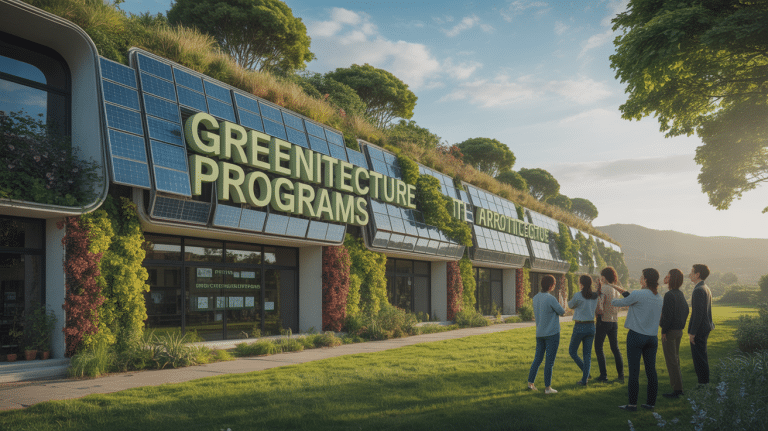
Green Architecture Programs: Curriculum & Job Prospects
What is Green Architecture?
Green Architecture represents a paradigm shift in the fields of architecture and construction, concentrating on designing buildings that minimize environmental impacts while promoting resource conservation and occupant well-being. This approach integrates sustainable design principles throughout the entire lifecycle of a building—from site selection to construction, operation, and eventual decommissioning. Students in Green Architecture programs learn not only to create aesthetically pleasing structures but also to ensure that these buildings blend harmoniously with their environmental context, provide energy efficiency, and utilize renewable resources.
Professionals trained in Green Architecture are equipped to address pressing global challenges such as climate change, urbanization, and resource depletion. They are instrumental in creating sustainable communities that aim towards a lower carbon footprint and a healthier future for all.
What Do You Study in Green Architecture?
Green Architecture programs typically entail a comprehensive curriculum that encompasses core subjects, elective courses, technical skills, and specialized workshops and internships.
Core Coursework
- Sustainable Building Strategies: Exploration of methods to design buildings that use resources efficiently and minimize waste.
- Climate and Site Analysis: Examination of geographical and climatic factors that affect building design, promoting optimal energy use.
- Water and Energy Conservation: Development of strategies for conserving water and energy in building operations.
- Architectural Sustainability Principles: Overview of concepts essential for sustainable architecture.
- Dimensioning and Measuring: Skills for accurately creating architectural representations.
Technical Skills
- 3D Architectural Design Software: Training in software such as Autodesk, which is essential for modern architectural design.
- Site Development Planning: Learning how to assess and develop sites with sustainability as a core principle.
- Analysis of Existing Architectural Environments: Evaluating current structures to suggest sustainable renovations.
- Renovation and Addition Practices: Techniques for incorporating sustainability into existing buildings.
Environmental Systems
- Electrical Systems: Understanding power distribution and its relationship to sustainable design.
- Communication Systems and Building Controls: Learning how to design systems that improve building performance while reducing energy usage.
- Illumination and Acoustics: Focus on creating functional, sustainable spaces with proper light and sound management.
- Environmental Data Analysis: Skills for assessing building performance metrics against sustainability criteria.
Advanced Topics
- Holistic Sustainability Strategies: Implementing approaches that are beneficial to both the environment and the community.
- Architectural Problem Solving: Applying creative solutions to design challenges through a sustainable lens.
- Parametric and Computational Design: Utilizing advanced technology to influence design outcomes.
- Contextual Design: Emphasizing designs that complement and enhance the natural and social environment.
Labs, Workshops, and Internships
Hands-on experience through labs and workshops is an essential part of Green Architecture programs, providing students with practical skills and exposure to real-world challenges. Internships with cooperative business partners allow students to gain valuable industry insights and apply theoretical knowledge in professional contexts.
Careers After Green Architecture
Graduates from Green Architecture programs have diverse career opportunities in a growing job market that recognizes the importance of sustainability in construction and design. Here are some potential job titles and sectors:
- Sustainable Design Architect
- Green Building Consultant
- Urban Planner focusing on Sustainability
- LEED Accredited Professional
- Environmental Systems Engineer
- Landscape Architect specializing in Sustainable Design
Industries and Sectors
Graduates can find employment in various fields, such as:
- Architectural and engineering firms
- Environmental consulting companies
- Public sector organizations focused on urban development
- Construction companies with a sustainability focus
- Non-profit organizations advocating for green living
Average Salaries
Salaries can vary widely based on experience, location, and specific job roles. However, here are the average salary ranges for selected positions:
- Sustainable Design Architect: $60,000 – $85,000 (USD); €50,000 – €70,000 (EUR)
- Green Building Consultant: $55,000 – $90,000 (USD); €45,000 – €75,000 (EUR)
- Urban Planner: $60,000 – $80,000 (USD); €50,000 – €65,000 (EUR)
- LEED Accredited Professional: $70,000 – $100,000 (USD); €60,000 – €85,000 (EUR)
- Environmental Systems Engineer: $65,000 – $95,000 (USD); €55,000 – €80,000 (EUR)
- Landscape Architect: $55,000 – $75,000 (USD); €45,000 – €65,000 (EUR)
Is Green Architecture Hard to Study?
Like any specialized academic discipline, studying Green Architecture comes with its own set of challenges. The following aspects can be demanding for students:
- Complexity of Subjects: The integration of environmental science, engineering principles, and architectural design requires a strong grasp of multiple fields.
- Critical Thinking and Creativity: Students must develop their skills in problem-solving and innovative thinking to create designs that are not only sustainable but also unique.
- Technical Skills: Mastering advanced architectural software and understanding building systems can be daunting for those new to these tools.
Required Skills
Prospective students should aim to develop competencies in the following areas:
- Analytical thinking and problem-solving skills
- Proficiency in design software (like AutoCAD, Revit, and SketchUp)
- Strong communication skills for effectively collaborating with teams
- A solid foundation in mathematics and physics, as these are often integral to architectural design and engineering concepts
Preparation Tips
Students can better prepare for a Green Architecture program by:
- Engaging in relevant extracurricular activities, such as design clubs or sustainability-focused organizations.
- Gaining exposure through internships or volunteering in related fields.
- Strengthening their math and science skills in high school or through preparatory courses.
Top Certifications After Green Architecture Graduation
Upon completing a Green Architecture program, students may consider obtaining various certifications that can enhance their employability and marketability:
- LEED (Leadership in Energy and Environmental Design): A widely recognized credential for professionals in sustainable building design.
- Green Globes Certification: An alternative to LEED focusing on sustainable building practices.
- Certified Sustainability Professional (CSP): A certification demonstrating expertise in sustainability practices across different industries.
Where to Study Green Architecture
Several private universities offer distinguished Green Architecture programs, ensuring students a quality education and solid grounding in sustainability principles. Here are some top institutions that you may consider:
These universities offer rigorous academic training in Green Architecture, integrating both theoretical and practical learning outcomes that prepare students for meaningful careers in sustainable design and construction.
Take the Next Step with Study in Turkiye
Pursuing a degree in Green Architecture is not only a commitment to a fulfilling career but also a vital step towards fostering sustainable practices in the built environment. If you are interested in learning more or need personalized assistance, reach out to Study in Turkiye for tailored guidance on selecting the right academic program for your aspirations.

