
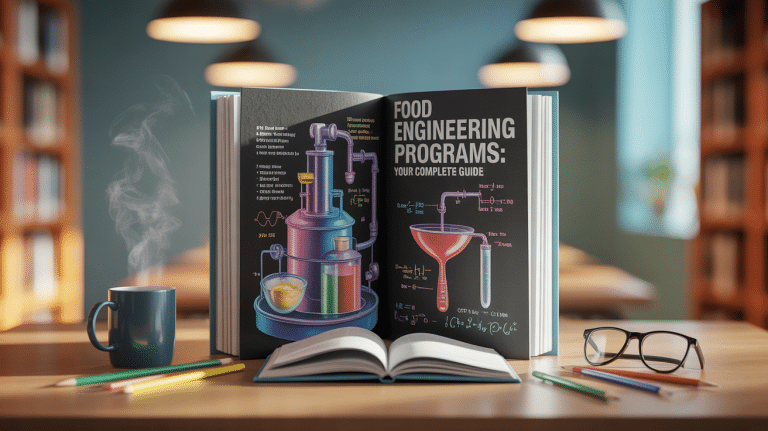
Food Engineering Programs: Your Complete Guide
Overview of Food Engineering Programs
Food engineering programs combine principles of engineering with food science to improve food processing, preservation, and distribution. This multidisciplinary field focuses on ensuring the safety and quality of food products from their original state to final consumption. These programs are ideal for students interested in combining their passion for food with technical expertise to tackle challenges in food safety, sustainability, and innovation.
What is Food Engineering?
Food engineering is a branch of engineering that applies scientific and engineering principles to the food industry. It includes designing and optimizing processing systems for food manufacturing, safeguarding food safety, and preserving quality throughout the food supply chain. This program emphasizes a blend of biological, chemical, and engineering disciplines to prepare graduates for the diverse challenges facing the food industry today.
What Do You Study in Food Engineering?
Food engineering curricula are deeply interdisciplinary, integrating core subjects across several fields. Here’s a detailed breakdown:
Core Subjects
- Mathematics and Physics: Foundational knowledge essential for problem-solving and analysis in engineering applications. Students will study calculus, differential equations, and concepts in physics related to energy and mass transfer in food systems.
- Chemistry and Microbiology: Key to understanding food composition, properties, and the biological processes that affect safety and quality. Topics include organic chemistry, food chemistry, and microbiology, which cover the behavior of foodborne pathogens.
- Engineering Fundamentals: This includes mass transfer, heat transfer, and fluid dynamics, which are essential for designing efficient food processing operations.
- Food Science and Technology: Courses cover processing techniques, preservation methods, food laws, regulations, and product formulation. Students will explore how to develop, maintain, and enhance food quality.
Elective Courses
- Food Packaging Technology: Understanding materials and methods to enhance food safety and shelf life through proper packaging.
- Food Quality Control and Assurance: Focus on the importance of quality management systems in food production and safety standards.
- Bioprocessing: Examining the use of biological systems for the sustainable production of food products.
Labs, Workshops, and Internships
Hands-on experience is a crucial component of food engineering education:
- Laboratory Work: Students engage in practical labs that complement theoretical knowledge, including food testing labs and engineering design projects.
- Workshops: Specialized training sessions on equipment used in food processing and analysis techniques.
- Internships: Opportunities with food companies, research institutions, or government agencies to provide students with industry experience and enhance their career readiness.
Careers After Food Engineering
Graduates of food engineering programs are equipped to enter various roles in the food industry. Here’s a look at potential career outcomes:
- Food Process Engineer: Designs and optimizes food production processes to enhance efficiency and product quality.
- Chemical Process Engineer: Applies chemical engineering principles in food manufacturing, focusing on innovation and quality enhancement.
- Food Safety Manager: Oversees food safety protocols and compliance with legal regulations in food production facilities.
- Research and Development Scientist: Develops new food products, processes, and technologies aimed at sustainability and innovation.
- Quality Assurance Manager: Ensures products meet quality and safety standards, developing protocols for inspections and audits.
Salary Expectations
Food engineering careers often yield competitive salaries. The following are average annual salary ranges for food engineering roles:
- Food Process Engineer: USD 60,000 – 80,000 / EUR 55,000 – 75,000
- Chemical Process Engineer: USD 65,000 – 85,000 / EUR 60,000 – 78,000
- Food Safety Manager: USD 70,000 – 90,000 / EUR 65,000 – 80,000
- Research and Development Scientist: USD 70,000 – 95,000 / EUR 65,000 – 85,000
- Quality Assurance Manager: USD 65,000 – 85,000 / EUR 60,000 – 78,000
The global demand for food engineers is increasing, driven by growing consumer demands for food safety and sustainable practices.
Is Food Engineering Hard to Study?
Common Challenges
- Complex Subject Matter: The intersection of multiple disciplines can present a steep learning curve, particularly in chemistry and engineering concepts.
- Hands-On Experience: Balancing theoretical knowledge with lab work and internships can be time-consuming and demanding.
- Technological Advances: Keeping up-to-date with emerging technologies and trends in food manufacturing may require adaptability and continuous learning.
Required Skills
- Analytical Skills: Ability to analyze data and troubleshoot issues in food processing systems.
- Technical Skills: Proficiency with engineering software and understanding the technical components of food production.
- Communication Skills: Essential for sharing complex information effectively among different stakeholders.
Preparation Tips
- Engage with Study Groups: Collaborating with peers can enhance understanding of challenging concepts.
- Seek Internships Early: Gaining practical experience will not only bolster your resume but also clarify real-world applications of your studies.
- Utilize University Resources: Take advantage of faculty office hours, tutoring services, and research opportunities.
Top Certifications After Food Engineering Graduation
While a degree in food engineering is crucial, obtaining additional certifications can enhance your career prospects. Key certifications to consider include:
- Certified Food Scientist (CFS): Offered by the Institute of Food Technologists (IFT), this certification demonstrates proficiency in food science principles.
- Hazard Analysis and Critical Control Points (HACCP): A certification focusing on food safety management systems.
- Food Safety Manager Certification: Teaches principles of food safety, compliance, and best practices in food handling.
- Six Sigma Certification: This methodology can help professionals improve processes and reduce waste in food production.
Where to Study Food Engineering
If you’re considering pursuing a food engineering program, several institutions offer excellent curriculums. Notable universities include:
- Ankara Medipol University – Turkiye
- Istinye University – Turkiye
- Bahcesehir University – Turkiye
- Antalya Bilim University – Turkiye
These universities provide advanced facilities, experienced faculty, and comprehensive support to help students succeed in their food engineering studies.
Take the Next Step with Study in Turkiye
For personalized assistance with your educational journey, please reach out to Study in Turkiye. We are here to help you find the best academic programs tailored to your interests and career goals.

