
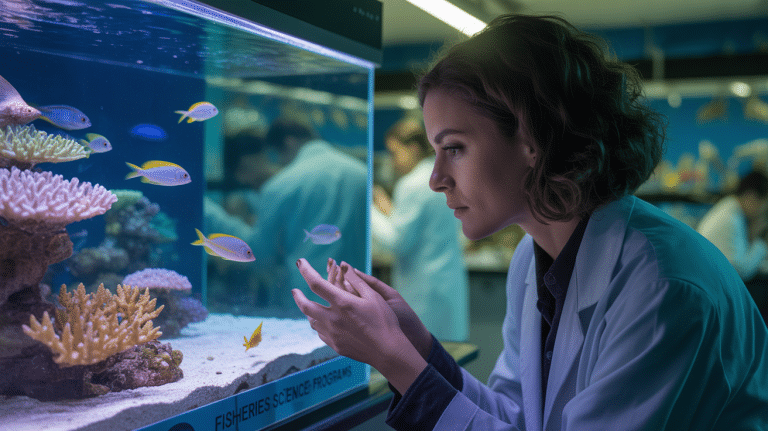
Fisheries Science Programs: Courses & Career Prospects
What is Fisheries Science?
Fisheries Science is the study of fish populations and their ecosystems, focusing on the sustainable management and conservation of aquatic resources. Students in this program will learn about fish biology, habitat conservation, ecosystems dynamics, and resource management. The discipline is not only about fishing but also emphasizes conservation efforts, environmental policies, and the application of scientific research to support biodiversity.
What Do You Study in Fisheries Science?
Core Fisheries Courses
- Biology and Ecology of Fishes: This foundational course delves into the biology of fishes, their behaviors, life cycles, and ecological roles.
- Sustainable Fisheries: This course examines sustainable practices in fisheries management, focusing on fish biology, habitats, and ecological impacts.
- Aquaculture Principles: Discusses the cultivation of aquatic animals and plants, addressing aspects like water quality management and species selection.
- Field Ecology of Aquatic Organisms: A hands-on course exploring diverse aquatic habitats, giving practical skills in field research and data collection.
Specialized Course Options
- Freshwater Fisheries Ecology & Management
- Marine Policy and Fisheries Management
- Ecological Approaches to Fisheries Management
- Fisheries Population Dynamics
Labs, Workshops, and Internships
Many Fisheries Science programs include practical experiences, such as laboratory work, fieldwork, and internships with organizations.
Careers After Fisheries Science
Graduates can pursue various rewarding careers, including:
- Fisheries Biologist
- Aquaculture Manager
- Wildlife Conservation Officer
- Marine Research Scientist
- Environmental Consultant
- Policy Advisor for Marine Resources
- Ecologist
Average Salaries
Salary ranges for various roles:
- Fisheries Biologist: $50,000 – $70,000 (approx. €45,000 – €63,000)
- Aquaculture Manager: $55,000 – $85,000 (approx. €50,000 – €77,000)
- Environmental Consultant: $60,000 – $90,000 (approx. €54,000 – €81,000)
- Marine Research Scientist: $65,000 – $95,000 (approx. €59,000 – €85,000)
- Wildlife Conservation Officer: $45,000 – $70,000 (approx. €40,000 – €63,000)
Is Fisheries Science Hard to Study?
Studying Fisheries Science can be challenging due to:
- Complex Biological Concepts
- Fieldwork Requirements
- Data Analysis
Required Skills
Successful students typically possess:
- Strong analytical and critical thinking skills
- Attention to detail and observational skills
- Teamwork and communication skills
- A genuine interest in environmental issues and sustainability
Preparation Tips
To prepare for studying Fisheries Science:
- Enhance your science background.
- Participate in volunteer opportunities.
- Stay updated on environmental policies and research.
Top Certifications After Fisheries Science Graduation
Certifications include:
- Certified Fisheries Professional (CFP)
- Aquaculture Certification
- Environmental Certifications
Where to Study Fisheries Science
Fisheries Science programs are offered by various universities in Turkiye. Recommended institutions include:
Take the Next Step with Study in Turkiye
Explore further to find the right academic path for you in Fisheries Science.

