
Dentistry Programs: Curriculum Insights & Careers
Overview of Dentistry Programs
Dentistry programs, typically leading to the Doctor of Dental Surgery (DDS) or Doctor of Dental Medicine (DMD) degree, are rigorous four-year professional degrees designed to prepare students for licensure and practice as dentists. These programs integrate both theoretical knowledge and practical skills necessary to excel in dental care. Ideal for individuals passionate about health science and patient care, prospective students should be prepared for a demanding yet rewarding educational journey.
What is Dentistry?
Dentistry is a branch of medicine focused on the diagnosis, prevention, and treatment of diseases and conditions of the oral cavity, which includes the teeth, gums, and other supporting structures. Dentists play a vital role not only in treating patients but also in educating them about oral health maintenance, conducting regular check-ups, and performing surgeries when necessary.
The scope of dentistry encompasses various specialties, enabling practitioners to focus on areas such as orthodontics, periodontics, or oral and maxillofacial surgery. As the demand for dental professionals continues to grow, pursuing a degree in dentistry offers promising career opportunities.
What Do You Study in Dentistry?
The curriculum for dentistry programs is meticulously structured over four years, scaling from foundational sciences to advanced clinical practices. Below is a breakdown of what students typically study throughout each year of the program.
Year 1: Foundations in Dentistry
- Core Subjects:
- Basic biomedical sciences: anatomy, physiology, histology, microbiology.
- Dental sciences: Introduction to dental anatomy and dental materials.
- Introduction to patient-centered care.
- Electives/Workshops:
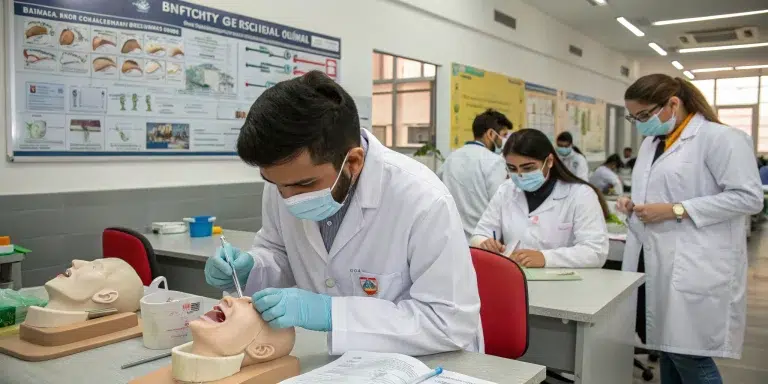
- Simulation-based clinical education, emphasizing early hands-on experiences.
Year 2: Clinical and Preclinical Training
- Core Subjects:
- Advanced biomedical sciences including pharmacology and pathology.
- Preclinical dental courses: radiology, operative dentistry, endodontics, orthodontics, and pediatric dentistry.
- Practical Experience:
- Initial clinical experiences in preventive and operative clinics where students begin providing care to simulated patients.
Year 3: Immersion in Clinical Practices
- Core Subjects:
- Intensive clinical practice through clerkships focusing on specific dental specialties such as oral surgery, periodontics, and prosthodontics.
- Hands-On Experience:
- Direct patient care in a supervised and structured environment, developing practical and diagnostic skills.
Year 4: Advanced Clinical Education
- Core Subjects:
- Electives in specialized areas, including advanced restorative dentistry and community health dentistry.
- Training on ethics and practice management.
- Final Experience:
- Students undertake community-based rotations that allow them to integrate their skills and prepare for independent practice.
Careers After Dentistry
The dentistry program equips graduates with skills for a multitude of career pathways. Professional opportunities are diverse, as outlined below:
- General Dentist: Operates in private practice, providing comprehensive oral health care.
- Specialist Dentist: After further residency training, can work in specialties such as:
- Orthodontics
- Endodontics
- Oral and Maxillofacial Surgery
- Pediatric Dentistry
- Periodontics
- Prosthodontics
- Academic Faculty or Researcher: Involvement in dental education or scientific research at universities.
- Public Health Dentist: Focuses on community health initiatives, disease prevention, and promotion of oral health.
- Military Dentist: Serving in military branches providing dental care to armed forces personnel and families.
Salary Expectations
The average salaries for dental professionals vary significantly based on specialization, location, and experience. Here are average salary ranges:
- General Dentist: USD $140,000 – $300,000 per year (Approx. €125,000 – €270,000)
- Orthodontist: USD $230,000 – $450,000 per year (Approx. €205,000 – €405,000)
- Oral Surgeon: USD $300,000 – $600,000 per year (Approx. €270,000 – €540,000)
- Pediatric Dentist: USD $200,000 – $300,000 per year (Approx. €180,000 – €270,000)
Career Growth Trends
The demand for dental services is projected to grow due to increasing awareness of oral health and an aging population requiring dental care. Furthermore, advancements in dental technology and treatments will continue to expand the professional landscape for future dentists.
Is Dentistry Hard to Study?
Studying dentistry is indeed challenging and requires strong dedication and resilience. Some common challenges students may face include:
- Rigorous Coursework: The vast amount of science and clinical knowledge requires significant time management and study skills.
- Practical Skills Development: Students must develop fine motor skills for performing complex procedures, which can take time and patience.
- High-Stakes Environment: Clinical performance directly impacts patient care; thus, maintaining a high level of accuracy and professionalism is essential.
Required Skills and Preparation Tips
- Strong foundational knowledge in biological sciences is key.
- Excellent communication skills for patient interactions and teamwork.
- Critical thinking and problem-solving abilities, especially under pressure.
To prepare, students should engage in relevant educational experiences, participate in internships, and seek out opportunities for hands-on learning from the start of their studies.
Top Certifications After Dentistry Graduation
Upon graduation, dentists must obtain the necessary certifications and licenses to practice. Here are some commonly required credentials:
- National Board Dental Examination (NBDE): Required in the United States for dental licensure.
- State Licensure: Every dentist must be licensed by the state in which they wish to practice.
- Specialty Board Certification: Additional examinations may be needed for those choosing to specialize in fields such as orthodontics or oral surgery.
- Continued Education Units (CEUs): Dentists are usually mandated to complete a certain amount of continuing education to maintain their licenses.
Where to Study Dentistry
Here are some institutions offering high-quality dentistry programs:
– Offers comprehensive dental education combining theoretical knowledge with practical skills.
For personalized help in finding the right dentistry program, reach out to Study in Turkiye. We can assist you in navigating your options and making the best educational choice for your future in dentistry.
Take the Next Step with Study in Turkiye
Explore further and start your journey towards a rewarding career in dentistry today!

