
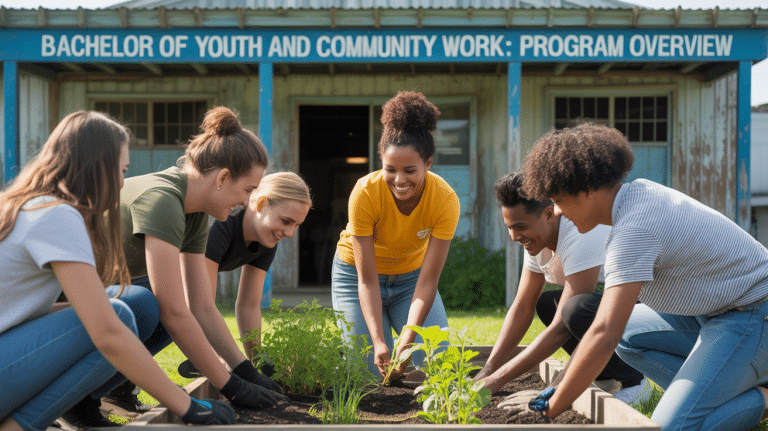
Bachelor of Youth and Community Work: Program Overview
What is a Bachelor of Youth and Community Work?
The Bachelor of Youth and Community Work is an interdisciplinary program focusing on theories and practices aimed at enhancing the lives of young people and the wider community. Students learn to understand the socio-ecological factors affecting youth, develop solution-oriented approaches, and acquire the practical experience necessary to effect change. The program balances theoretical studies in youth development, social justice, and community engagement with hands-on learning opportunities.
What Do You Study in Youth and Community Work?
Core Subjects
The curriculum encompasses a range of core subjects designed to furnish students with a well-rounded understanding of youth and community dynamics. Typical core subjects include:
- Childhood, Adolescent, and Family Development Theory: Provides foundational knowledge of how young people grow and interact within familial contexts.
- Socio-ecological Context of Youth and Communities: Studies the broader environment affecting youth, including cultural, social, and economic factors.
- Pedagogical Practices for Informal Learning: Focuses on techniques to foster learning outside traditional classroom settings, such as in youth clubs or community initiatives.
- Diversity, Inclusion, and Social Justice: Explores issues of equity and representation in youth and community work.
- Community Psychology and Prevention Sciences: Investigates psychological concepts relevant to community betterment and preventative strategies for youth at risk.
- Research Methods and Practitioner Research: Equips students with essential skills to conduct research pertinent to youth issues and community practices.
- Policy and Practice in Youth Work: An overview of the regulations and frameworks guiding youth services and community projects.
Elective Courses
Students may also have the opportunity to choose electives that align with their interests, including:
- Digital Youth Work Practices: Explores the impact of technology on youth engagement.
- Issues and Interventions in Youth Work: Address pressing social issues through targeted community interventions.
- Interpersonal Communication Skills: Enhances relationship-building skills necessary for effective youth work.
Labs, Workshops, and Internships
Practical experience is a cornerstone of the program, often featuring:
- Practice-Based Learning: Programs usually include multiple supervised placements, amounting to over 250 hours of work-based learning. These allow students to apply theoretical concepts in real-world settings.
- Workshops and Seminars: Interactive sessions with field facilitators and experts help students develop soft skills essential in community work.
Careers After Youth and Community Work
Graduates equipped with a Bachelor in Youth and Community Work can anticipate diverse career opportunities. Possible roles include:
- Youth Worker: Engage with young people in schools, community centers, or non-profits.
- Community Development Officer: Facilitate projects aiming for community upliftment and engagement.
- Project Manager: Lead youth initiatives or community programs.
- Practitioner or Manager in Youth Organizations: Operate or manage services to support youth development.
- Social Policy Adviser: Work with government or non-government agencies to shape policies affecting youth.
- Digital Youth Work Specialist: Focus on using technology for enhancing youth engagement.
- Roles in Crime Prevention and Social Change: Address wider societal issues through advocacy and activism.
Salary Ranges
Salaries may vary depending on the country, experience, and specific roles, but general ranges for youth and community work professionals are:
- In the United States: $38,000 – $50,000 (approximately €32,000 – €42,000)
- In Europe: €35,000 – €45,000 (approximately $42,000 – $53,000)
- In Turkiye: TRY 40,000 – 60,000 (approximately $1,500 – $2,200)
Is Youth and Community Work Hard to Study?
Studying Youth and Community Work presents both challenges and rewards. Here are common difficulties faced by students and how to prepare:
Common Challenges
- Managing work placements: Balancing theoretical study with practical experiences can be demanding.
- Emotional resilience: Working with at-risk youth can be emotionally taxing.
- Interdisciplinary Studies: The broad curriculum requires students to integrate knowledge from various fields, which can be overwhelming.
Required Skills
- Communication Skills: Effective communication is essential for building relationships with youth and stakeholders.
- Problem-Solving: Ability to devise effective solutions to conflicts and community issues.
- Cultural Competence: Understanding and respecting diverse backgrounds and contexts.
Preparation Tips
- Engage in Volunteer Work: Gain experience in community engagement or youth support before starting the course.
- Build Emotional Intelligence: Participate in workshops focused on interpersonal skills, empathy, and resilience.
- Stay Informed: Keep abreast of current trends and issues affecting youth and communities.
Top Certifications After Youth and Community Work Graduation
Upon graduation, professionals may need various certifications to enhance employability or meet legal requirements. Common certifications include:
- National Youth Work Level Qualifications: Recognized qualifications in different regions that establish professionalism in youth work.
- First Aid Certification: Often required for youth workers to ensure safety and preparedness.
- Certified Youth Development Professional (CYD): An international credential acknowledging expertise in youth work practices.
- Continuing Professional Development (CPD) courses: Ongoing training updates in relevant areas are vital to staying current in the field.
Where to Study Youth and Community Work
Several universities offer strong programs in Youth and Community Work. Here are some universities where students can pursue this degree:
These institutions provide a robust academic foundation and comprehensive practical experiences suited for students aspiring to make a difference in their communities.
Take the Next Step with Study in Turkiye
If you’re considering pursuing a Bachelor of Youth and Community Work or need personalized guidance in navigating academic programs, reach out to Study in Turkiye for expert assistance. Your journey towards making a meaningful impact starts here.

