
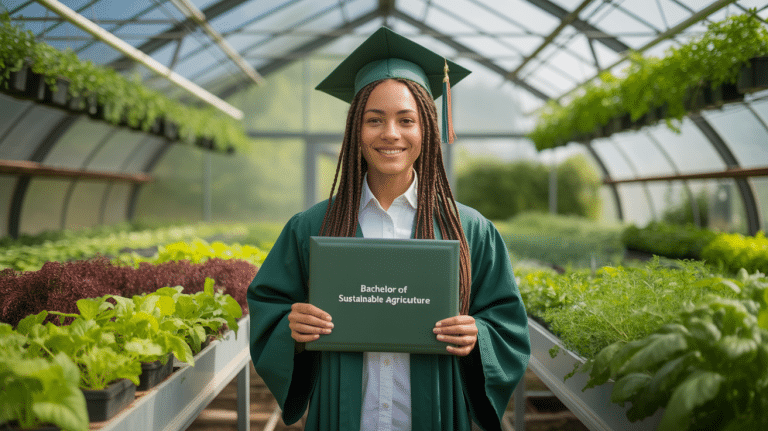
Bachelor of Sustainable Agriculture: A Comprehensive Guide
- What is Bachelor of Sustainable Agriculture?
- What Do You Study in Bachelor of Sustainable Agriculture?
- Careers After Bachelor of Sustainable Agriculture
- Is Bachelor of Sustainable Agriculture Hard to Study?
- Top Certifications After Bachelor of Sustainable Agriculture Graduation
- Where to Study Bachelor of Sustainable Agriculture
What is Bachelor of Sustainable Agriculture?
A Bachelor of Sustainable Agriculture is an interdisciplinary program tailored for students who are passionate about advancing ecological, technological, and social dimensions within agricultural systems. This degree combines classroom theory with hands-on learning opportunities in farm settings, preparing graduates to manage sustainable agroecosystems effectively.
This program emphasizes sustainable practices that meet the needs of current generations without compromising the ability of future generations to meet their own needs. It is designed for individuals looking to understand and improve agricultural systems while addressing pressing global challenges such as food security, climate change, and ecological degradation.
What Do You Study in Bachelor of Sustainable Agriculture?
Core Subjects
The curriculum for the Bachelor of Sustainable Agriculture typically includes both foundational and specialized courses.
Agro-ecosystem Design and Stewardship
This area emphasizes the scientific principles underlying the creation and management of resilient agricultural systems that support ecosystem health.
Ecologically Sound Crop Production
Courses within this field focus on innovative agricultural production methods that prioritize sustainability.
Farm Business Management
Students acquire essential skills in sustainable business practices, including resource management and financial planning.
Solutions to Food System Challenges
This vital component of the curriculum addresses current economic, social, and environmental issues affecting agriculture.
Elective Courses
The degree typically consists of a minimum of 123 credits, including a significant elective component (approximately 27 credits).
Academic Experience
Hands-on experiences are critical to the program. Students engage with ecological principles, social and economic considerations, and technological advancements.
Careers After Bachelor of Sustainable Agriculture
Graduates from this program are equipped to pursue a variety of rewarding career paths across multiple sectors, including:
- Sustainable Farmer
- Agricultural Consultant
- Food Systems Analyst
- Policy Advisor (Sustainable Agriculture)
- Environmental Educator
Sample Job Titles and Salaries
The global average salaries for careers in sustainable agriculture can vary widely, with approximate ranges as follows:
- Sustainable Farmer: $40,000 – $70,000 USD
- Agricultural Consultant: $50,000 – $90,000 USD
- Food Systems Analyst: $45,000 – $80,000 USD
- Policy Advisor: $60,000 – $100,000 USD
- Environmental Educator: $40,000 – $75,000 USD
Is Bachelor of Sustainable Agriculture Hard to Study?
Pursuing a Bachelor of Sustainable Agriculture can be challenging but immensely rewarding. Some difficulties include:
- Complex interdisciplinary material
- Practical laboratory work
- Problem-solving scenarios
Required Skills
To excel in this program, students should cultivate:
- Analytical Skills
- Communication Skills
- Technical Proficiency
- Adaptability
Preparation Tips
Helpful tips include having foundational knowledge, engaging with the community, and networking.
Top Certifications After Bachelor of Sustainable Agriculture Graduation
After completing their degree, graduates may consider obtaining additional certifications such as:
- Certified Crop Advisor (CCA)
- Organic Certification
- Farm Management Certificates
- Sustainable Agriculture Certificates
Where to Study Bachelor of Sustainable Agriculture
Several prestigious universities offer Bachelor of Sustainable Agriculture programs, including:
Take the Next Step with Study in Turkiye
Explore further and make a significant impact in the world of agriculture. Connect with Study in Turkiye for personalized guidance.

