
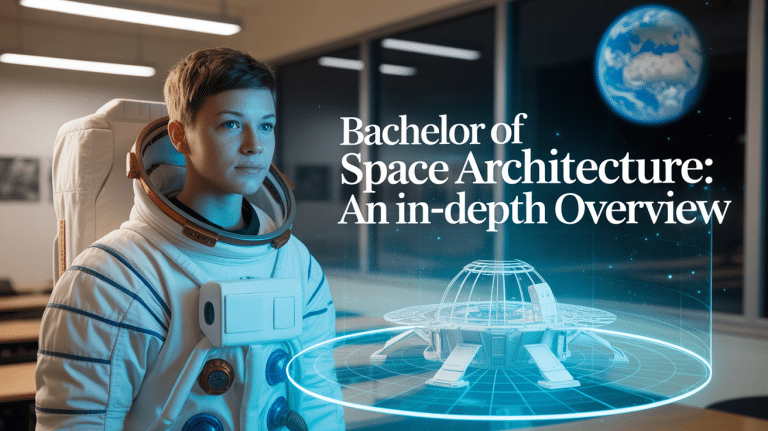
Bachelor of Space Architecture: An In-Depth Overview
What is Bachelor of Space Architecture?
The Bachelor of Space Architecture is a unique program that merges traditional architectural principles with advanced engineering techniques tailored for extraterrestrial conditions. As we venture further into space exploration, there is an increasing need for professionals equipped with the skills to create functioning habitats in challenging environments, such as Mars, asteroids, and orbital satellites. This program prepares students to understand not only the aesthetic elements of architecture but also the technical complexities of living and working in space.
Institutions such as the Sasakawa International Center for Space Architecture (SICSA) at the University of Houston have established themselves as pioneers in this field by adopting an interdisciplinary approach, where collaboration between architects and engineers is essential for the design of space infrastructures.
What Do You Study in Bachelor of Space Architecture?
The curriculum of the Bachelor of Space Architecture encompasses a blend of theoretical studies and practical applications. Students engage in a variety of courses that develop their architectural and engineering expertise tailored for space environments.
Core Subjects
- Space Systems Fundamentals: This foundational course introduces students to the design of spacecraft, the principles of mission planning, celestial mechanics, and an overview of space instrumentation.
- Spacecraft and Habitat Design: Focusing on the practical application of architectural design, this course explores the complexities of creating operational habitats within spacecraft.
- Advanced Mission Analytics: This advanced study includes topics such as orbital dynamics, mission design, and simulation.
Elective Courses
- Sustainability in Space Habitats
- Advanced Structural Systems
- Human Factors and Ergonomics in Design
- Interplanetary Architecture Innovations
Labs, Workshops, and Internships
Practical experience is paramount in the Bachelor of Space Architecture program. Students often engage in labs and workshops that replicate space conditions or involve the use of simulation technology for mission planning.
Careers After Bachelor of Space Architecture
Graduating from a Bachelor of Space Architecture opens doors to various career paths in the rapidly evolving space sector. Professionals equipped to design and construct habitats for space missions are in high demand as public and private sector interest in space exploration surges.
Potential Job Titles
- Spacecraft Habitat Designer
- Space Systems Engineer
- Mission Planner
- Space Architect
- Research and Development Specialist
- Aerospace Consultant
Industries and Sectors
Graduates can find employment in:
- Aerospace industry
- Research and development firms
- Government space agencies (e.g., NASA, ESA)
- Private space exploration companies (e.g., SpaceX, Blue Origin)
- Academic and research institutions involved in space science
Salary Expectations
Salaries can vary significantly based on location and specific industry roles:
- United States: USD 60,000 – 90,000 annually
- European Union: EUR 50,000 – 75,000 annually
- Turkiye: Approximately TRY 20,000 – 30,000 per year initially
Is Bachelor of Space Architecture Hard to Study?
Studying Space Architecture can be challenging due to the multidisciplinary nature of the field, which combines elements of architecture, engineering, and space science. Students must navigate complex concepts and perform rigorous analytical methods to design viable solutions for extraterrestrial environments.
Common Challenges
- Understanding advanced principles of physics and engineering related to space environments.
- Balancing creativity with technical constraints, especially in systems design.
- Conducting interdisciplinary collaboration, which requires both teamwork and communication skills.
Required Skills
Students are encouraged to develop strong problem-solving abilities, proficiency in architectural design software, and a solid foundation in scientific principles. Creativity and innovation are equally critical.
Preparation Tips
- Engage in foundational courses in physics, mathematics, and CAD before entering the program.
- Participate in workshops or internships related to architecture and aerospace.
- Stay updated on current trends in space exploration and technology advancements.
Top Certifications After Bachelor of Space Architecture Graduation
Essential Certifications
- LEED Accreditation
- Project Management Professional (PMP)
- Systems Engineering Certification
Where to Study Bachelor of Space Architecture
Institutions Offering Bachelor of Space Architecture
1. Medipol University – Known for its strength in science and engineering programs, it offers many opportunities for research and practical applications in innovative fields. Learn more about Medipol University
2. Bahcesehir University (BAU) – Offers a robust architecture program with a focus on technology and design, perfect for aspiring space architects. Discover Bahcesehir University
3. Istinye University – This institution combines engineering with creative design solutions and supports interdisciplinary studies crucial for space architecture. Explore Istinye University
4. Ozyegin University – Features programs that blend innovation with practical applications, ideal for students aiming to enter the space sector. Find out more about Ozyegin University
Take the Next Step with Study in Turkiye
Considering a career in this groundbreaking field? Reach out to Study in Turkiye for personalized help in finding the right academic program for your ambitions.

