
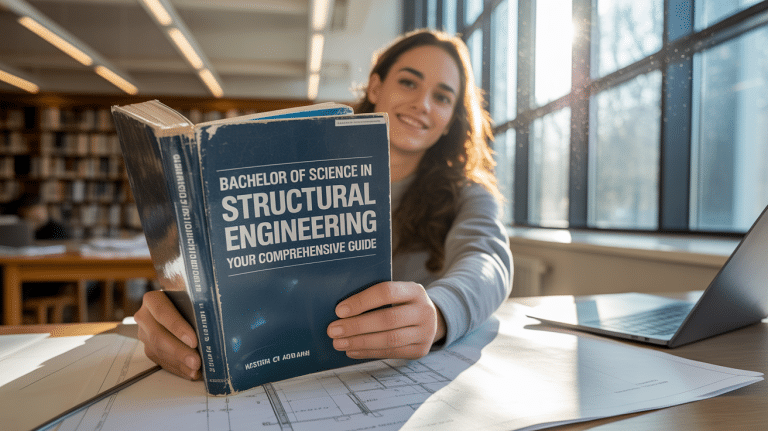
Bachelor of Science in Structural Engineering: Your Comprehensive Guide
Overview of the Program
A Bachelor of Science (B.S.) in Structural Engineering is a specialized program that prepares students for a career in one of the most vital disciplines of engineering. This field emphasizes the analysis, design, and construction of structures that can withstand natural forces and human activities. Students who choose this program are generally interested in the interplay between engineering principles and architectural aesthetics, and they aspire to make lasting contributions to the built environment.
What is Structural Engineering?
Structural engineering is a sub-discipline of civil engineering that focuses specifically on ensuring the durability, integrity, and safety of structures. It encompasses the design of buildings, bridges, tunnels, and various other types of structures that require a high degree of precision and methodical analysis. A structural engineer applies principles from physics and material science to solve technical challenges and create efficient designs.
Moreover, a B.S. in Structural Engineering is typically accredited by bodies such as the Engineering Accreditation Commission of ABET, ensuring that the program meets high educational standards. This accreditation is critical for those pursuing licensure as a Professional Engineer (PE).
What Do You Study in Structural Engineering?
Core Subjects
Students enrolled in a B.S. in Structural Engineering are required to complete a series of foundational courses that cover essential engineering principles:
- Mathematics: Advanced calculus, differential equations, and linear algebra are crucial for understanding engineering concepts.
- Physics: Mechanics and dynamics form the basis for understanding applied forces and movements in structures.
- Chemistry: An understanding of materials is essential, given that structural engineers work with concrete, steel, and other materials.
Specialized Structural Engineering Courses
In addition to core subjects, the curriculum includes specialized courses designed to equip students with specific skills and knowledge:
- Mechanics of Materials: Study how different materials respond to various stresses and loads.
- Structural Analysis: Learn to calculate the effects of loads on physical structures.
- Design of Concrete and Steel Structures: Engage in advanced learning about the specific materials used in construction.
- Fluid Mechanics: Essential for understanding how structures interact with water and other fluids.
Workshops and Labs
Hands-on experience is a vital part of structural engineering education. Programs typically feature:
- Laboratory Experiments: Students conduct tests that help them understand material properties and structural behavior.
- Design Projects: Engaging in real-world design problems promotes teamwork and practical skills.
Internships
Many programs facilitate internships that provide invaluable real-world experience. Opportunities may involve:
- Collaborating with Engineering Firms: Gain insights into daily operations and learn under experienced engineers.
- Participating in Industry Projects: Work on live projects that require applying theoretical knowledge in practical scenarios.
Careers After Structural Engineering
Graduates of a B.S. in Structural Engineering have various career paths available to them across multiple industries:
- Structural Engineer: Involves analyzing, designing, and overseeing the construction of infrastructure projects.
- Design Engineer: Contributes to innovative designs in civil, mechanical, aerospace, or marine sectors.
- Consultant Engineer: Advises clients on project feasibility, sustainability, and regulatory compliance.
- Project Manager: Manages timelines, budgets, and teams to ensure successful project completion.
Sample Job Titles
- Structural Engineer
- Design Engineer
- Project Engineer
- Civil Engineer
- Consulting Engineer
Average Salaries
United States: $60,000 – $90,000 USD per year
Europe: €40,000 – €75,000 EUR per year
According to PayScale and Glassdoor, structural engineering professionals can expect these salary ranges, which can vary based on experience, location, and firm size.
Is Structural Engineering Hard to Study?
The study of structural engineering can be challenging but rewarding. Common challenges include:
- Complex Mathematical Concepts: Proficiency in advanced mathematics is required, which can be daunting for some students.
- Intensive Coursework: The combination of theoretical knowledge and practical application creates a demanding workload.
- Time Management: Balancing classwork, projects, and potentially internships can be difficult.
Required Skills and Preparation Tips
- Analytical Skills: Ability to break down complex problems and analyze data.
- Attention to Detail: Necessary for creating accurate designs and calculations.
- Teamwork: Essential for collaborative projects and design teams.
To prepare:
- Strengthen Math Skills: Focus on calculus and algebra before starting the program.
- Familiarize with Engineering Software: Learning tools such as AutoCAD and Revit can give you a head start.
- Engagement in Practical Projects: Participate in workshops or club activities related to engineering.
Top Certifications After Structural Engineering Graduation
While a B.S. degree is fundamental, obtaining certifications can enhance career prospects:
- Professional Engineer (PE): Licensure often requires passing the Fundamentals of Engineering (FE) examination, followed by the PE exam.
- Structural Engineering Licensure: Special certification in structural design can further validate expertise.
Where to Study Structural Engineering
Here are some top private institutions that offer a Bachelor of Science in Structural Engineering:
Medipol University
Aydin University
Istinye University
Bahcesehir University (BAU)
Take the Next Step with Study in Turkiye
Considering a degree in Structural Engineering? Explore further about your options.

