
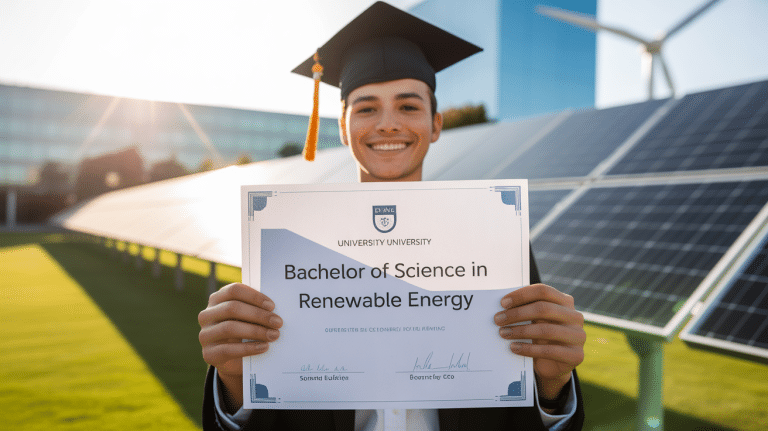
Bachelor of Science in Renewable Energy: Program Overview
What Do You Study in Bachelor of Science in Renewable Energy?
Careers After Bachelor of Science in Renewable Energy
Is Bachelor of Science in Renewable Energy Hard to Study?
Top Certifications After Bachelor of Science in Renewable Energy Graduation
Where to Study Bachelor of Science in Renewable Energy
What is Bachelor of Science in Renewable Energy?
A Bachelor of Science in Renewable Energy is an interdisciplinary academic program designed for students seeking to contribute to the burgeoning field of sustainable energy. This program combines rigorous theoretical study with hands-on experiences, aiming to equip graduates with the knowledge and skills necessary to thrive in industries that focus on renewable energy technologies such as solar, wind, geothermal, and more. This degree is ideal for students passionate about addressing climate change and fostering a transition towards cleaner energy sources.
What Do You Study in Bachelor of Science in Renewable Energy?
Core Curriculum and Focus Areas
The program covers a comprehensive array of subjects, including:
- Mathematics and Physics: Essential foundational courses ensuring a deep understanding of the scientific principles behind energy systems.
- Thermofluids and Engineering Concepts: This includes mechanical and electrical engineering courses tailored to renewable energy technologies, focusing on energy generation, delivery, and consumption.
- Sustainable Energy Policies: Students learn about qualitative and quantitative methods related to energy policies, regulatory frameworks, and the economic impacts of energy technologies.
- Environmental Impact Assessment: Courses on material sciences and environmental impacts teach students to analyze and mitigate the effects of energy systems on the environment.
- Innovative Technology Applications: Students explore technological innovations in renewable energy, preparing them to apply cutting-edge solutions to real-world energy challenges.
- Business and Regulatory Frameworks: Understanding the business aspects of renewable energy, including market analysis, policy implications, and project management.
- Specialization Options: Many programs provide tracks such as Data Analytics or Entrepreneurship, allowing students to tailor their education according to their career aspirations.
Labs, Workshops, and Internships
Practical experience is a cornerstone of this program. Students typically engage in:
- Experiential Learning Projects: Programs often include capstone projects where students design and implement renewable energy solutions, challenging them to meet real-world goals in cost, performance, and usability.
- Internships: Internships with renewable energy companies give students crucial real-world experience and networking opportunities.
- Hands-On Workshops: Labs dedicated to testing and experimenting with renewable energy technologies help students understand practical applications and innovations in the field.
Careers After Bachelor of Science in Renewable Energy
A degree in Renewable Energy opens doors to a diverse range of career opportunities in various sectors, including:
- Environmental Consultant
- Renewable Energy Engineer
- Energy Policy Analyst
- Project Manager in Renewable Energy Projects
- Energy Efficiency Specialist
- Business Analyst for Clean Technology
- Regulatory Affairs Specialist in Energy Sector
Average Salaries (Global)
- Renewable Energy Engineer: USD: $75,000 – $110,000 / EUR: €70,000 – €100,000
- Environmental Consultant: USD: $60,000 – $90,000 / EUR: €55,000 – €80,000
- Energy Policy Analyst: USD: $65,000 – $95,000 / EUR: €60,000 – €85,000
- Project Manager: USD: $80,000 – $120,000 / EUR: €75,000 – €110,000
- Energy Efficiency Specialist: USD: $55,000 – $80,000 / EUR: €50,000 – €75,000
Is Bachelor of Science in Renewable Energy Hard to Study?
The difficulty of studying for a Bachelor of Science in Renewable Energy largely depends on individual aptitude for scientific and technical subjects. Common challenges students may face include:
- Complex Mathematical Concepts: Students need a strong grasp of advanced mathematics, including calculus and statistics, which are foundational to engineering and technical courses.
- Integration of Various Disciplines: The multidisciplinary nature of renewable energy requires students to understand concepts from physics, engineering, economics, and environmental science, which can be overwhelming for some.
- Hands-On Workload: The practical components, such as labs and projects, demand significant time and commitment but are necessary for skill development.
Required Skills and Preparation Tips
To excel in this program, students should cultivate the following skills:
- Analytical Thinking: Ability to analyze complex problems related to energy production and management.
- Technical Proficiency: Comfort with engineering tools and technologies is crucial.
- Communication Skills: Essential for working in teams and sharing ideas in both academic and professional settings.
Preparation tips include:
- Strong performance in high school math and science courses.
- Engaging in extracurricular activities or volunteer work related to environmental initiatives or energy projects.
- Reading and staying updated on current trends in renewable energy.
Top Certifications After Bachelor of Science in Renewable Energy Graduation
While not always mandatory, obtaining professional certifications can enhance employability and validate expertise in the field. Important certifications include:
- Leadership in Energy and Environmental Design (LEED): Recognizes professionals in green building and energy-efficient building practices.
- Certified Energy Manager (CEM): Offered by the Association of Energy Engineers, this certification enhances credibility in energy management.
- Renewable Energy Professional (REP): A certification that signifies proficiency in renewable energy installations, operations, and management.
- Project Management Professional (PMP): Useful for graduates aiming to lead projects related to renewable energy initiatives.
Where to Study Bachelor of Science in Renewable Energy
Several esteemed universities offer Bachelor of Science programs in Renewable Energy or closely related fields, providing students with the opportunity to pursue their studies in innovative environments. Some top private universities include:
These institutions provide an excellent foundation in renewable energy studies, along with access to valuable resources and internship opportunities.
Take the Next Step with Study in Turkiye
Explore further to find the best academic path for your future in renewable energy!

