
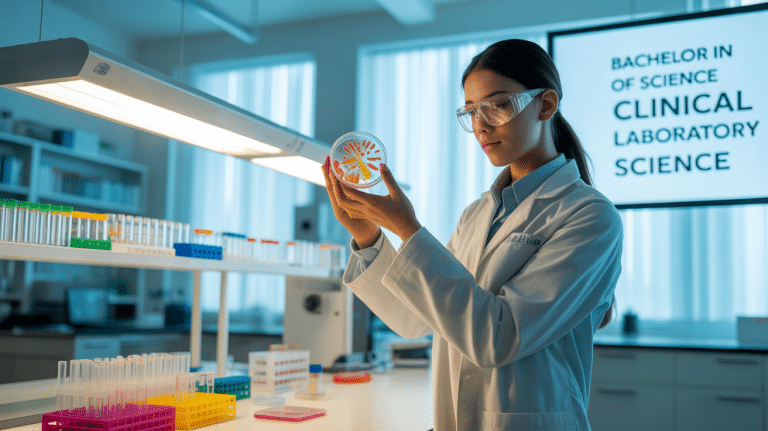
Bachelor of Science in Clinical Laboratory Science
What is Bachelor of Science in Clinical Laboratory Science?
The Clinical Laboratory Science (CLS) program equips students with the knowledge and skills needed to excel in a variety of laboratory disciplines. This rigorous curriculum emphasizes various aspects of laboratory science, including chemistry, hematology, immunology, and microbiology, culminating in a Bachelor of Science degree.
Graduates are expected to demonstrate entry-level competencies necessary to ensure accurate laboratory procedures and patient safety.
The program typically follows a structured format that includes a significant clinical component. Students participate in hands-on laboratory experience, combined with lectures, to fully understand the methodologies and technologies used in modern healthcare settings.
Importantly, the program also prepares students for professional licensure, providing a pathway to certification through recognized boards, such as the American Society for Clinical Pathology (ASCP).
What Do You Study in Bachelor of Science in Clinical Laboratory Science?
Core Subjects
- Chemistry and Biochemistry
- Analytical Chemistry and Biochemistry: Essential foundational courses focusing on chemical analysis and biochemical processes that underlie laboratory science.
- Clinical Chemistry: Emphasis is placed on analyzing bodily fluids and the importance of chemical constituents in disease diagnosis and health monitoring.
- Biological Sciences
- Hematology: Students learn about blood components, their functions, and the techniques used to diagnose blood disorders.
- Immunology: Focuses on the immune system’s structure, function, and response to pathogens, crucial for understanding disease mechanisms.
- Medical Microbiology: Covers the various microorganisms relevant to human disease, along with culture and identification techniques.
- Immunohematology: Studies blood grouping, compatibility testing for transfusions, and the underlying principles of blood products.
Specialized Courses
- Molecular Biology and Genetics: Focuses on DNA and RNA structures, genetic inheritance, and laboratory techniques used in genetic analysis.
- Physics and Mathematics
- Physics: Essential principles relevant to laboratory equipment and measurement techniques, particularly optics and electricity.
- Mathematics: Provides analytical skills necessary for statistical analysis and data interpretation in laboratory results.
Labs, Workshops, and Internships
The CLS program includes hands-on laboratory courses where students apply theoretical knowledge to real-world scenarios. Students engage in practical labs covering all major disciplines, allowing them to gain proficiency in laboratory equipment, techniques, and safety protocols.
Additionally, clinical laboratory rotations are integral to the program, providing direct exposure to clinical environments where students can observe and perform procedures under professional supervision.
Careers After Bachelor of Science in Clinical Laboratory Science
Graduates of the Clinical Laboratory Science program have a range of career opportunities available to them. They can work in various medical settings, including hospitals, clinics, and private laboratories. Here are several career paths and expected job titles:
- Medical Laboratory Scientist
- Clinical Laboratory Technologist
- Blood Bank Technologist
- Microbiologist
- Hematology Technologist
- Biotechnology Research Scientist
- Quality Control Analyst
Job Outlook and Salary Expectations
The labor market for Clinical Laboratory Scientists is robust, with growing demand due to an aging population and advances in medical technology. According to recent data, the average salary ranges are as follows:
- In the United States: $54,000 – $85,000 per year (approximately 50,000 – 80,000 EUR).
- In Europe: €30,000 – €50,000 per year, depending on the country and specific job role.
The career outlook is positive, with certain specializations within laboratory science, such as molecular diagnostics and genetics, seeing particularly high demand.
Is Bachelor of Science in Clinical Laboratory Science Hard to Study?
Studying Clinical Laboratory Science can be challenging due to its rigorous curriculum and the depth of required knowledge across several scientific disciplines. However, students who succeed tend to possess strong organizational skills, good attention to detail, and proficiency in scientific reasoning and mathematics.
Common Challenges
- Understanding complex biological and chemical interactions.
- Mastering laboratory techniques and equipment operation.
- Balancing theoretical knowledge with practical application.
Preparation Tips
- Engage in study groups to facilitate peer learning and clarification of complex concepts.
- Develop strong time management skills to balance coursework, labs, and clinical rotations.
- Take advantage of available resources (tutors, academic advisors) to reinforce learning.
Top Certifications After Bachelor of Science in Clinical Laboratory Science Graduation
Graduates of the CLS program are typically required to pursue certification and licensure to practice as laboratory professionals. Some essential certifications include:
- American Society for Clinical Pathology (ASCP) Board of Certification: Most widely recognized certification for laboratory professionals.
- National Credentialing Agency for Laboratory Personnel (NCA): Another certification option recognized within the field.
- State Licensure: Depending on the state, students may need to obtain additional licenses to practice professionally.
Where to Study Bachelor of Science in Clinical Laboratory Science
Several universities in Turkiye offer exceptional Clinical Laboratory Science programs. Here are some of the top private universities:
These institutions provide comprehensive educational resources and support for aspiring laboratory scientists, ensuring students are well-prepared for their future careers.
Take the Next Step with Study in Turkiye
If you are considering a Bachelor of Science in Clinical Laboratory Science and need personalized guidance on choosing the right program, reach out to Study in Turkiye for expert assistance tailored to your academic goals.

