
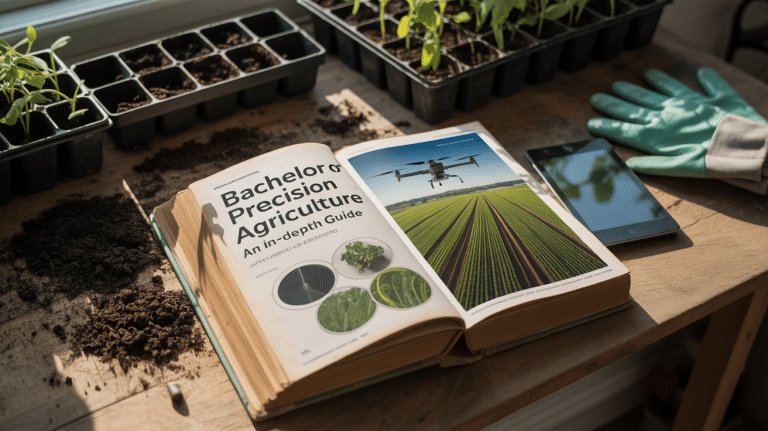
Bachelor of Precision Agriculture: An In-Depth Guide
- What is Bachelor of Precision Agriculture?
- What Do You Study in Bachelor of Precision Agriculture?
- Careers After Bachelor of Precision Agriculture
- Top Certifications After Graduation
- Where to Study Bachelor of Precision Agriculture
- Is Bachelor of Precision Agriculture Hard to Study?
- Take the Next Step with Study in Turkiye
What is Bachelor of Precision Agriculture?
The Bachelor of Precision Agriculture is an undergraduate degree focused on applying cutting-edge technologies to optimize agricultural practices. This program is designed to equip students with practical and theoretical understanding in areas such as Geographic Information Systems (GIS), remote sensing, and data analytics, emphasizing sustainability and productivity. The curriculum covers the application of precision agriculture principles, enabling graduates to address the complex challenges faced by the agricultural industry.
This degree is especially relevant as the global demand for food continues to rise alongside an increasing focus on environmental sustainability. By employing technology-driven methods, graduates can lead the way in promoting efficient resource use and reducing agricultural waste.
What Do You Study in Bachelor of Precision Agriculture?
The curriculum for a Bachelor of Precision Agriculture typically encompasses a blend of core subjects and elective courses designed to provide students with a comprehensive understanding of the field. Below is a detailed outline of what students can expect to study.
Core Courses
- Geospatial Data Analysis and Geographic Information Systems (GIS) – This course introduces the foundational principles of GIS, focusing on spatial data usage in agricultural applications.
- Precision Agriculture Technology and Automation – Covering contemporary technologies such as drones and automated equipment, this course emphasizes advancing agricultural productivity through smart technology.
- Soil Science and Crop Management – Understanding the interplay between soil quality and crop yield is essential.
- Plant Nutrient and Pest Management – Students explore integrated practices for managing nutrient delivery and controlling pest populations.
- Data Analytics and Agricultural Statistics – Focuses on statistical tools used in agriculture to analyze trends.
- Economic and Environmental Resource Management – Students learn to balance economic viability with environmental stewardship.
- Technical Communication and Critical Thinking in Agriculture – Equips students to communicate complex technical information.
- Application of GPS, Automatic Tractor Guidance, and Variable-Rate Input Systems – Emphasizes hands-on skills to enhance precision agriculture practices.
Elective Courses
Students may also have the option of choosing electives that tailor their educational experience to their interests, such as:
- Agricultural Engineering
- Advanced Irrigation Management
- Digital Farming Technology
- Sustainable Agriculture Practices
Labs, Workshops, and Internships
Hands-on experience is a cornerstone of the Precision Agriculture program. Students often participate in:
- Laboratory Work: Engaging in experiments related to soil analysis and crop health.
- Workshops: Participating in sessions that include hands-on demonstrations of precision agriculture technologies.
- Internships: Gaining practical field experience through internships with farms or agricultural firms.
Careers After Bachelor of Precision Agriculture
Graduates of this program are well-prepared for a variety of career opportunities in the agricultural sector. Here’s an overview of potential job titles and sectors in which they can work:
- Precision Agriculture Specialist: Working on technology implementation on farms.
- Crop Advisor or Consultant: Advising farmers on the best practices based on data analysis.
- Farm Manager with Technology Expertise: Managing operations with a focus on precision practices.
- Research Technician in Agronomic Sciences: Conducting experiments to advance agricultural technologies.
- Data Analyst in Agri-Business: Analyzing agricultural data to drive business decisions.
- Roles in Equipment Supply Companies: Focusing on technology implementation and support.
Salary Overview
In terms of financial prospects, graduates can expect varying salaries based on job function, location, and experience level. Here are average salary estimates for some roles (in USD and EUR):
- Precision Agriculture Specialist: $55,000 – $75,000 (USD) / €50,000 – €67,000 (EUR)
- Crop Advisor: $50,000 – $65,000 (USD) / €45,000 – €60,000 (EUR)
- Farm Manager: $60,000 – $90,000 (USD) / €55,000 – €82,000 (EUR)
- Research Technician: $45,000 – $65,000 (USD) / €40,000 – €60,000 (EUR)
- Data Analyst: $55,000 – $80,000 (USD) / €50,000 – €72,000 (EUR)
Is Bachelor of Precision Agriculture Hard to Study?
The Bachelor of Precision Agriculture can be challenging, as it requires a blend of technical skills, critical thinking, and scientific knowledge. Here are some common challenges students might face:
- Complexity of Technologies: Familiarity with advanced technologies such as GIS, GPS, and automated equipment could initially be overwhelming.
- Data Interpretation: Analyzing large sets of agricultural data demands strong analytical skills and attention to detail.
- Laboratory Work: Practical components often require a solid understanding of scientific principles and methodologies.
Required Skills and Preparation Tips
To excel in this program, students should possess:
- Strong analytical and problem-solving skills.
- Basic proficiency in mathematics and statistics.
- A passion for agriculture and technology.
- Good communication abilities for relaying complex information clearly.
Preparatory steps for prospective students include:
- Gaining foundational knowledge in mathematics and basic sciences.
- Familiarizing themselves with agricultural practices and technologies.
- Engaging in extracurricular activities related to engineering, environmental science, or agricultural organizations.
Top Certifications After Bachelor of Precision Agriculture Graduation
Graduates pursuing a career in precision agriculture may need specific certifications or licenses to enhance their career prospects. Here are several certifications worth considering:
- Certified Crop Advisor (CCA): A recognized credential for agronomy professionals focusing on crop management.
- Precision Agriculture Certification: Offered by various agricultural organizations, validating expertise in precision practices.
- Certified Agricultural Technician (CAT): This certification focuses on machinery and technical systems in agriculture.
- Professional Agrologist (P.Ag.): A recognized professional title in many regions for advisors in agricultural science.
Where to Study Bachelor of Precision Agriculture
Students interested in pursuing a Bachelor of Precision Agriculture can explore several reputed institutions:
These institutions offer diverse curriculums that equip students with essential skills and knowledge for successful careers in precision agriculture.
Take the Next Step with Study in Turkiye
Empower your future by exploring the Bachelor of Precision Agriculture programs. Join the forefront of innovative agricultural practices and contribute to global food sustainability.

