
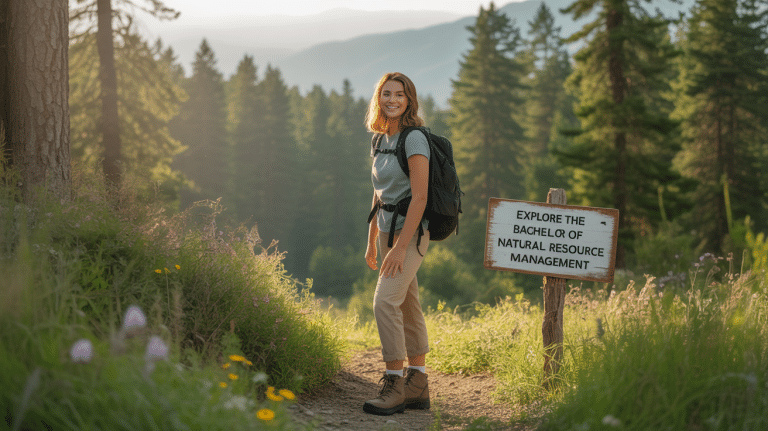
Bachelor of Natural Resource Management
Overview of the Program
A Bachelor of Natural Resource Management prepares students to understand and sustainably manage a diverse range of renewable natural resources. This program focuses on the interconnected needs of society and the environment, offering a comprehensive approach to the vital areas of ecology, policy, and resource management. As the world faces increasing environmental challenges, this degree is ideal for students passionate about promoting sustainability and working towards a balance between human needs and ecological health.
What is Bachelor of Natural Resource Management?
A Bachelor of Natural Resource Management is an interdisciplinary program that combines knowledge from various fields, including environmental sciences, social sciences, and public policy. This approach allows graduates to develop critical thinking and problem-solving skills essential for addressing complex environmental and resource management challenges. The program emphasizes the importance of biodiversity, ecosystem services, and sustainable usage of natural resources, and prepares students for active roles in conservation, management, and policy-making.
What Do You Study in Bachelor of Natural Resource Management?
The curriculum for a Bachelor of Natural Resource Management typically integrates foundational coursework in various disciplines, focusing on both theoretical knowledge and practical skills. The following sections outline the core subjects and elective courses students may encounter:
Core Subjects
- Biological and Ecological Sciences: Focus on understanding ecosystems, wildlife, soils, forests, and water systems. Courses may include Ecology, Wildlife Management, Soil Science, and Aquatic Systems.
- Social Sciences and Policy: Courses in environmental law, economics, leadership, and communications to bridge human and environmental needs. Subject matter may include Environmental Policy, Sociology of Environment, and Environmental Economics.
- Management and Planning: Techniques for resource management, land, and water use planning, and technical writing. Specific classes often include Natural Resources Planning, Environmental Impact Assessment, and Land Use Planning.
Elective Courses and Specializations
Students typically select electives or specializations tailored to their career interests, such as:
- Coastal Management: Focusing on coastal ecosystems and the human impacts on these areas.
- Environmental Law: Understanding legal frameworks governing resource use and conservation.
- Urban Forestry: Managing urban trees and green spaces as vital components of city infrastructure.
- Nature-Based Recreation: Examining the intersection of recreation, tourism, and natural resource conservation.
- Watershed Sciences: Studying water resource management, including water quality, hydrology, and watershed dynamics.
Learning Format
The educational experience blends classroom instruction with practical components, including:
- Undergraduate Research: Engaging students in hands-on research projects that address real-world resource management challenges.
- Internships: Providing opportunities to gain practical experience with conservation organizations, governmental agencies, or non-profit institutions.
- Fieldwork: Hands-on learning in various ecosystems to understand field data collection and ecological assessment.
- Study Abroad Programs: Enabling students to experience global perspectives on natural resource management.
Careers After Bachelor of Natural Resource Management
Graduates of Natural Resource Management programs are equipped for a wide array of careers related to natural resource stewardship. Typical job positions include:
- Environmental Educator or Outreach Officer
- Land Management Specialist with Local, State, or Federal Agencies
- Natural Resources Administrator
- Park and Recreation Planner
- Environmental Policy Analyst
- Conservation Coordinator
- Specialist Roles in Forestry, Watershed Management, or Wildlife Conservation
The interdisciplinary nature of this program empowers graduates to pursue careers across various sectors, including government agencies, non-profit organizations, consultancy firms, and environmental advocacy groups.
Salary Ranges
As for salaries, the average compensation may vary depending on location, experience, and specific roles. Here are some estimated global salary ranges for graduates in this field:
- Environmental Educator/Outreach Officer: USD $40,000 – $65,000; EUR €35,000 – €55,000
- Land Management Specialist: USD $50,000 – $80,000; EUR €45,000 – €70,000
- Environmental Policy Analyst: USD $55,000 – $90,000; EUR €50,000 – €75,000
- Conservation Coordinator: USD $45,000 – $75,000; EUR €40,000 – €60,000
Is Bachelor of Natural Resource Management Hard to Study?
The difficulty of studying for a Bachelor of Natural Resource Management largely depends on individual strengths and interests. This program demands a significant commitment to understanding complex ecological systems and their interactions with human activities. Common challenges faced by students include:
- Interdisciplinary Nature: Balancing coursework in sciences, humanities, and policy can be demanding.
- Fieldwork Requirements: Physical demands of fieldwork may not be appealing to all students.
- Analytical Skills: Students must develop strong analytical and critical thinking skills, as they will analyze complex data and policies.
Required Skills
To succeed in this program, students should cultivate the following skills:
- Strong analytical capabilities for interpreting ecological and social data
- Effective communication skills for articulating ideas and engaging stakeholders
- Problem-solving abilities to address real-world environmental challenges
Preparation Tips
- Engage with Nature: Volunteering or participating in local conservation efforts can provide practical insights.
- Take Related Courses: Enroll in introductory courses in biology, ecology, and policy during high school or college to build foundational knowledge.
- Stay Informed: Read environmental science literature and stay updated on current global ecological issues.
Top Certifications After Bachelor of Natural Resource Management Graduation
While some positions may not require specific licenses or certifications, obtaining relevant credentials can enhance employability and knowledge in the field. Key certifications include:
- Certified Environmental Professional (CEP): Offered by the National Association of Environmental Professionals (NAEP), this credential demonstrates expertise in environmental management.
- Certified Wildlife Biologist (CWB): A certification from The Wildlife Society aimed at professionals who wish to work in wildlife conservation.
- LEED Accreditation: Relevant for those interested in green building and sustainable practices in urban and resource management.
- Project Management Professional (PMP): Beneficial for graduates looking to manage projects related to natural resources and sustainability.
Where to Study Bachelor of Natural Resource Management
Students interested in pursuing a Bachelor of Natural Resource Management can find excellent programs at several prestigious private universities in Turkiye, such as:
These institutions provide impactful curricula and opportunities for research and internships, preparing students for rewarding careers in natural resource management.
Take the Next Step with Study in Turkiye
Explore further and take the next step towards your academic journey today. Whether you’re ready to apply or want to learn more about studying in Turkiye, we are here to help you navigate your future.

