
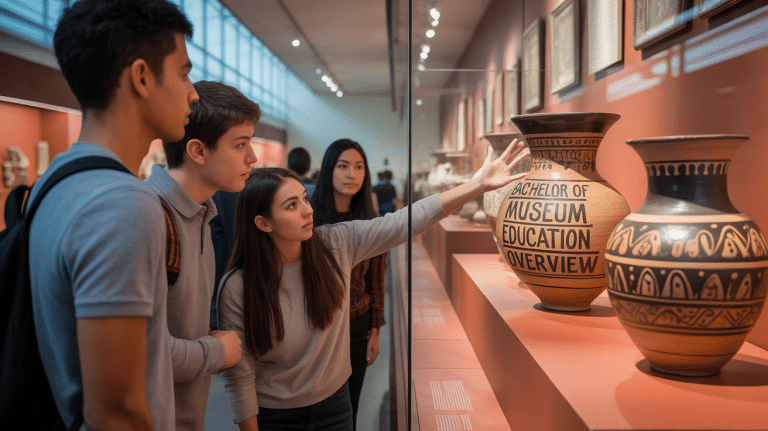
Bachelor of Museum Education: Program Overview
What is a Bachelor of Museum Education?
The Bachelor of Museum Education focuses on the intersection of education and cultural heritage, equipping students with the theoretical knowledge and practical skills necessary for effective educational programming within museums. It aims to cultivate professionals who can develop and implement educational strategies that inform, inspire, and engage diverse audiences in meaningful learning experiences.
What Do You Study in a Bachelor of Museum Education?
Core Curriculum and Courses
-
Museum Foundations:
This course examines the historical context and societal roles of museums, exploring their impact on culture and significance as educational institutions.
-
Museum Administration:
Students learn principles of leadership and management specific to museums, including operational planning, budgeting, and human resource management.
-
Collections Management:
This covers the acquisition, care, and documentation of collections, discussing provenance, conservation, and ethical considerations.
-
Exhibition Design:
This course focuses on the planning, design, and installation of educational exhibits, emphasizing the creative and logistical processes involved.
-
Museum Education:
This component emphasizes the development, execution, and evaluation of educational programs tailored for diverse audiences, focusing on interactive resources for visitor engagement.
Elective Courses
-
Art History and Visual Thinking:
Enhances students’ ability to analyze and interpret artwork and artifacts, providing insightful perspectives into cultural presentations.
-
Fundraising and Marketing:
Students learn strategies for resource development, public engagement, and audience outreach.
-
Digital Preservation and Technology:
Focuses on the use of technology in museum settings, including digital curation and online exhibit design.
Practical Learning Experiences
-
Internships:
Collaborations with local museums and cultural institutions provide students practical experience in real-world contexts.
-
Project-Based Courses:
Involve developing a museum exhibition from concept to execution, addressing real community needs collaboratively.
-
Workshops:
Interactive workshops help develop skills in areas such as grant writing, exhibit development, and educational programming.
Careers After Bachelor of Museum Education
Graduates of a Bachelor of Museum Education program are well-prepared for diverse career opportunities across the cultural sector, including:
- Museum Educator or Education Program Coordinator
- Museum Curator or Collections Manager
- Exhibit Designer or Preparator
- Outreach and Community Engagement Specialist
- Visitor Services or Tour Leader
- Archivist in galleries, museums, or cultural heritage organizations
Salary Expectations
The salary for professionals in museum education depends on location, experience, and specific roles. Below is an overview of typical salary ranges:
- Museum Educator: $45,000 – $70,000 USD / €41,000 – €64,000 EUR
- Curator: $50,000 – $85,000 USD / €46,000 – €78,000 EUR
- Exhibit Designer: $40,000 – $70,000 USD / €37,000 – €64,000 EUR
- Outreach Specialist: $40,000 – $60,000 USD / €37,000 – €55,000 EUR
- Archivist: $50,000 – $80,000 USD / €46,000 – €75,000 EUR
Is Bachelor of Museum Education Hard to Study?
Common Challenges
- Multidisciplinary Nature: The program covers diverse subjects, demanding adaptability to various academic styles.
- Field Experience Requirements: Balancing coursework with internships can be demanding, requiring effective time management.
- Skills Development: Building competencies in teaching methods, design creativity, and administrative skills can present challenges.
Required Skills
- Strong Communication: Ability to convey complex ideas clearly to diverse audiences.
- Creative Thinking: Skill in developing engaging educational content and exhibits.
- Organizational Skills: Competence in planning and managing projects effectively.
- Collaborative Attitude: Capability to work with diverse teams and stakeholders.
Preparation Tips
- Engage in Volunteer Work: Gain experience in museums or educational programs.
- Foster a Passion for Learning: Cultivate a willingness to learn across various subjects.
- Develop Research Skills: Familiarize with research methodologies and academic writing.
Top Certifications After Bachelor of Museum Education Graduation
- Certified Museum Professional (CMP): Demonstrates knowledge and competence in museum management.
- Museum Education and Programming Certification: Focuses on effective educational strategies in museums.
- Accreditation via the American Alliance of Museums (AAM): Validates expertise and commitment to museum education.
- Digital Curation Certifications: Relevant as museums incorporate digital platforms.
Where to Study Bachelor of Museum Education
Recommended institutions include:
- Medipol University, Turkiye
- Bahcesehir University, Turkiye
- Uskudar University, Turkiye
- Istanbul Bilgi University, Turkiye
These universities provide comprehensive education and strong connections within the cultural sector, ensuring graduates are well-prepared for their careers.
Take the Next Step with Study in Turkiye
For personalized assistance and more information about pursuing a Bachelor of Museum Education, reach out to Study in Turkiye today. Explore further options and begin your academic journey.

