
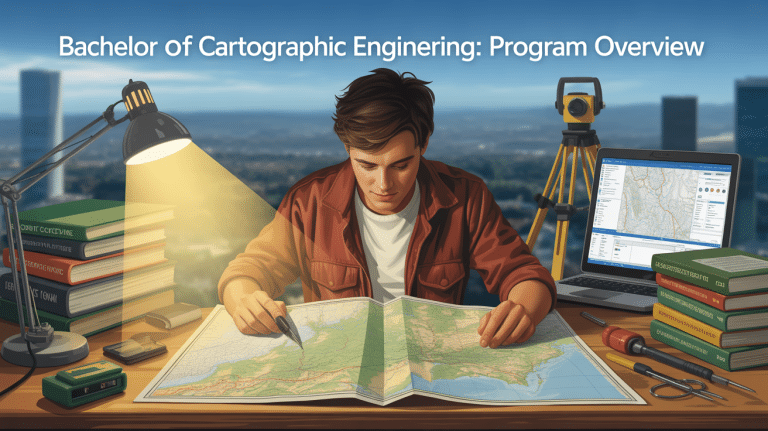
Bachelor of Cartographic Engineering: Program Overview
What is Cartographic Engineering?
Cartographic Engineering is the scientific discipline concerned with the visual representation of geographic information. It integrates multiple fields, including geography, computer science, and engineering, to create maps that provide meaningful information about spatial relationships and features on Earth. The profession addresses various needs across different industries, focusing on the design and functional requirements of maps, which can range from interactive web maps to traditional printed materials.
With an increasing reliance on spatial data analysis in today’s world, professionals trained in cartographic engineering are essential for innovative solutions in multiple sectors such as urban development, disaster management, and resource allocation.
What Do You Study in Cartographic Engineering?
The curriculum of a Bachelor of Cartographic Engineering typically includes a diverse array of core subjects and elective courses, focusing on the skills necessary for effective mapping design and data analysis.
Core Curriculum
- Cartography: The fundamentals of map-making, covering both traditional techniques and modern practices involving digital technologies. Students learn to create visually appealing and informative maps.
- Geographic Information Systems (GIS): Understanding software and platforms that manage, analyze, and visualize geographic data, enabling decision-making in various applications ranging from urban planning to environmental studies.
- Remote Sensing: Techniques for collecting and interpreting data through satellite and aerial imagery. This section encompasses an understanding of how to analyze images and extract meaningful spatial information.
- Geoprocessing and Data Analysis: Methods for transforming data into actionable information. Students learn to implement algorithms and analytical techniques to process large datasets.
- Programming and Data Science: Acquiring programming skills, often in Python, that are tailored to GIS applications, including handling geospatial data and developing interactive tools.
- Web and Mobile Mapping Applications: Development of digital applications and tools for online and mobile platforms, enabling users to interact with geospatial data intuitively.
- Quality Assurance and Control: Techniques to ensure accuracy and reliability in the creation of cartographic materials, focusing on maintaining high standards in the mapping process.
- Applied Projects: Hands-on projects that culminate in a senior capstone, allowing students to engage in real-world scenarios and apply theoretical concepts to practical challenges.
Elective Courses
In addition to core subjects, students may choose from electives that deepen their expertise in specific areas such as advanced remote sensing techniques, spatial data analysis, urban geography, and environmental management.
Labs and Internships
Many programs include laboratory sessions where students gain practical experience with GIS and remote sensing software. Internships with governmental agencies, private companies, or NGOs are also common, providing essential industry experience.
Careers After Cartographic Engineering
Graduates of a Bachelor of Cartographic Engineering can pursue a diverse range of careers in both the public and private sectors. Here are some potential job roles and industries for graduates:
- Cartographic Engineer: Responsible for creating and designing maps, along with developing GIS solutions for various industries.
- GIS Analyst or Technician: Engaged in managing spatial data, producing maps, and maintaining geospatial databases.
- Remote Sensing Specialist: Tasked with interpreting images collected from satellites or aerial platforms to assist with environmental monitoring and urban planning.
- Geospatial Technology Developer: Focused on building and maintaining web and mobile mapping applications.
- Land Surveyor and Geospatial Engineer: Specializes in measuring and mapping land features for construction and legal purposes.
- Spatial Data Scientist: Utilizes statistical methods and programming to analyze complex geospatial data sets.
- Geovisualization Expert: Works on transforming data into visual formats to better communicate geographic information.
Typical sectors employing these graduates include:
- Urban Planning
- Environmental Science
- Government Agencies
- Technology and Software Development
- Natural Resource Management
Average Salaries
Salaries for cartographic engineering professionals can vary significantly based on location, experience, and industry. Here are some average salary ranges:
- Cartographic Engineer: $60,000 – $90,000 (USD) / €50,000 – €75,000 (EUR)
- GIS Analyst: $55,000 – $80,000 (USD) / €45,000 – €65,000 (EUR)
- Remote Sensing Specialist: $65,000 – $95,000 (USD) / €55,000 – €80,000 (EUR)
- Geospatial Technology Developer: $70,000 – $100,000 (USD) / €60,000 – €85,000 (EUR)
Is Cartographic Engineering Hard to Study?
The Bachelor of Cartographic Engineering program is intensive, requiring substantial engagement from students. It is best suited for those who possess a keen interest in technology and spatial data, as well as analytical and creative thinking skills.
Common Challenges
- Technical Complexity: Mastering various software and programming languages can be daunting for some, particularly those without a strong background in technology.
- Data Analysis Skills: Developing proficiency in data analysis and visualization requires both patience and practice.
- Project Management: Managing multiple assignments or projects simultaneously, especially with demanding deadlines, poses a challenge for many students.
Required Skills
- Strong analytical abilities
- Proficiency in computer programming (especially Python)
- Creativity in map design and data presentation
- Basic knowledge of geography and spatial relationships
Preparation Tips
- Engage in preliminary courses in mathematics, statistics, and computer science.
- Familiarize yourself with GIS software tools even before beginning your formal studies.
- Participate in workshops or online courses focused on programming and data analysis.
Top Certifications After Cartographic Engineering Graduation
Graduates seeking to enhance their qualifications may consider obtaining the following certifications:
- GIS Professional (GISP): Recognized certification demonstrating expertise in GIS and spatial analysis.
- Certified Geographic Information Systems Technician (CGIT): Credential showcasing foundational GIS skills, beneficial for entry-level positions.
- Esri Technical Certification: Various levels of certification based on expertise in Esri GIS software, highly regarded in the industry.
- Remote Sensing Certificates: Offered through different organizations, these certifications validate skills in interpreting remote sensing data.
Where to Study Cartographic Engineering
If you’re interested in pursuing a Bachelor of Cartographic Engineering, here are some top private universities you may consider:
, known for its robust engineering programs, including GIS and remote sensing capabilities.
, offers a comprehensive curriculum in geospatial technologies along with practical internship opportunities.
, recognized for its innovative approach to geospatial studies, blending theory and hands-on application.
Conclusion
Graduating with a Bachelor of Cartographic Engineering prepares students for exciting careers at the forefront of geospatial technology and cartography. The program equips them with the essential skills to analyze and visualize geographic data effectively, providing innovative solutions in a variety of professional realms. For personalized assistance in exploring educational opportunities in this field, reach out to Study in Turkiye today.
Take the Next Step with Study in Turkiye
Encouraging you to explore further your educational possibilities in Cartographic Engineering and other exciting fields.

