
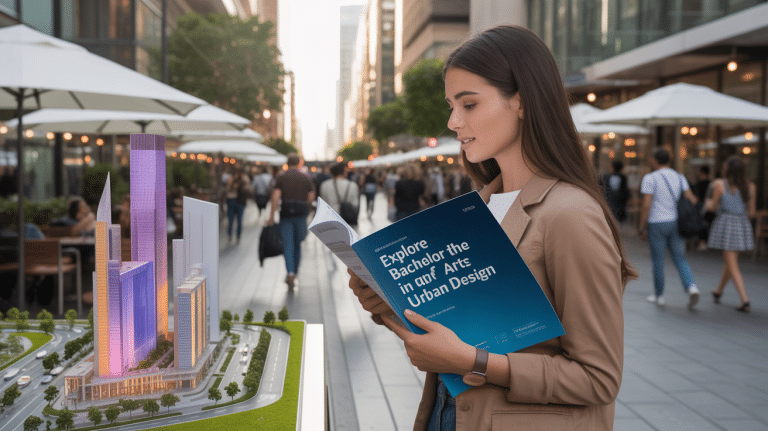
Bachelor of Arts in Urban Design
What Do You Study?
Careers After Graduation
Is It Hard to Study?
Top Certifications
Where to Study
What is Bachelor of Arts in Urban Design?
The Bachelor of Arts in Urban Design is an interdisciplinary degree that focuses on the planning and design of urban spaces. It encompasses a range of topics including urban sociology, land use planning, design principles, and the socio-political contexts of cities.
Students gain insight into how architectural elements and public spaces influence social behavior, promote community interaction, and affect the quality of life.
The program encourages critical thinking and creativity, preparing students to design functional and sustainable environments, typically culminating in a capstone project that allows students to apply what they have learned in a real-world context.
What Do You Study in Bachelor of Arts in Urban Design?
Core Subjects
- Introduction to Urban Design:
- Overview of urban design principles and history.
- Impact of urban design on societal development.
- Urban Sociology:
- Study of social interactions and structures within urban environments.
- Effects of urbanization on community dynamics.
- Sustainable Design Practices:
- Integration of sustainable methods in urban planning.
- Assessment of environmental impacts.
- Site Planning and Development:
- Fundamentals of land use and zoning laws.
- Techniques for designing public spaces and infrastructures.
- Urban Policy and Governance:
- Exploration of the political and legal frameworks governing urban development.
- Examination of policy-making processes that impact city planning.
Elective Courses
- Community Engagement Techniques
- Transit-Oriented Development
- Digital Tools in Urban Design (e.g., GIS and CAD)
- Historic Preservation and Urban Heritage
- Economic Aspects of Urban Development
Labs, Workshops, and Internships
Many programs incorporate practical experiences through:
- Design Studios: Hands-on workshops where students develop their design skills through real projects, often collaborating with community stakeholders.
- Internships: Opportunities to work with urban planning firms, government agencies, or non-profit organizations to gain real-world experience and professional insight.
- Field Studies: Trips to various urban environments to analyze and understand design challenges and urban dynamics.
Careers After Bachelor of Arts in Urban Design
Graduates can enter various fields, equipped with expertise for roles in urban planning, design, and public policy.
Potential Career Paths
- Urban Planner
- Landscape Architect
- Transportation Planner
- Real Estate Developer
- Urban Designer
- Community Development Specialist
- Policy Analyst
Sample Job Titles and Average Salaries
- Urban Planner: Average Salary: $75,000 (USD), €70,000 (EUR)
- Landscape Architect: Average Salary: $68,000 (USD), €63,000 (EUR)
- Real Estate Developer: Average Salary: $90,000 (USD), €84,000 (EUR)
- Urban Designer: Average Salary: $78,000 (USD), €73,000 (EUR)
- Transportation Planner: Average Salary: $76,000 (USD), €71,000 (EUR)
- Community Development Specialist: Average Salary: $65,000 (USD), €60,000 (EUR)
Is Bachelor of Arts in Urban Design Hard to Study?
Studying urban design presents unique challenges. The program demands a comprehensive understanding of various disciplines, including economics, sociology, and environmental science.
Common Challenges
- Interdisciplinary Nature: Students must manage diverse content areas simultaneously, which requires strong time management and organizational skills.
- Design Projects: The hands-on nature of design studios can be intense, often requiring lengthy hours for project completion.
- Critical Thinking: Urban design involves solving complex problems that require analytical skills and creative thinking.
Required Skills
- Creativity and Innovation: Ability to conceive unique design solutions.
- Technical Proficiency: Familiarity with design software (e.g., AutoCAD, Adobe Creative Suite) is essential.
- Communication Skills: Strong verbal and written skills are crucial for collaborating with diverse stakeholders and presenting ideas clearly.
Preparation Tips
- Engage in relevant extracurricular activities, such as architecture clubs or internships in design-related fields.
- Build foundational knowledge by studying fundamental design and planning principles.
- Practice using design software early on to enhance technical skills before entering the program.
Top Certifications After Bachelor of Arts in Urban Design Graduation
Certain certifications may be beneficial for graduates in urban design, enhancing employability and expertise in the field.
- American Institute of Certified Planners (AICP) Certification: For urban planners in the United States, showcasing a professional standard in planning practices.
- LEED Accreditation (Leadership in Energy and Environmental Design): For those focusing on sustainable design, emphasizing commitment to green building practices.
- National Council for Interior Design Qualification (NCIDQ) Certification: Important for urban designers whose work overlaps with interior space planning.
Where to Study Bachelor of Arts in Urban Design
Several institutions in Turkiye offer leading programs in Urban Design:
- Uskudar University
- Known for its interdisciplinary approach and hands-on learning opportunities.
- Bahcesehir University (BAU)
- Offers robust urban design programs emphasizing practical experiences and community engagement.
- Ozyegin University
- Focuses on sustainable urban solutions while providing students with rich academic resources and exposure.
If you are interested in pursuing a Bachelor of Arts in Urban Design, reach out to Study in Turkiye for personalized assistance tailored to your educational goals.
Take the Next Step with Study in Turkiye
Explore further and find the right program that meets your needs, guiding you through the application process and beyond.

