
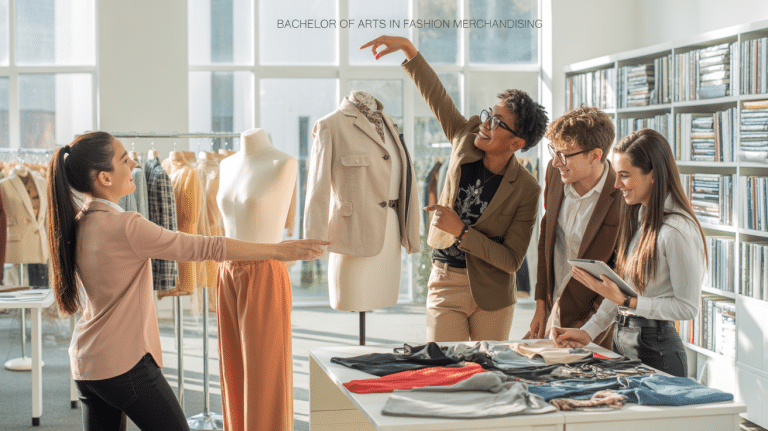
Bachelor of Arts in Fashion Merchandising
What is Bachelor of Arts in Fashion Merchandising?
The Bachelor of Arts in Fashion Merchandising centers on understanding the complex journey of fashion products from conception to consumer. It encompasses various elements, including design principles, market analysis, consumer behavior, and retail strategies, thus preparing students for an array of positions in the fashion industry.
What Do You Study in Bachelor of Arts in Fashion Merchandising?
A typical curriculum in a Bachelor of Arts in Fashion Merchandising program involves a blend of core subjects and elective courses, along with workshops, labs, and internships that offer real-world experience.
Core Courses
- Introduction to Fashion Merchandising: Provides a foundation for understanding the fashion business, including retail concepts and global market considerations.
- Textiles and Fabric for Fashion: Offers insights into materials used in fashion and their characteristics influencing merchandising decisions.
- Merchandising Concepts and Practices: Explores strategies for product development, assortment planning, and product lifecycle management.
- Consumer Behavior: Studies the psychological aspects influencing consumer decisions regarding fashion purchases.
- Fashion Promotion: Focuses on marketing strategies, advertising techniques, and promotional tactics tailored to the fashion industry.
Business-Related Courses
- Marketing Fundamentals: Covers essential marketing theories and practices, specifically in the context of fashion brands.
- Retail Management: Discusses retail operations, management techniques, and customer service practices necessary for success in a retail setting.
- Financial Accounting: Introduces accounting principles relevant to managing budgets and financial statements in the fashion business.
- E-Commerce in Fashion: Examines online retailing strategies and technologies impacting the fashion industry.
Creative Courses
- Fashion Illustration: Develops the ability to communicate ideas visually, focusing on design sketches and technical drawings.
- Costume Design: Explores the artistry and methodology behind creating costumes for film, theater, and editorial purposes.
- Digital Tools for Fashion Presentations: Teaches the use of the latest software and technology for enhancing fashion presentations and promotions.
Labs, Workshops, and Internships
Most programs integrate practical experiences through labs and workshops, which may include:
- Internships: Students often complete internships with leading fashion retailers, brands, and manufacturers, giving hands-on experience.
- Workshops: These practical sessions may cover aspects like fashion photography, styling, or visual merchandising under the guidance of industry professionals.
Careers After Bachelor of Arts in Fashion Merchandising
Graduates of the Bachelor of Arts in Fashion Merchandising can pursue a variety of career paths within the fashion industry. The skills obtained allow them to enter diverse roles that bridge creative and business competencies.
Sample Job Titles
- Fashion Merchandiser
- Retail Buyer
- Visual Merchandiser
- Brand Manager
- Fashion Marketing Coordinator
- Product Developer
- Fashion Analyst
- Supply Chain Manager
- E-commerce Specialist
Industries and Sectors
Graduates may find opportunities in various sectors, including:
- Retail
- Wholesale distribution
- Fashion design firms
- E-commerce businesses
- Marketing agencies
Average Salaries
The salary for graduates can vary widely based on location, role, and experience. Below are averages derived from reliable sources:
United States:
- Fashion Merchandiser: $60,000 – $75,000
- Retail Buyer: $55,000 – $70,000
Europe:
- Fashion Merchandiser: €45,000 – €60,000
- Retail Buyer: €40,000 – €55,000
Is Bachelor of Arts in Fashion Merchandising Hard to Study?
The complexity of the Bachelor of Arts in Fashion Merchandising program can vary based on personal interests and strengths. While it emphasizes both creative skills and analytical thinking, many students find the following aspects challenging:
Common Challenges
- Balancing Creativity and Business Skills
- Understanding Market Dynamics
- Time Management
Required Skills
- Analytical Skills
- Communication Skills
- Creativity
Preparation Tips
- Engage in Fashion Communities
- Stay Updated with Fashion News
- Participate in Workshops
Top Certifications After Bachelor of Arts in Fashion Merchandising Graduation
To enhance employability and specialize further, graduates may pursue various certifications post-degree, including:
Essential Certifications
- Certified Fashion Merchandiser (CFM): Offers foundational knowledge in fashion merchandising principles.
- Digital Marketing Certification: Focuses on online marketing strategies beneficial for e-commerce-related positions.
- Merchandising Certification: Provides specialized training on effective merchandising techniques.
Where to Study Bachelor of Arts in Fashion Merchandising
Several renowned institutions offer excellent programs in Fashion Merchandising, providing students with access to industry-standard training and networking opportunities. Some notable universities include:
Take the Next Step with Study in Turkiye
Ready to explore more about your educational journey? Discover programs that suit your interests and start your adventure in Turkiye today!

