
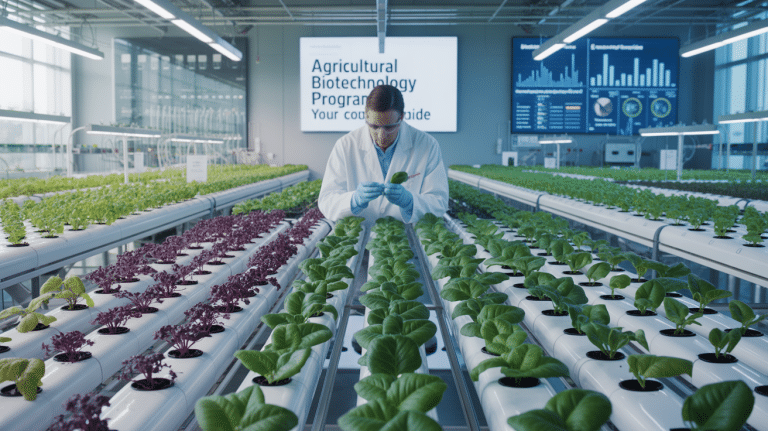
Agricultural Biotechnology Programs: Your Complete Guide
Quick Navigation
What is Agricultural Biotechnology?
Agricultural biotechnology leverages advancements in molecular biology, genetics, and biochemistry to improve agricultural productivity and sustainability. By employing techniques like genetic engineering, students learn how to manipulate organisms at the molecular level to develop crops that are more resilient to pests, diseases, and environmental conditions. Programs in agricultural biotechnology foster knowledge and skills essential for researching and developing new agricultural practices and products.
Through these programs, students explore the vital role of biotechnology in addressing global issues such as food security, environmental preservation, and climate change mitigation.
What Do You Study in Agricultural Biotechnology?
Agricultural biotechnology programs offer a comprehensive curriculum that blends theoretical concepts with hands-on applications. The coursework typically includes core subjects, electives, practical labs, and internships.
Core Subjects
- Biological Sciences
- Molecular Biology: Understanding genetic structures and functions in plants.
- Plant Science: Study of plant biology, genetics, and physiology.
- Microbiology: Examination of microorganisms that affect agriculture and bioprocesses.
- Cell Culture Techniques: Methods for growing plant cells and tissues in vitro.
- Agricultural Focus
- Soil Science: Investigation into soil properties, fertility, and management practices.
- Entomology: Study of insects and pests that impact crop production.
- Plant Pathology: Understanding diseases in crops and strategies for management.
- Supporting Knowledge
- Biochemistry: Study of chemical processes within and related to living organisms.
- Biostatistics: Application of statistics for analyzing agricultural data.
- Technical Writing: Skills for documenting research findings and contributing to scientific literature.
Elective Courses
Students may have the opportunity to choose electives, focusing on specialized topics such as:
- Advanced Genetic Engineering Techniques
- Organic Agricultural Biotechnology
- Sustainable Agricultural Practices
Labs, Workshops, and Internships
Hands-on experiences are vital in agricultural biotechnology programs. Students participate in laboratory work where they apply techniques like DNA extraction, PCR, and genetic transformation. Workshops and seminars often provide insights from industry professionals. Internships are also integral, offering students real-world applications of their knowledge in research institutions, agricultural firms, or government agencies.
Careers After Agricultural Biotechnology
Graduates of agricultural biotechnology programs have a wide array of career options in various sectors, including agriculture, biotechnology companies, research institutions, and governmental agencies. Here are some common job titles:
- Agricultural Scientist: Research and development roles focused on improving crop varieties and sustainable practices.
- Biotechnologist: Application of biotechnology techniques to enhance crop traits.
- Laboratory Technician: Performing testing and analysis in labs focusing on plant genetics.
- Crop Consultant: Advising farmers on crop management and agricultural production strategies.
- Research Scientist: Engaging in innovative research to improve agricultural productivity.
- Agribusiness Manager: Overseeing operations within agricultural firms or companies in the biotechnology sector.
Average Salaries
Salaries for agricultural biotechnology professionals can vary widely based on job title, location, and experience. According to recent data from reliable sources, salaries can generally be summarized as follows:
- Agricultural Scientist: $60,000 – $90,000 (USD), €50,000 – €75,000
- Biotechnologist: $65,000 – $95,000 (USD), €52,000 – €78,500
- Laboratory Technician: $40,000 – $60,000 (USD), €35,000 – €50,000
- Crop Consultant: $50,000 – $70,000 (USD), €40,000 – €60,000
- Research Scientist: $70,000 – $110,000 (USD), €60,000 – €90,000
- Agribusiness Manager: $75,000 – $120,000 (USD), €65,000 – €100,000
Is Agricultural Biotechnology Hard to Study?
Studying agricultural biotechnology involves both challenges and rewards. The complexity of the topics covered requires a solid foundation in the natural sciences, particularly biology, chemistry, and biotechnology. Here are common challenges faced by students:
- Complex Scientific Concepts: Students must grasp intricate molecular processes and genetic manipulation techniques.
- Laboratory Skills: Practical lab work requires precision, patience, and attention to detail.
- Interdisciplinary Approach: The need to integrate knowledge from multiple scientific disciplines can be demanding.
Required Skills and Preparation Tips
To succeed, students should cultivate the following skills:
- Strong analytical and problem-solving skills
- Effective laboratory and technical skills
- Attention to detail and meticulousness in research
- Adaptability and willingness to learn new technologies
Preparation tips include:
- Gaining foundational knowledge in biology and chemistry before starting the program.
- Engaging in hands-on laboratory experiences, even through internships or volunteer opportunities.
- Participating in study groups and academic discussions to enhance understanding of complex materials.
Top Certifications After Agricultural Biotechnology Graduation
While a degree in agricultural biotechnology is essential, certain certifications and licenses can enhance a graduate’s employability. Relevant certifications include:
- Certified Crop Adviser (CCA): Offered by the American Society of Agronomy, focusing on crop management and advisory skills.
- Certified Professional Agronomist (CPAg): For professionals providing expert advice on crop production and agronomy.
- Organic Certification: For those interested in sustainable and organic farming practices.
- Pesticide Applicator Certification: Required for individuals wishing to work with chemical pest control solutions.
Where to Study Agricultural Biotechnology
Students interested in pursuing agricultural biotechnology can find excellent programs at the following academic institutions in Turkiye:
Each of these universities offers robust agricultural biotechnology programs, combining rigorous academic curricula with practical experiences, ensuring graduates are well-prepared for their careers.
For personalized assistance in choosing the right program and institution, please reach out to Study in Turkiye. Our team is dedicated to helping students navigate their academic journeys effectively.
Take the Next Step with Study in Turkiye
Explore further and find your ideal agricultural biotechnology program in Turkiye today!

