
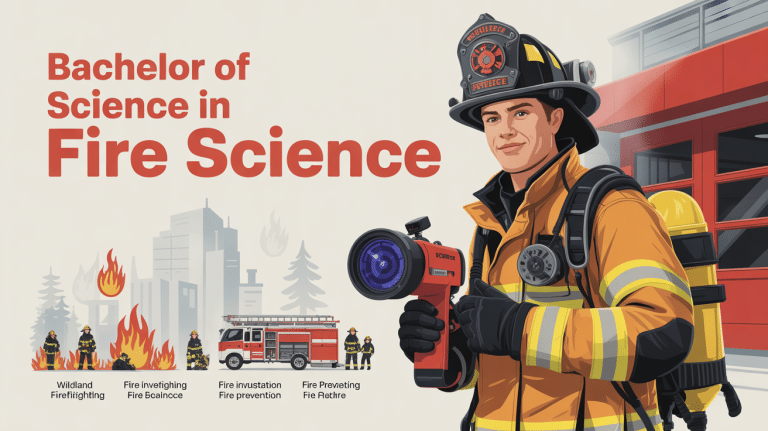
Bachelor of Science in Fire Science
What Do You Study in Fire Science? |
Careers After a Bachelor of Science in Fire Science |
Is Fire Science Hard to Study? |
Top Certifications After Fire Science Graduation |
Where to Study Fire Science
What is a Bachelor of Science in Fire Science?
A Bachelor of Science in Fire Science is a vital program designed to equip students with the knowledge and skills necessary for careers in fire protection, prevention, and management. Tailored for individuals aspiring to impact public safety, this four-year degree blends theory and practical experience to prepare students for numerous roles within fire service.
This comprehensive academic program integrates various disciplines to address the complex nature of fire safety and emergency response. The curriculum is heavily focused on the technical, social, and legal aspects of fire science, adhering to guidelines set forth by the Fire and Emergency Services Higher Education (FESHE) model, which is recognized by the U.S. Fire Administration.
This program covers foundational topics like firefighter safety, building codes, fire prevention, and firefighting strategies. Students in this program receive an education that not only prepares them for firefighting roles but also opens doors to management and administrative positions within fire departments and safety organizations.
Key areas of study include:
- Fire behavior and suppression methods: Understanding how fires ignite and how to effectively extinguish them.
- Fire protection and safety practices: Learning to design and implement safety measures in various environments.
- Prevention techniques and methodologies: Engaging in proactive strategies to mitigate fire risks.
- Building codes and inspection procedures: Gaining knowledge of the legal standards ensuring safety in construction.
- Tactical operations and strategy: Focusing on the decision-making processes during fire emergencies.
What Do You Study in Fire Science?
Core Subjects
Students pursuing a Bachelor of Science in Fire Science will delve deeply into key subject areas that equip them for careers in the fire service. These subjects often include:
- Fire Science Basics: Fundamental principles of fire dynamics and the science behind combustion.
- Firefighting Tactics and Strategy: Training in the direct management of fire suppression operations, including various firefighting techniques.
- Fire Prevention: Methods and practices for reducing fire hazards and increasing public safety.
- Public Safety Administration: Understanding the administrative side of fire service operations, including budgeting and resource management.
Elective Courses
Students often have the opportunity to choose from elective courses in specialized areas, such as:
- Hazardous Materials Management: Strategies for dealing with hazardous incidents and materials.
- Fire Protection Systems: Study on the design and maintenance of automatic fire suppression systems, such as sprinklers.
- Emergency Management: Principles guiding effective responses to emergencies beyond fire, including natural disasters.
Labs, Workshops, and Internships
Practical experience is a critical component of the program. Students may participate in:
- Live Fire Training: Hands-on experience with fire behavior, tactics, and equipment in controlled environments.
- Simulations: Engaging in scenario-based training where students must apply their knowledge to real-life firefighting situations.
- Internships: Opportunities to work alongside fire departments or related agencies, allowing students to gain firsthand experience and mentorship from industry professionals.
Careers After a Bachelor of Science in Fire Science
Graduates of the Bachelor of Science in Fire Science program have diverse career opportunities across various sectors, particularly within the public safety domain. Common career paths include:
- Firefighter: Engaging in emergency response and firefighting operations.
- Fire Inspector: Evaluating buildings for compliance with fire safety codes.
- Fire Investigator: Investigating the circumstances surrounding fire incidents.
- Fire Safety Officer: Overseeing fire safety protocols and training within organizations.
- Emergency Manager: Coordinating disaster preparedness and response efforts.
Important employment forecasts indicate a 7% growth for firefighters and a 10% growth for fire inspectors and investigators from recent years, reflecting a strong demand for professionals in this sector.
Sample Job Titles and Salaries
Here are representative job titles, industries, and approximate salary ranges (in USD and EUR):
- Firefighter
- Industry: Public Safety
- Average Salary: $50,000 – $70,000 / €43,000 – €60,000
- Fire Inspector
- Industry: Government, Fire Services
- Average Salary: $55,000 – $75,000 / €46,000 – €65,000
- Fire Service Administrator
- Industry: Government, Non-profit
- Average Salary: $70,000 – $90,000 / €60,000 – €77,000
- Fire Investigator
- Industry: Government, Private Sector
- Average Salary: $52,000 – $80,000 / €45,000 – €70,000
These positions not only offer competitive salaries but also the opportunity for professional growth in increasingly important fields such as public safety and emergency management.
Is Fire Science Hard to Study?
Pursuing a degree in Fire Science presents unique challenges as well as rewards. Those considering this field may face the following common difficulties:
- Physical and Mental Demands: Firefighting training is physically rigorous, requiring students to be in good shape. Mental acuity is also necessary for making critical decisions in high-pressure situations.
- Scientific Understanding: A thorough grasp of fire science relies on chemistry and physics principles, which can be challenging for some students.
- Management Skills: As many graduates move into leadership roles, strong management and communication skills are essential for success.
Required Skills and Preparation Tips
To excel in this field, students should cultivate:
- Physical Fitness: Regular training and conditioning.
- Analytical Skills: Engaging with scientific concepts and analyzing data.
- Teamwork and Leadership: Working well with others and potentially leading teams in emergencies.
Preparation tips include seeking internships for practical experience and dedicating time to study groups focusing on complex topics.
Top Certifications After Fire Science Graduation
While a Bachelor of Science in Fire Science provides a solid foundation, certain certifications can enhance a graduate’s employability and expertise:
- Fire Officer Certification: Credentialing for those looking to hold managerial roles in fire departments.
- Fire Inspector Certification: An essential examination facilitating career progression in fire inspection roles.
- Hazardous Materials Certification: Specialization in managing incidents involving hazardous materials.
In some locations, obtaining state-specific certifications may also be necessary, significantly enhancing job prospects and professional standing.
Where to Study Fire Science
Students interested in pursuing a Bachelor of Science in Fire Science should explore several top private universities that offer strong programs in this discipline.
These institutions are committed to equipping students with the skills and knowledge needed to excel in fire science careers.
Take the Next Step with Study in Turkiye
For prospective students and their families exploring education options in fire science, reach out to Study in Turkiye for personalized assistance in identifying the best academic programs that fit your goals and aspirations.

