
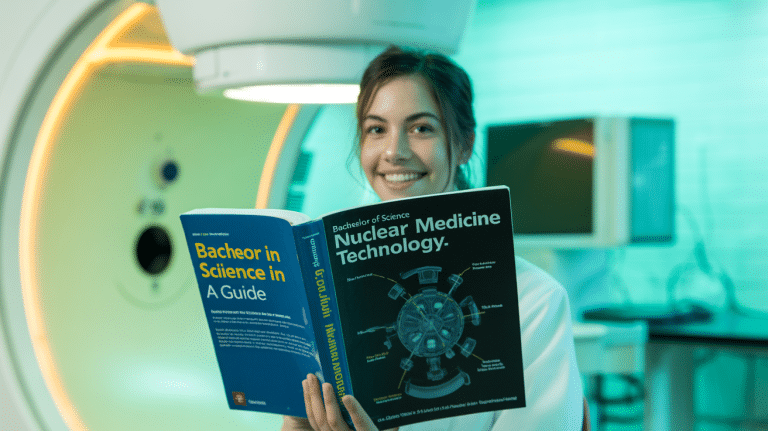
Bachelor of Science in Nuclear Medicine Technology: A Comprehensive Guide
What is Bachelor of Science in Nuclear Medicine Technology?
Nuclear Medicine Technology is a branch of medical imaging that employs radiopharmaceuticals and gamma cameras to provide unique and vital diagnostic information to physicians. The Bachelor of Science in Nuclear Medicine Technology equips students with the necessary skills to perform various procedures, including imaging using positron emission tomography (PET) and single-photon emission computed tomography (SPECT).
In this program, students learn to integrate complex scientific principles, including physics, biology, and pharmacology, into practical applications, thereby playing a crucial role in patient diagnosis and treatment. Graduates of this program often pursue licensure and certification, increasing their employability in the healthcare sector.
What Do You Study in Bachelor of Science in Nuclear Medicine Technology?
Core Coursework
- Radiation Physics and Instrumentation: Focuses on the principles of nuclear radiation physics and the instruments used in nuclear medicine (typically 5 credits).
- Radiopharmacy and Pharmacology: Covers the study of radiopharmaceuticals, their applications and how they interact with the human body (2-4 credits).
- Anatomy, Physiology, and Pathology: Provides essential knowledge of human anatomy and disease processes (2-4 credits).
- Patient Care: Emphasizes management techniques and methods pertinent to patient care (1-2 credits).
- Clinical Practicums: Involves hands-on clinical experience in nuclear medicine settings, generally requiring students to complete 6-8 credits per semester.
- Radiation Protection: Studies safety measures and protocols necessary to protect patients and healthcare workers from radiation exposure (4 credits).
- Multi-Modality Imaging: An exploration of various advanced imaging techniques utilized in modern medicine (4 credits).
Specialized Courses
- Nuclear Cardiology: This course examines imaging techniques specifically related to cardiac health.
- PET and PET/CT Principles: This course covers advanced imaging techniques using positron emission tomography.
- Molecular Imaging: An exploration of imaging at the molecular level, enhancing diagnostic capabilities.
- Radioimmunoassay: Involves laboratory techniques that utilize radioactive materials to provide critical information regarding various diseases.
- International Experiences: Provides opportunities for students to engage in nuclear medicine contexts in an international environment.
Clinical Training
Clinical training is integral to the education of nuclear medicine technologists. Students typically engage in multiple clinical practicums throughout their program, allowing them to apply theoretical knowledge in real healthcare settings. Notable clinical experiences may include:
- Clinical Nuclear Practicum I & II: These practicums generally account for 6-8 credits each semester and provide extensive real-world exposure.
- Clinical Nuclear Medicine I-IV: Progressive clinical experiences designed to deepen practical learning (4 credits each).
Careers After Bachelor of Science in Nuclear Medicine Technology
Graduates of the Bachelor of Science in Nuclear Medicine Technology can look forward to a range of career opportunities in healthcare settings, specifically in hospitals, diagnostic imaging centers, and research facilities. Potential job titles include:
- Nuclear Medicine Technologist
- Radiologic Technologist
- Positron Emission Tomography (PET) Technologist
- Radiation Safety Officer
- Clinical Research Associate
Salary Expectations
The compensation for nuclear medicine technologists can vary significantly based on location, experience, and specific roles. On average, salaries worldwide range as follows:
- United States: $70,000 – $100,000 per year (approx. €65,000 – €95,000)
- Europe:
- Germany: €45,000 – €70,000
- United Kingdom: £30,000 – £50,000 (approx. €35,000 – €60,000)
- France: €40,000 – €60,000
- Turkiye: The average salary for a nuclear medicine technologist is around 30,000 TRY annually, translating to approximately $1,578 or €1,430.
Is Bachelor of Science in Nuclear Medicine Technology Hard to Study?
Pursuing a Bachelor of Science in Nuclear Medicine Technology can be challenging, primarily due to the blend of rigorous scientific coursework and the clinical skills required. Students must be prepared to engage with complex concepts in physics, math, and biology.
Common Challenges
- Technical Complexity: Mastering both the theoretical and practical aspects of nuclear medicine requires dedication and hard work.
- Clinical Skills Application: Engaging with patients and applying techniques in clinical settings can be daunting for many students.
- Licensure Preparation: Preparing for licensure exams may require extensive study and practice.
Required Skills
- Analytical Thinking: Ability to analyze complex data and make quick decisions.
- Attention to Detail: Precision in practice is essential for accurate diagnoses and patient care.
- Compassion and Communication: Strong interpersonal skills to effectively interact with patients and healthcare teams.
Preparation Tips
- Engage in Study Groups: Collaborative learning can enhance understanding of challenging topics.
- Seek Practical Experience: Participate in volunteer opportunities or internships where possible.
- Utilize Resources: Take advantage of tutoring services or faculty office hours for additional support.
Top Certifications After Bachelor of Science in Nuclear Medicine Technology Graduation
Upon completing a Bachelor of Science in Nuclear Medicine Technology, obtaining relevant certifications can significantly enhance career prospects. Essential certifications include:
- American Registry of Radiologic Technologists (ARRT) in Nuclear Medicine Technology: A widely recognized certification necessary for many job positions in the United States.
- Nuclear Medicine Technology Certification Board (NMTCB): Certification that may be required depending on location and job opportunities.
- State Licensure: Various states have specific licensing requirements, which may involve taking additional examinations.
Where to Study Bachelor of Science in Nuclear Medicine Technology
Several prestigious universities offer Bachelor of Science in Nuclear Medicine Technology, ensuring students have access to quality education. Some top private universities include:
Exploring these institutions can provide students with a strong foundation in nuclear medicine technology.
Take the Next Step with Study in Turkiye
Are you ready to embark on your educational journey in the dynamic field of nuclear medicine technology? Explore further with Study in Turkiye!

