
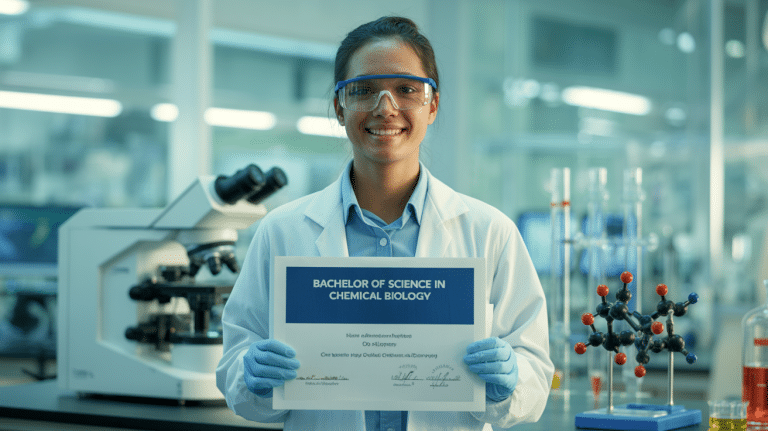
Bachelor of Science in Chemical Biology: Program Overview
What is Chemical Biology?
Chemical Biology focuses on understanding biological processes through a chemical lens, combining principles from both disciplines to innovate and solve real-world problems. This program entails rigorous study in areas such as organic chemistry, molecular biology, and biochemistry, allowing students to develop a comprehensive understanding of how chemical processes influence biological activity. As an ever-evolving field, Chemical Biology opens numerous avenues for interdisciplinary research and application, making it a pertinent choice for future academic pursuits and career paths.
What Do You Study in Chemical Biology?
Students pursuing a BS in Chemical Biology will engage in a variety of foundational and specialized courses designed to cultivate a deep understanding of both chemistry and biology.
Core Curriculum
- Introductory Courses
- Foundational studies in Mathematics and Physics, which lay the groundwork for more complex subjects.
- Chemistry Curriculum
- General Chemistry: Basic concepts and principles.
- Organic Chemistry: Focus on the structure, properties, reactions, and synthesis of organic compounds; crucial for understanding biological molecules.
- Inorganic Chemistry: Study of inorganic substances and their reactions.
- Physical Chemistry: Investigating the physical phenomena underlying chemical processes, including thermodynamics and kinetics.
- Biology Curriculum
- General Biology: Introduction to the principles of living organisms.
- Cell Biology: Understanding cellular structures and functions.
- Molecular Biology: Exploration of the molecular mechanisms that drive cellular processes.
- Microbiology: Study of microorganisms and their interactions with larger biological systems.
- Immunology: Investigates the immune system and its response to pathogens.
- Physiology: Understanding how organs and systems function.
- Specialized Courses
- Biochemistry: The chemistry of biological processes, including metabolic pathways.
- Bioinorganic Chemistry: How inorganic elements interact within biological systems.
- Green Chemistry: Strategies for designing chemical processes that reduce hazardous substances and wastes.
Labs, Workshops, and Internships
Participants in the Chemical Biology program engage in various hands-on laboratory experiences, which are pivotal for applying theoretical concepts learned in the classroom. Many institutions require students to complete research projects or capstone experiences, providing critical exposure to real-world scientific inquiry and methodologies. Internships often are encouraged to further enhance practical understanding and skill development, which helps in transitioning to the professional world.
Careers After Chemical Biology
Graduates of the Bachelor of Science in Chemical Biology are well-prepared to enter various sectors, primarily focusing on research and development. Below are some potential job titles and pathways:
- Professional Chemist: Conduct laboratory research or work in industry.
- Biological Technician: Assist biological and medical scientists in laboratories.
- Pharmaceutical Sales Representative: Work in the sales and distribution of pharmaceutical products to healthcare professionals.
- Biotechnology Research Scientist: Focus on developing new drugs, therapies, or agricultural products.
- Environmental Scientist: Work in environmental protection and policy-making.
- Quality Control Analyst: Ensure that products meet regulatory standards in manufacturing.
- Regulatory Affairs Specialist: Navigate the legal aspects required for laboratory products.
Average Salaries Globally
The salary for graduates in Chemical Biology can vary widely depending on the region, industry, and specific roles pursued. Below, we outline average salaries in USD and EUR:
- Professional Chemist:
- USD: $70,000 – $100,000
- EUR: €65,000 – €95,000
- Biological Technician:
- USD: $40,000 – $60,000
- EUR: €38,000 – €55,000
- Biotechnology Research Scientist:
- USD: $75,000 – $110,000
- EUR: €70,000 – €100,000
- Quality Control Analyst:
- USD: $50,000 – $75,000
- EUR: €48,000 – €70,000
Is Chemical Biology Hard to Study?
Studying Chemical Biology can be challenging, but with a passion for science and dedicated study habits, students can excel. The rigorous and interdisciplinary nature of the program requires a strong foundation in the sciences and mathematics.
Common Challenges
- Complex Concepts: The curriculum includes intricate theories and applications that require deep understanding.
- Laboratory Work: Hands-on lab work can be demanding, requiring attention to detail and safety procedures.
- Time Management: Balancing coursework, lab assignments, and potential research projects necessitates effective time management skills.
Required Skills
- Analytical Skills: Ability to analyze data and interpret results.
- Problem Solving: Critical and innovative thinking to tackle complex scientific questions.
- Collaborative Skills: Working effectively with peers and faculty is key during lab work and group projects.
Preparation Tips
- Develop a solid understanding of high school chemistry and biology before entering the program.
- Engage in extracurricular activities that enhance scientific understanding, such as science clubs or internships.
- Focus on building effective study habits and seek help when concepts are challenging.
Top Certifications After Chemical Biology Graduation
Upon graduation, students may pursue additional certifications or licenses to enhance their qualifications. Key certifications can include:
- Certified Chemical Technician (CCT): Offered by professional chemical societies.
- Regulatory Affairs Certification (RAC): For those looking to work in regulatory affairs within pharmaceuticals or biotechnology.
- Clinical Research Coordinator Certification (CRCC): For graduates interested in managing clinical trials.
Where to Study Chemical Biology
Several esteemed institutions offer Bachelor’s degrees in Chemical Biology or closely related fields. Here are some notable universities where students can pursue this program:
Read More
For more information about studying Chemical Biology and exploring related programs, check out these options from the universities mentioned above to find the right fit for your academic goals.
Take the Next Step with Study in Turkiye
Explore further opportunities to advance your education and career. Begin your journey today!

