
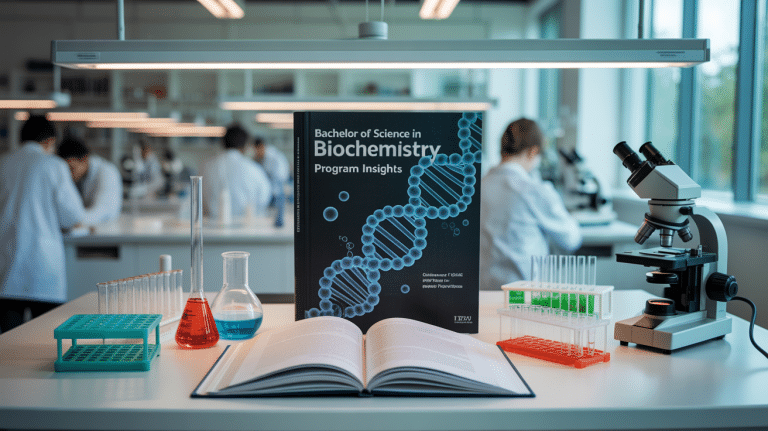
Bachelor of Science in Biochemistry: Program Insights
- What is the Bachelor of Science in Biochemistry?
- What Do You Study in the Bachelor of Science in Biochemistry?
- Careers After the Bachelor of Science in Biochemistry
- Is the Bachelor of Science in Biochemistry Hard to Study?
- Top Certifications After Graduation
- Where to Study the Bachelor of Science in Biochemistry
What is the Bachelor of Science in Biochemistry?
The BS in Biochemistry merges principles from both biology and chemistry to study the molecular foundations of life. Students gain insight into metabolic pathways, molecular genetics, and biochemical techniques used to analyze biological materials. The program is structured to ensure a comprehensive understanding of both theoretical concepts and practical applications, allowing students to explore various scientific domains such as pharmaceuticals, environmental science, and biotechnology.
What Do You Study in the Bachelor of Science in Biochemistry?
Core Coursework
The core curriculum typically includes:
- General Chemistry: An introduction to the principles of chemistry, including atomic structure, stoichiometry, and basic reaction mechanisms.
- Organic Chemistry: A detailed study of the structure, properties, and reactions of organic molecules and functional groups.
- Biochemistry: Focuses on the chemical processes in biological systems, covering topics like enzyme function, metabolic pathways, and molecular signalling.
- Biology: Provides a foundational understanding of cellular biology, genetics, and physiology.
Elective Courses
Students often have the flexibility to choose elective courses that align with their interests and career goals, typically including:
- Molecular Biology: Understanding the molecular mechanisms of gene expression and regulation.
- Analytical Biochemistry: Techniques used to analyze biomolecules, including chromatography and mass spectrometry.
- Immunology: The study of the immune system and its biochemical basis.
- Plant Biochemistry: Exploring biochemical processes in plants, including photosynthesis and secondary metabolism.
This diversity in course offerings allows students to tailor their education to specific interests within the biochemistry field.
Laboratory Skills and Research
A significant focus of the program will be on developing laboratory skills:
- Laboratory Emphasis: Courses often include laboratory components where students engage in hands-on experiments, learning to handle sophisticated lab equipment and apply proper safety protocols.
- Research Projects: Many institutions encourage undergraduate research, allowing students to work on independent or faculty-led projects, fostering innovation and extended learning experiences.
Internships and Industry Experience
Internships can be an integral part of the biochemistry curriculum, enabling students to gain practical experience in real-world settings. They may have the opportunity to work in:
- Pharmaceutical companies
- Biotech firms
- Research institutions
- Healthcare facilities
Careers After the Bachelor of Science in Biochemistry
Graduating with a BS in Biochemistry opens a multitude of career paths, including:
- Biochemist: Working in laboratories to conduct research and develop products (Average Salary: $62,000 – $80,000 USD / €54,000 – €68,000 EUR).
- Clinical Research Coordinator: Overseeing clinical studies and trials to ensure compliance and data management (Average Salary: $65,000 – $82,000 USD / €56,000 – €70,000 EUR).
- Quality Control Analyst: Ensuring that products meet required standards before they go to market (Average Salary: $55,000 – $75,000 USD / €48,000 – €65,000 EUR).
- Forensic Scientist: Analyzing biological samples in criminal investigations (Average Salary: $60,000 – $78,000 USD / €52,000 – €67,000 EUR).
- Pharmaceutical Sales Representative: Marketing and selling biochemistry-related products (Average Salary: $70,000 – $90,000 USD / €60,000 – €75,000 EUR).
- Healthcare Professional: Entering medical school to pursue an MD or other health professional degrees.
The versatility of a BS in Biochemistry also allows graduates to pursue advanced degrees in biochemistry, molecular biology, or fields such as pharmacology and environmental science, further enhancing their career prospects.
Is the Bachelor of Science in Biochemistry Hard to Study?
The BS in Biochemistry is a challenging yet rewarding program that requires strong analytical skills, a solid foundation in mathematics, and a passion for science.
Common Challenges Include:
- Complex Concepts: The integration of chemistry and biology at a molecular level can be conceptually demanding.
- Laboratory Work: While rewarding, the lab component requires precision, attention to detail, and time management.
- Research Projects: Conducting independent research can be stressful due to the need for critical thinking and problem-solving.
Required Skills:
- Analytical Thinking: Ability to analyze and interpret complex data.
- Scientific Literacy: Understanding scientific literature and methodologies.
- Technical Skills: Proficiency in lab techniques and equipment.
Preparation Tips:
- Strong Foundation: Review basic chemistry and biology principles before starting the program.
- Engagement: Actively participate in laboratory work and discussions to enhance understanding.
- Time Management: Develop a schedule to balance coursework, laboratory commitments, and study time.
Top Certifications After Bachelor of Science in Biochemistry Graduation
Upon completing their degree, graduates may pursue various certifications and licensure to enhance their credentials, including:
- Certified Biochemist (CBC): A certification demonstrating proficiency in biochemistry.
- Clinical Laboratory Improvement Amendments (CLIA) Certification: Required for laboratory professionals.
- Board of Certification (BOC): Available for various laboratory specialties, which can enhance employability.
Where to Study the Bachelor of Science in Biochemistry
For those considering the BS in Biochemistry, several prestigious universities offer exceptional programs:
These institutions provide strong academic programs, state-of-the-art laboratories, and opportunities for research and internships, setting a solid foundation for a successful career in biochemistry.
Take the Next Step with Study in Turkiye
Explore further opportunities to study biochemistry and connect with top universities in Turkiye.

