
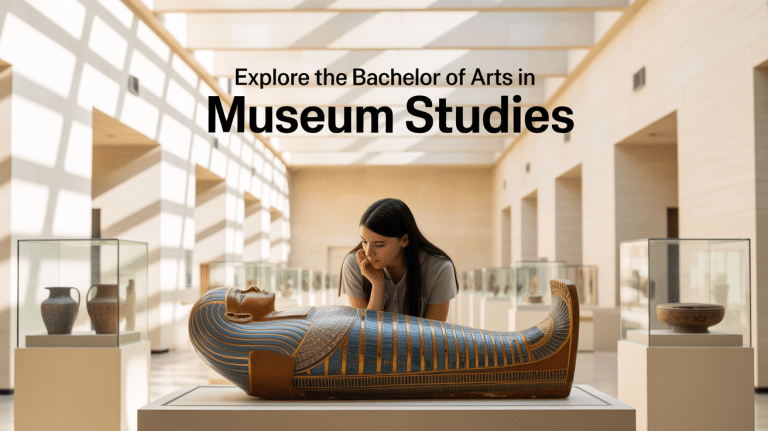
Bachelor of Arts in Museum Studies
Overview
The Bachelor of Arts (BA) in Museum Studies is an undergraduate program meticulously crafted to cultivate a deep understanding of museum practices among students who aspire to work in cultural heritage sectors. This program combines theoretical foundations with practical experiences, preparing graduates for dynamic roles within museums and related organizations. It’s designed for individuals passionate about arts, culture, and education, allowing them to engage in the preservation and interpretation of historical artifacts and cultural narratives.
What is Museum Studies?
Museum Studies is an interdisciplinary field that encompasses the study of artistic, historical, and cultural artifacts, as well as the operations and management of museums. It examines the role of museums as institutions that collect, preserve, and exhibit artifacts while also serving as sites for education and community engagement. This program not only prepares students to work in museums but also teaches them the underlying philosophies and ethics of curating and interpreting heritage.
Graduates from Museum Studies programs are equipped with critical thinking skills and practical knowledge about managing exhibitions, educating audiences, and administrating museum operations. They explore the historical context of museums along with contemporary challenges, including technological advancements and shifting societal expectations.
What Do You Study in Museum Studies?
Core Curriculum and Focus Areas
The BA in Museum Studies typically requires students to complete approximately 39 to 40 credit hours dedicated to major coursework. The curriculum features a blend of theoretical coursework and hands-on experiences. Key academic components include:
- Introduction to Museum Operations: Understanding how museums function, their historical significance, and their societal roles.
- Curating and Managing Collections: Training in art handling, collection care, and preparation for exhibitions.
- Museum Education: Developing educational programs and interpreting art for diverse audiences.
- Museum Management: Learning about administration, budgeting, fundraising, and addressing legal/ethical issues in cultural settings.
- Event Planning and Organizational Tasks: Tasks vital for running museum operations smoothly.
- Project Management: Emphasis on executing and growing museum exhibitions or public outreach programs.
- Digital Tools and Best Practices: Exposure to contemporary digital resources and practices in museum work.
- Art Historical Methodology and Research Strategies: Instructing students in the research methodologies used in art history.
Additional supporting courses may encompass subjects like history, economics, and advanced art history to ensure students develop a multidisciplinary foundation that enriches their understanding of museum contexts.
Applied Experience
An essential component of the Museum Studies program is the emphasis on hands-on training. Students engage in direct museum tasks, digital curation, and routine collection management. The program often includes opportunities to work alongside practicing professionals in the field, such as curators and museum educators, thereby providing immediate relevance to theoretical knowledge.
Careers After Museum Studies
Graduates of the BA in Museum Studies are prepared to take on various roles in diverse institutions, including:
- Art Museums
- History Museums
- Children’s Museums
- Commercial Art Galleries
- Public Art Organizations
- Nonprofit Cultural Organizations
Typical Job Titles Include:
- Curatorial Assistant
- Collections Manager
- Museum Educator
- Registrar
- Preparator
- Archives Technician
- Exhibition Designer
Each of these roles contributes uniquely to the functioning of museums and cultural organizations.
Salary Expectations
The earnings for these roles can vary widely depending on the region, type of institution, and level of experience. Here are typical salary ranges:
- Curatorial Assistant: $30,000 – $45,000 (USD) / €25,000 – €40,000
- Collections Manager: $40,000 – $60,000 (USD) / €35,000 – €50,000
- Museum Educator: $35,000 – $55,000 (USD) / €30,000 – €45,000
- Registrar: $40,000 – $70,000 (USD) / €35,000 – €60,000
- Exhibition Designer: $45,000 – $75,000 (USD) / €40,000 – €65,000
These figures illustrate a robust upward mobility potential within museum careers, especially for those with further qualifications or specialized skills.
Is Museum Studies Hard to Study?
The difficulty of studying Museum Studies often depends on individual interests and aptitudes. However, students can anticipate several challenges:
- Critical Analysis: Interpreting historical contexts and contemporary issues in the museum sector requires strong analytical skills.
- Hands-On Work: The practical components of the course might be demanding, especially when involving heavy artifacts or complex digital tools.
- Interdisciplinary Nature: The program integrates knowledge from various fields, necessitating adaptability and willingness to engage with diverse academic perspectives.
Preparation Tips:
- Develop strong research and writing skills to tackle theoretical aspects effectively.
- Seek opportunities for hands-on experiences in local museums or cultural organizations to familiarize yourself with operational practices.
- Engage with art and cultural history outside the classroom to cultivate a broad appreciation for the subject matter.
Top Certifications After Museum Studies Graduation
While a BA in Museum Studies provides foundational knowledge and skills, certain certifications can enhance career prospects and promote professional development:
- Certified Museum Professional (CMP): Offered by the American Association of Museums (AAM), this certification demonstrates proficiency in museum operations.
- Exhibition Design Certificate: Available from various professional organizations, focusing on design best practices in exhibition curation.
- Digital Curation Certificates: These credentials often cover topics related to using digital tools and technology in museum contexts, enhancing digital proficiency.
These certifications can bolster a graduate’s résumé and open up more specialized career opportunities in the museum and cultural sectors.
Where to Study Museum Studies
Students interested in pursuing a Bachelor of Arts in Museum Studies have several prestigious institutions to consider. Top private universities offering this program include:
Universities:
- Bahcesehir University (Istanbul) – Learn more
- Medipol University (Ankara) – Learn more
- Istinye University (Istanbul) – Learn more
- Ozyegin University (Istanbul) – Learn more
These institutions not only provide quality education in Museum Studies but also offer various resources for student engagement in real-world museum scenarios.
Take the Next Step with Study in Turkiye
For personalized assistance in finding the right academic program for you, don’t hesitate to reach out to SIT Search. We’re here to help you embark on your educational journey effectively.

