
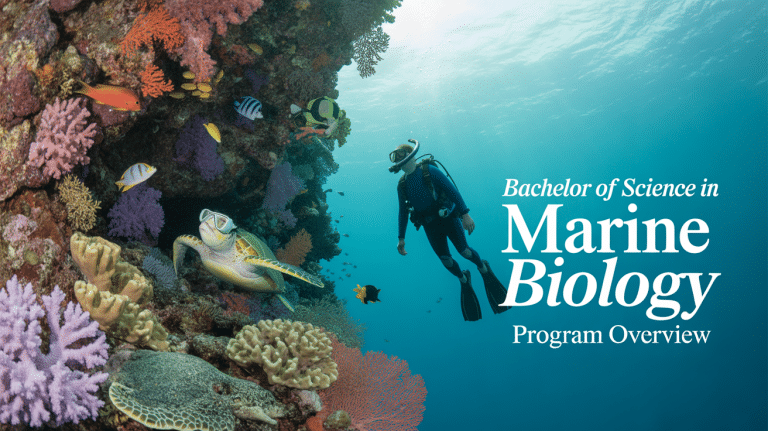
Bachelor of Science in Marine Biology: Program Overview
Quick Navigation
- What is the Bachelor of Science in Marine Biology?
- What Do You Study in Bachelor of Science in Marine Biology?
- Careers After Bachelor of Science in Marine Biology
- Is Bachelor of Science in Marine Biology Hard to Study?
- Top Certifications After Bachelor of Science in Marine Biology Graduation
- Where to Study Bachelor of Science in Marine Biology
- Conclusion
What is the Bachelor of Science in Marine Biology?
The Bachelor of Science in Marine Biology is a comprehensive academic program that emphasizes the scientific study of marine life and ocean ecosystems. Students enrolled in this program explore the diversity of marine organisms, their behaviors, physiology, genetics, and conservation strategies.
By integrating classroom learning with field-based experiences, students gain a thorough understanding of the ecological significance of oceans and strategies for protecting their health and sustainability.
What Do You Study in Bachelor of Science in Marine Biology?
The curriculum for a Bachelor of Science in Marine Biology typically combines foundational courses in the sciences with specialized marine biology subjects. Students engage in both theoretical learning and practical experiences. Here’s an overview of what students can expect:
Core Subjects
- Introduction to Marine Biology: Overview of marine ecosystems, marine organism diversity, and ecological roles of marine species.
- Marine Ecology: Study of interactions between marine organisms and their environments, including population dynamics and community structures.
- Biological Oceanography: Exploration of physical, chemical, and geological factors affecting marine organisms and ecosystems.
- Marine Physiology: Examination of how marine organisms function and adapt to their environments, focusing on respiratory, reproductive, and nutritional processes.
- Conservation Biology: Discussions on biodiversity loss, conservation methods, and human impacts on marine ecosystems.
Elective Courses
Students often have the flexibility to choose elective courses that allow them to delve deeper into specific areas of interest. These might include:
- Marine Mammalogy
- Coral Reef Ecology
- Fisheries Biology
- Aquaculture
- Environmental Policy and Management
- Marine Policy and Law
Labs, Workshops, and Internships
Practical experience is a vital component of the curriculum. Most programs involve:
- Laboratory Work: Hands-on laboratory experiments to study marine organisms and ecosystems.
- Field Trips: Visits to marine environments and fieldwork to apply knowledge in natural settings.
- Internships: Opportunities with marine research organizations, conservation groups, or governmental agencies.
Careers After Bachelor of Science in Marine Biology
Graduates can pursue various career pathways within the marine science arena, with employment across different sectors, including academia, government, and private industry.
Potential Job Titles
- Marine Biologist
- Environmental Consultant
- Conservation Scientist
- Marine Policy Analyst
- Aquaculture Specialist
- Research Scientist
- Oceanographer
- Wildlife Biologist
Sample Industries and Sectors
- Government Agencies: Conducting research or managing marine resources.
- Non-profit Organizations: Working on conservation initiatives and environmental advocacy.
- Academia: Seeking teaching and research positions.
- Private Sector: Engaging in consulting, biotechnology, or pharmaceuticals.
Average Salaries
| Job Title | Average Salary (USD) | Average Salary (EUR) |
|---|---|---|
| Marine Biologist | $55,000 – $85,000 | €50,000 – €75,000 |
| Environmental Consultant | $60,000 – $90,000 | €55,000 – €80,000 |
| Conservation Scientist | $50,000 – $80,000 | €45,000 – €72,000 |
| Marine Policy Analyst | $65,000 – $95,000 | €60,000 – €82,000 |
| Research Scientist | $70,000 – $100,000 | €65,000 – €90,000 |
Is Bachelor of Science in Marine Biology Hard to Study?
Pursuing a Bachelor of Science in Marine Biology can be both rewarding and challenging, requiring strong foundational knowledge in science and a dedication to intensive study.
Common Challenges
- Complex Scientific Concepts: Mastering concepts from various scientific fields is essential.
- Fieldwork Conditions: Research can involve challenging environmental conditions.
- High Academic Standards: Students must maintain rigorous academic standing.
Required Skills
- Analytical Thinking: Required to analyze complex data effectively.
- Attention to Detail: Precision in research and observations is crucial.
- Team Collaboration: Good communication skills are necessary for teamwork in fieldwork.
Preparation Tips
- Solidify Science Foundations: Take preparatory courses in biology, chemistry, and mathematics.
- Engage in Marine-Related Activities: Volunteer or intern in marine conservation programs.
- Stay Curious and Motivated: Maintain a passion for marine life and research.
Top Certifications After Bachelor of Science in Marine Biology Graduation
Graduates may pursue various certifications or licenses to enhance their employability:
- Diving Certifications: Such as PADI Open Water Diver or Advanced Diver.
- Scientific Diver Certifications: Training in underwater research techniques.
- U.S. Coast Guard Licenses: For marine transportation or engineering fields.
- Certified Marine Scientist (CMS): Enhances credibility in marine science professions.
Where to Study Bachelor of Science in Marine Biology
Students interested in pursuing a Bachelor of Science in Marine Biology can consider the following top private universities in Turkiye:
Conclusion
The Bachelor of Science in Marine Biology offers students a robust education that blends scientific theory with real-world application. Through a comprehensive curriculum, valuable hands-on experiences, and access to experienced faculty, graduates are equipped to make significant contributions to marine science and conservation. Students are encouraged to reach out to Study in Turkiye for personalized help in navigating their academic paths and finding suitable programs that meet their career aspirations.
Take the Next Step with Study in Turkiye
Explore further to find the right program and start your journey in Marine Biology today!

