
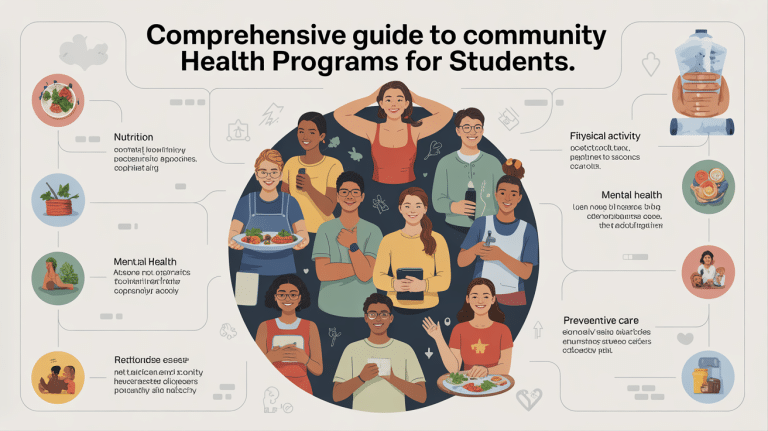
Understanding Community Health Programs: A Comprehensive Guide for Students
What is a Community Health Program?
Community health programs are designed to train individuals in assessing and addressing the health requirements of communities. They focus on promoting health, preventing disease, and reducing health disparities. These programs emphasize practical training, leadership, advocacy, and collaboration across various sectors, preparing students to engage actively in public health initiatives.
What Do You Study in a Community Health Program?
Community health programs typically combine a solid foundation of public health coursework with specialized content in community health. The structure usually comprises core subjects, elective courses, and practical experiences.
Core Subjects
-
Needs Assessment and Program Planning
Students learn techniques for assessing population health needs, including data collection and analysis, allowing them to design effective health promotion interventions.
-
Research and Evaluation Methods
Key courses in biostatistics, epidemiology, and research methodologies teach students how to analyze data and measure the effectiveness of community health programs.
-
Health Equity and Social Determinants
This coursework covers the social factors impacting health outcomes, equipping students with the knowledge to address health disparities effectively.
-
Leadership, Advocacy, and Policy
Students develop skills necessary for leading public health initiatives, advocating for health policies, and engaging communities effectively.
Elective Courses
Many programs offer electives to tailor the educational experience. Common subjects may include:
- Global Health Issues
- Environmental Health
- Nutrition and Health Promotion
- Mental Health in Communities
Labs, Workshops, and Internships
Community health programs usually include hands-on experiences through internships, practicums, or collaborative projects with community organizations. These practical placements allow students to apply their skills in real-world settings, working directly to solve community health problems.
Sample Courses
Students might encounter courses such as:
- Elements of Epidemiological Research
- Principles of Public Health Statistics
- Program Planning, Research, and Evaluation in Community Health Sciences
- Community-Based Participatory Research
- Quality Improvement and Leadership
Careers After Community Health Program
Graduates of community health programs can pursue a variety of career options across public, private, academic, and non-profit sectors. The versatility of this degree opens doors to numerous roles that play a critical part in promoting public health.
Job Titles
- Community Health Educator
- Health Program Planner/Manager
- Public Health Researcher
- Patient Education Specialist
- Consumer Health Advocate
- Community Clinic Coordinator
- Policy Analyst or Advocate
- Health Communication Specialist
Average Salaries
While salaries can vary depending on experience, location, and specific roles, here are some average global salary ranges:
- Community Health Educator: $40,000 – $70,000 (approximately €34,000 – €59,000)
- Health Program Manager: $60,000 – $90,000 (approximately €51,000 – €76,000)
- Public Health Researcher: $45,000 – $80,000 (approximately €38,000 – €68,000)
- Policy Analyst: $50,000 – $85,000 (approximately €43,000 – €73,000)
Is Community Health Hard to Study?
Like any advanced program, community health studies come with their share of difficulties. Students may face challenges due to the rigorous nature of the material, the need for practical engagement, and the breadth of public health knowledge required.
Common Challenges
- Complex Subject Matter: Topics can range widely from epidemiology to health policy, requiring a robust understanding of multifaceted issues.
- Fieldwork Demands: Balancing coursework with field placements can be challenging but is critical for a comprehensive educational experience.
Required Skills and Preparation Tips
Students should focus on developing skills in:
- Analytical thinking to interpret data effectively.
- Strong communication for engaging with various stakeholders.
- Leadership abilities for managing diverse teams and projects.
Preparation tips include:
- Engaging in volunteer opportunities in community health settings to gain real-world experience.
- Building a foundation in statistics and research methodologies through preliminary courses.
- Networking with professionals in the field to gain insights and mentorship.
Top Certifications After Community Health Program Graduation
Upon completing a community health program, certifications can bolster a graduate’s qualifications, making them more competitive in the job market. Key certifications to consider include:
- Certified Health Education Specialist (CHES): This certification emphasizes the knowledge, skills, and abilities necessary for health educators.
- Certified in Public Health (CPH): For those who want to focus more broadly on public health issues, this certification demonstrates a commitment to the field.
- Global Health Certification: An alternative for those pursuing international health contexts.
Depending on the country, additional certification requirements may be necessary for specific roles, particularly in clinical or health policy positions.
Where to Study Community Health Programs
Students interested in pursuing a degree in community health should consider the following institutions known for their robust programs:
Conclusion
Community health programs present an invaluable opportunity for students aiming to effect positive change in public health. Through rigorous coursework, practical experiences, and diverse career opportunities, graduates are well-equipped to address the health needs of various populations worldwide. If you’re considering this exciting field, reach out to SIT Search for personalized assistance with your academic journey. Your future in community health starts here!
Take the Next Step with Study in Turkiye
Explore further opportunities in community health and take the first step towards a rewarding career. Start your journey with us today!

