
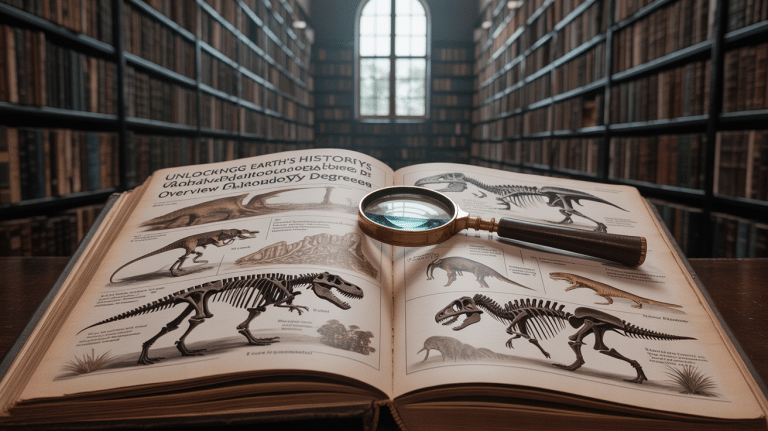
Overview of Paleontology Degrees
What is Paleontology?
Paleontology is the scientific study of the history of life on Earth using fossils. This discipline encompasses various aspects of biology and geology to understand how ancient organisms lived, evolved, and interacted with their environments. The program covers a range of topics including fossil classification, ancient ecosystems, evolutionary biology, and geologic time scales.
Degrees in paleontology can vary from undergraduate certificates to advanced graduate degrees. Students typically study the biology of extinct organisms, the geological contexts in which they lived, and the methodologies used to analyze and interpret fossil evidence.
What Do You Study in Paleontology?
Students enrolled in paleontology programs will encounter a diverse array of subjects that provide both theoretical foundations and practical skills. The curriculum is designed to equip graduates with well-rounded knowledge of biological and geological principles essential for a career in this field.
Core Subjects
- Introduction to Paleontology: Overview of paleontological methods and significance; History of the discipline and major discoveries.
- Geology and Stratigraphy: Study of geological formations and rock layers; Understanding sedimentation processes and plate tectonics.
- Evolution and Taxonomy: Principles of evolution, natural selection, and speciation; Classification of extinct organisms.
- Fossil Identification and Interpretation: Techniques for identifying fossils from various taxa; Analytical methods to interpret fossil records.
- Paleoecology: Study of ancient ecosystems and environmental changes; Examination of extinction events and their impacts on biodiversity.
- Field Methods in Paleontology: Skills required for conducting field research; Techniques for fossil excavation and documentation.
Elective Courses
Paleontology programs also offer elective courses that allow students to specialize in areas of personal interest, including:
- Invertebrate Paleontology: Focus on non-vertebrate organisms and their fossil records.
- Vertebrate Paleontology: Study of fossilized remains of vertebrate animals.
- Paleoethology: Examination of ancient behaviors through fossil evidence.
- Geochemistry: Understanding the chemical aspects of rock and fossil formation.
Laboratories, Workshops, and Internships
Many institutions incorporate hands-on learning experiences including:
- Laboratory Work: Analyzing fossils using microscopy and other scientific methods.
- Field Projects: Participating in fossil collection expeditions and geological surveys.
- Internships: Gaining practical experience in museums, research centers, or environmental consulting firms.
Careers After Paleontology
Graduates from paleontology programs can pursue a variety of career paths in academia, research, environmental consulting, and public education. The diverse skill set acquired during their studies prepares them for various roles in multiple sectors.
Potential Job Titles
- Academic Researcher / Professor
- Museum Curator
- Field Paleontologist
- Environmental Consultant
- Geoscience Educator
- Science Communicator
Industries and Sectors
- Education (Higher education institutions)
- Museums and Cultural Institutions
- Environmental Consulting Firms
- Government Research Agencies
- Non-profit Organizations focused on Science Communication
Salary Ranges
The salary for paleontology graduates can vary significantly by job title and geographic location. As of recent data, the average salaries are as follows:
- Academic Researcher: $60,000 – $90,000 (USD) | €50,000 – €75,000 (EUR)
- Museum Curator: $40,000 – $70,000 (USD) | €35,000 – €65,000 (EUR)
- Field Paleontologist: $45,000 – $75,000 (USD) | €40,000 – €60,000 (EUR)
- Environmental Consultant: $50,000 – $80,000 (USD) | €45,000 – €70,000 (EUR)
Is Paleontology Hard to Study?
Studying paleontology can be challenging due to the interdisciplinary nature of the field, which combines principles from various scientific disciplines. Below are common challenges along with recommended skills and preparation tips:
Common Challenges
- Complex Concepts: Mastering the diverse biological and geological concepts can be demanding.
- Field Work: Conducting field research can involve physical labor, unpredictable weather, and logistical challenges.
- Data Analysis: Interpreting geological and paleontological data requires strong analytical skills.
Required Skills
- Critical Thinking: Ability to evaluate complex information and draw conclusions.
- Attention to Detail: Essential for accurately documenting findings and analyzing fossil records.
- Communication Skills: Important for effectively sharing research findings and participating in public outreach.
Preparation Tips
- Engage with introductory geology and biology courses prior to enrolling in a paleontology program.
- Participate in summer field camps or internships to gain practical experience.
- Join paleontological societies to network with professionals and access additional resources.
Top Certifications After Paleontology Graduation
While a degree in paleontology provides foundational knowledge, certain certifications may enhance employability and career advancement. Depending on career goals, students may need the following certifications or licensures:
Essential Certifications
- Professional Geologist (PG): Licensure that may be required for consulting roles, depending on local regulations.
- Field Research Certification: For those pursuing fieldwork, obtaining certifications in safety and research methodologies is beneficial.
- Teaching Certification: For those interested in K-12 education, this is often mandatory.
Where to Study Paleontology
Several universities offer robust programs in paleontology or related fields. Here’s a selection of institutions that provide comprehensive education for aspiring paleontologists:
Take the Next Step with Study in Turkiye
Whether you are seeking to understand ancient life forms or embark on a fulfilling career in this fascinating field, studying paleontology in Turkiye presents numerous opportunities. Explore programs tailored to your interests and aspirations.

