
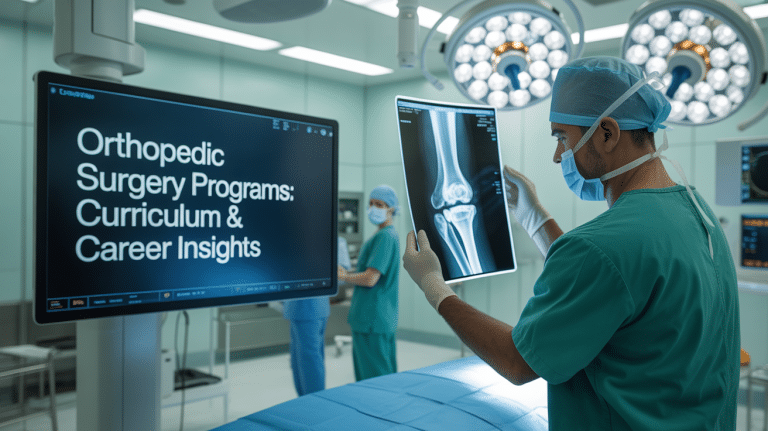
Orthopedic Surgery Programs: Curriculum & Career Opportunities
Overview of Orthopedic Surgery Programs
Orthopedic surgery programs are specialized residency tracks designed for medical graduates aspiring to become orthopedic surgeons. This rigorous training typically spans five years and combines theoretical instruction, hands-on clinical practice, and opportunities for research. The primary objective is to equip residents with the skills necessary to diagnose, treat, and prevent various musculoskeletal disorders. The program suits medical professionals committed to improving patients’ quality of life through surgical and non-surgical interventions.
What is Orthopedic Surgery?
Orthopedic surgery is a branch of medicine focused on the diagnosis and treatment of conditions affecting the musculoskeletal system, which includes bones, joints, ligaments, tendons, and muscles. Orthopedic surgeons may address issues resulting from injuries, degenerative diseases, congenital conditions, infections, and tumors. This specialty requires a thorough understanding of the anatomy and biomechanics of the body, as well as mastery of surgical techniques and post-operative care.
What Do You Study in Orthopedic Surgery?
The curriculum of orthopedic surgery residency programs is structured to provide a comprehensive education encompassing various aspects of orthopedic care. Residents engage in a combination of didactic education, clinical rotations, and research opportunities.
Core Subjects and Elective Courses
- Anatomy and Physiology
- Detailed study of musculoskeletal anatomy.
- Understanding physiological processes related to movement.
- Pathophysiology
- Exploring the mechanisms of musculoskeletal diseases.
- Understanding the implications of injuries on soft tissues and bones.
- Radiology
- Learning imaging techniques like X-rays, MRIs, and CT scans.
- Interpreting image results to inform treatment plans.
- Surgical Techniques
- Mastering various surgical approaches, including minimally invasive techniques.
- Training in joint replacement, arthroscopy, fracture repair, and reconstructive surgeries.
- Pain Management
- Understanding pain management strategies for preoperative and postoperative care.
- Focusing on non-pharmacological interventions and rehabilitation protocols.
- Rehabilitation
- Studying recovery processes and physiotherapy modalities post-surgery.
- Learning to design personalized rehabilitation programs for patients.
Labs, Workshops, and Internships
- Clinical Rotations: Residents rotate through various subspecialties, including trauma surgery, sports medicine, pediatric orthopedics, and spine surgery. Each rotation provides hands-on experience in diagnosing and treating a wide range of conditions.
- Didactic Education and Conferences: Regular lectures and case discussions help residents stay updated on the latest research and advancements in orthopedic surgery. These often involve guest speakers and expert panels.
- Research Opportunities: Residents are encouraged to engage in research projects that may result in publications or presentations at national conferences, enhancing their understanding and contributing to the field.
Careers After Orthopedic Surgery
Becoming an orthopedic surgeon opens numerous career pathways within diverse settings. Below are possible job titles and sectors where graduates may find opportunities:
- Orthopedic Surgeon: Practicing in hospitals, clinics, or private settings.
- Orthopedic Consultant: Advising organizations or practices on best practices in orthopedics.
- Academic Clinician: Engaging in teaching and research at universities and affiliated hospitals.
- Sports Medicine Specialist: Focusing on injuries related to athletic activities.
- Pediatric Orthopedic Surgeon: Specializing in conditions affecting children.
Average Salaries
The earning potential for orthopedic surgery graduates can be lucrative, reflecting the specialization’s demand and the complexity of the work. Below are average global salary estimates:
- Orthopedic Surgeon (USA):
- Average: $500,000 – $600,000 USD
- Average: €450,000 – €540,000 EUR
- Orthopedic Surgeon (Europe):
- Average: €200,000 – €300,000 EUR (varies by country)
- Orthopedic Consultant (USA):
- Average: $400,000 USD
- Average: €360,000 EUR
- Pediatric Orthopedic Surgeon (USA):
- Average: $400,000 – $500,000 USD
- Average: €360,000 – €450,000 EUR
Top Certifications After Orthopedic Surgery Graduation
Upon completing an orthopedic surgery residency program, graduates must often pursue additional certifications to practice independently. Here are some essential credentials:
- Board Certification: Achieved through the American Board of Orthopaedic Surgery (ABOS) to validate expertise.
- Advanced Trauma Life Support (ATLS): Certification that provides essential skills for trauma care.
- Pediatric Advanced Life Support (PALS): Often required for those specializing in pediatric orthopedics.
- Advanced Orthopedic Surgery Certification (AOSC): Specializing in surgical techniques and innovations.
- Continuous Medical Education (CME) Credits: Maintaining licensure often necessitates ongoing education.
Where to Study Orthopedic Surgery
Selecting a respected institution for orthopedic surgery residency is crucial for achieving a successful career. Here are some universities that offer strong programs in Turkiye:
- Medipol University
Visit University - Istinye University
Visit University - Bahcesehir University
Visit University
Conclusion
In summary, orthopedic surgery residency programs provide an intensive and rewarding educational experience for physicians eager to specialize in this field. Understanding the curriculum, potential career paths, and required certifications can lay a solid foundation for your professional journey. For personalized help in exploring academic programs in orthopedic surgery or any other field, feel free to reach out to Study in Turkiye for tailored guidance.
Take the Next Step with Study in Turkiye
Ready to explore your options for studying orthopedic surgery in Turkiye? Discover your academic path today!

