
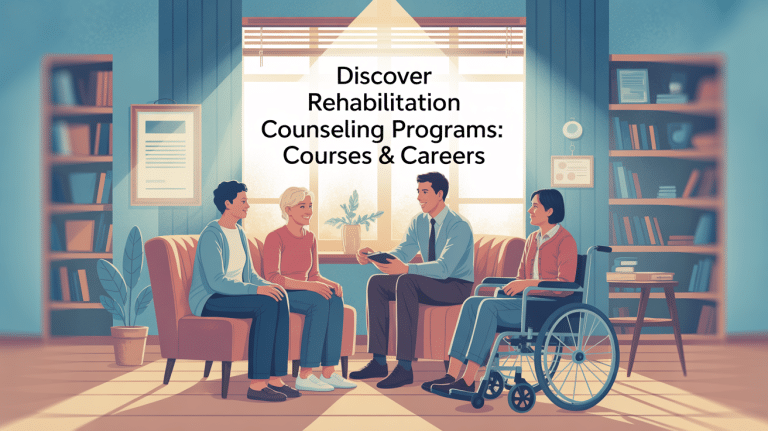
Rehabilitation Counseling Programs: Courses & Careers
What is Rehabilitation Counseling?
Rehabilitation counseling focuses on the holistic support of individuals with disabilities. Professionals in this field help clients to cope with, manage, and overcome challenges posed by their disabilities, enabling them to achieve their personal and professional goals. Rehabilitation counselors often work in various settings, including healthcare facilities, educational institutions, government agencies, and private practice.
The Master’s in Rehabilitation Counseling is typically a 60 credit hour, CACREP-accredited program designed to prepare graduates to work effectively with clients of all ages and disabilities. The curriculum emphasizes not only counseling skills but also specialized knowledge relevant to the rehabilitation process.
What Do You Study in Rehabilitation Counseling?
The curriculum in Rehabilitation Counseling programs is generally structured around the following core components:
Core Program Components
- Professional Studies/Counseling Foundations
- Rehabilitation Core/Content Studies
- Clinical Practice/Competencies
- Electives
Common Courses
Rehabilitation Counseling programs typically encompass a variety of foundational, core, and specialized courses. Here’s how these might look:
Foundational Courses:
- Introduction to Rehabilitation Counseling: Covers the fundamental principles and practices of rehabilitation counseling.
- Medical Aspects of Disability: Focuses on understanding various disabilities, their medical implications, and relevant rehabilitation processes.
- Psychopathology and Diagnosis: Provides insight into mental health issues that clients might face.
Core Counseling Courses:
- Counseling Theory and Process: Explores various counseling theories and their application in practice.
- Career Development: Discusses career counseling strategies tailored for individuals with disabilities.
- Counseling Skills: Offers practical skills training for effective counseling.
- Professional Issues, Ethics, and Advocacy in Counseling: Focuses on ethical considerations and advocacy roles.
- Group Procedures: Covers group counseling techniques essential for rehabilitation settings.
Specialized Rehabilitation Topics:
- Work and Disability: Examines the intersection of work and disability, emphasizing career reintegration strategies.
- Orientation to Rehabilitation Counseling: Reviews essential concepts and practices within the field.
- Case Management and Vocational Rehabilitation: Teaches practical skills for managing client cases and facilitating employment opportunities.
Additional Required Courses:
- Multicultural Approach to Counseling: Focuses on understanding cultural diversity in counseling practices.
- Substance Abuse Counseling: Prepares students to address issues related to substance abuse in rehabilitation settings.
- Life Span Development: Offers insights into the development stages individuals go through and their implications for counseling.
Clinical Experience Requirements
Clinical experiences are a critical component of Rehabilitation Counseling programs, ensuring that students can apply their classroom learning in real-world contexts:
- Practicum: Typically involves 100 hours of supervised counseling experience.
- Internship: Generally requires around 600 hours of supervised field experience, giving students the essential hands-on training necessary for their future careers.
Careers After Rehabilitation Counseling
Graduates of Rehabilitation Counseling programs are prepared for various career opportunities in multiple sectors, including healthcare, government, and nonprofit organizations. The skills they develop enable them to support clients in overcoming barriers to independence.
Possible Job Titles:
- Rehabilitation Counselor
- Vocational Rehabilitation Specialist
- Case Manager
- Clinical Rehabilitation Counselor
- Disability Services Coordinator
- Quality Assurance Specialist
- Mental Health Counselor
Industries and Sectors:
- Healthcare
- Education
- Social Services
- Government Agencies
- Non-Profit Organizations
Salary Insights
Salary ranges for rehabilitation counselors can vary based on location, experience, and the type of employer. However, typical salaries include:
- United States: $35,000 – $80,000 annually (approx. €30,000 – €68,000)
- Europe: €25,000 – €60,000 annually (approx. $29,000 – $70,000)
In the United States, the average salary for rehabilitation counselors is about $52,000 (approximately €47,000), according to the U.S. Bureau of Labor Statistics.
Is Rehabilitation Counseling Hard to Study?
Studying Rehabilitation Counseling can be demanding, as it requires both emotional resilience and a strong commitment to helping others. Here are some common challenges students may encounter:
- Emotional Fatigue: Engaging deeply with clients’ struggles can lead to emotional exhaustion. Students must develop self-care strategies.
- Complex Subject Matter: Understanding the intricate aspects of disabilities, mental health issues, and counseling techniques requires consistent dedication and study.
- Practical Experience: Navigating clinical settings can be intimidating without prior exposure. Students are encouraged to seek internships and volunteer opportunities to gain confidence.
Required Skills:
- Empathy and active listening
- Strong communication skills
- Problem-solving abilities
- Flexibility and adaptability
- Cultural sensitivity
Preparation Tips:
- Engage in volunteer work or internships early to gain relevant experience.
- Develop a support network for sharing experiences with peers.
- Focus on self-care to manage emotional stress.
Top Certifications After Rehabilitation Counseling Graduation
Graduates of Rehabilitation Counseling programs may pursue various certifications and licenses to enhance their employability and professional credibility. Some of the key certifications include:
- Certified Rehabilitation Counselor (CRC): This nationally recognized credential signifies that the individual has met rigorous training and examination standards in rehabilitation counseling.
- Licensed Professional Counselor (LPC): Required in many states, this license allows graduates to practice independently as mental health counselors.
- National Certified Counselor (NCC): This certification further demonstrates professional competence and commitment to ethical practice.
Consulting relevant local regulatory bodies or professional organizations is crucial for understanding specific requirements for certification and licensure in your jurisdiction.
Where to Study Rehabilitation Counseling
If you are considering pursuing a degree in Rehabilitation Counseling, several prestigious universities offer this program:
These institutions provide comprehensive training in Rehabilitation Counseling, ensuring you are well-prepared for a rewarding career.
Take the Next Step with Study in Turkiye
Enrolling in a Rehabilitation Counseling program equips students with vital skills to impact individuals with disabilities deeply. With a clear path to professional development and the demand for qualified counselors continuing to grow, this field presents numerous opportunities for those dedicated to making a difference.

