
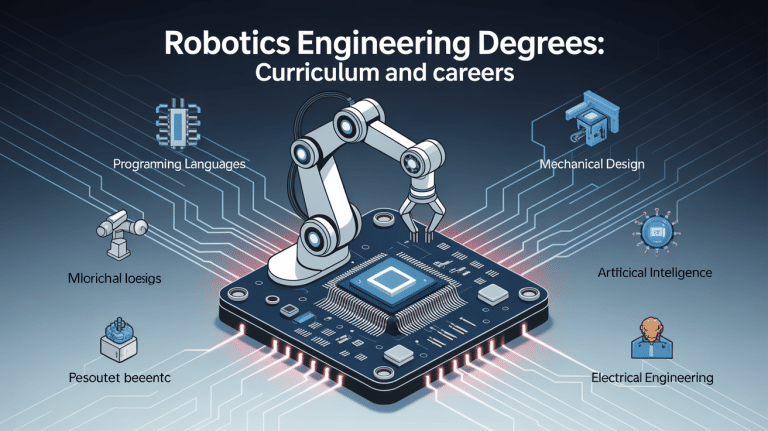
Robotics Engineering Degrees: Curriculum, Careers & Outlook
What is Robotics Engineering?
Robotics Engineering is a specialized branch of engineering that deals with the design, construction, operation, and application of robots. Robotics engineers are responsible for creating robots that can perform tasks autonomously or semi-autonomously. The field encompasses elements from various disciplines, allowing engineers to work on a wide range of applications – from industrial automation systems to surgical robots and even robots for space exploration.
Robotics Engineering programs typically culminate in a Bachelor of Science in Engineering (BSE) degree, focusing on providing students with both theoretical foundations and practical skills necessary for working with complex robotic systems. Students will encounter multidisciplinary concepts, integrating knowledge from mechanical design, programming, and electronics, to realize robotic applications effectively.
What Do You Study in Robotics Engineering?
Core Coursework
Robotics Engineering education generally involves a robust curriculum with core subjects that reflect the multidisciplinary nature of the field. Students can expect to take foundational courses in:
- Mathematics and Physics: Fundamental principles that inform engineering practice.
- Electrical and Computer Engineering: Covers circuit design, digital systems, and embedded systems crucial for robot functionalities.
- Mechanical Engineering: Focuses on mechanics, dynamics, and materials which are essential for building and operating robots.
- Systems Engineering: Emphasizes an integrated approach to engineering, focusing on the lifecycle of complex systems.
- Programming and Computer Science: Instruction on programming languages and software development, fundamental for programming robot behaviors.
Elective Courses
Alongside core courses, students may choose from a number of electives that allow them to specialize in different aspects of robotics:
- Automation Systems: Exploration of automated control systems utilized in various mechanical applications.
- Machine Learning: Introduction to algorithms that enable robots to make independent decisions.
- Artificial Intelligence: Covers the underlying principles allowing robots to mimic human-like cognition and problem-solving.
- Human-Robot Interaction: Focuses on interfaces and collaborations between humans and robots in shared environments.
Labs, Workshops, and Internships
Experiential learning forms a critical part of Robotics Engineering programs. Students engage in:
- Labs: Hands-on technical labs where students work with actual robotic systems and components, learning to troubleshoot, design, and program robots.
- Workshops: Practical sessions that encourage innovation where students can refine their skills on new technologies or methodologies.
- Internships: Opportunities to work in relevant industries, linking theoretical knowledge with real-world applications. Internships often provide exposure to industry-grade robotics projects, enhancing employability and providing essential experience.
Careers After Robotics Engineering
Graduates of Robotics Engineering can find employment across diverse sectors, capitalizing on their specialized skills. Career paths include:
Job Titles
- Robotics Engineer
- Automation Engineer
- Controls Engineer
- Mechatronics Engineer
- Research Scientist in Robotics
- Software Developer for Robotics
- Project Manager for Robotics Systems
- Applications Engineer
Industries and Sectors
Robotics Engineering graduates are employed in various industries, including:
- Manufacturing (automotive, electronics)
- Healthcare (medical robotics)
- Defense and Aerospace
- Automotive (self-driving vehicles)
- Education (robotics for learning platforms)
- Research and Development (innovative robotics solutions)
Average Salaries
The earnings potential for robotics engineers varies based on experience, location, and specific job roles. Due to the rising demand in this area, salaries are competitive:
- Global Average Salaries:
- In the United States: $85,000 – $105,000 (approx. €80,000 – €100,000)
- In Europe: €45,000 – €70,000
- In Turkiye: 300,000 TRY – 600,000 TRY
Salaries can significantly increase with experience, advanced degrees, and specialized skills.
Is Robotics Engineering Hard to Study?
Pursuing a degree in Robotics Engineering can be intellectually demanding, often requiring strong analytical, mathematical, and programming skills. Common challenges students may encounter include:
- Complexity of Topics: Robotics integrates multiple engineering disciplines, making it essential for students to grasp varied concepts and techniques.
- Programming Requirements: Proficiency in programming is crucial, and students often need to engage in self-study or workshops to master relevant programming languages (e.g., C++, Python).
- Project-Based Learning: While enriching, this can demand significant time and dedication, especially in lab courses.
Required Skills
Successful students in Robotics Engineering typically exhibit:
- Strong mathematical skills for modeling and analysis.
- An affinity for technology and hands-on technical work.
- Problem-solving capabilities that allow them to navigate complex challenges.
- Effective communication skills for collaborating with multidisciplinary teams.
Preparation Tips
- Strengthen Mathematical Foundations: Focus on calculus, linear algebra, and differential equations.
- Gain Programming Experience: Familiarize yourself with languages such as C, C++, and Python.
- Engage in Robotics Projects: Practical experiences through internships or personal projects can solidify understanding.
Top Certifications After Robotics Engineering Graduation
While a degree in Robotics Engineering provides foundational knowledge, obtaining certifications can enhance career prospects and demonstrate expertise. Essential certifications include:
- Certified Robotics Technician (CRT): Validates skills in electrical, mechanical, and programming aspects of robotics.
- Professional Engineer (PE) License: Optional, but can be beneficial for career advancement, particularly in an engineering firm.
- Robotics Process Automation (RPA) Certification: Focuses on automation procedures that are becoming increasingly important in software and business process industries.
- Cisco Certified Network Associate (CCNA): Beneficial for network engineering roles within robotics.
Where to Study Robotics Engineering
Several prestigious universities offer internationally recognized Robotics Engineering programs. Consider exploring the following institutions for your academic journey:
Top Universities:
- Medipol University – Offers innovative engineering courses and robust research facilities.
- Istinye University – Known for its cutting-edge technology and focus on practical engineering applications.
- Bahcesehir University – Provides diverse engineering programs with international collaboration opportunities.
- Ozyegin University – Features an advanced curriculum with emphasis on technology-driven education.
Consider visiting each university’s website for specific details on their Robotics Engineering programs, admission criteria, and unique offerings.
Take the Next Step with Study in Turkiye
Embark on your academic journey in Robotics Engineering and explore the multitude of opportunities available. Let Study in Turkiye be your trusted authority guiding international students!

