
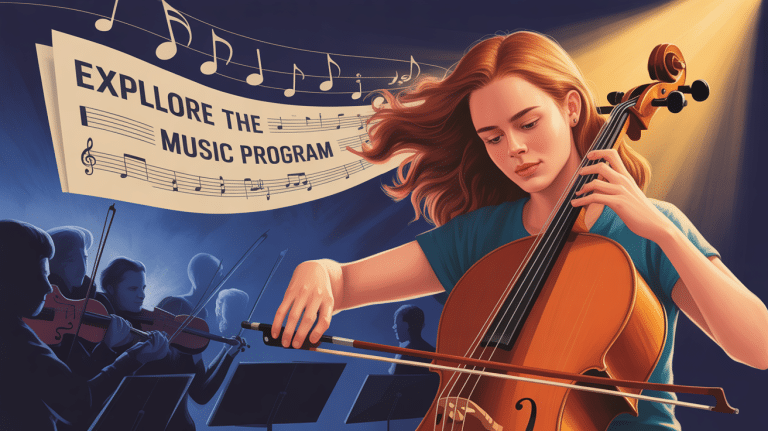
Music Program Overview
What is the Music Program?
The Music program provides a comprehensive educational experience that blends theoretical knowledge with practical musicianship. It typically culminates in a Bachelor of Arts or Bachelor of Music degree. Students engage in a balanced curriculum designed to develop their analytical skills, technical ability, and creative expression. Students will explore a range of genres and styles, equipping them to navigate the diverse landscape of the music profession.
What Do You Study in the Music Program?
The curriculum is structured around core subjects that every music student must master, alongside elective courses that allow for personal interests and specialization.
Core Subjects
- Music Theory and Analysis:
- Fundamental concepts of music theory, including scales, chords, and harmonic function.
- Analyzing music literature from different historical periods and styles.
- Music History and Cultural Contexts:
- Study of significant composers and styles across various cultures and historical contexts.
- Examination of how culture and society influence musical development.
- Applied Instrument or Voice (Technique and Repertoire):
- Individual instruction on chosen instruments or vocal technique, focusing on repertoire selection and performance techniques.
- Creative Practices (Composition, Improvisation):
- Opportunities to compose original works, improvise, and develop personal style.
- Ensemble Participation:
- Students engage in group performances, enhancing their collaborative skills and application of learned techniques in real-world settings.
Electives and Specializations
Students have the option to tailor their education through electives such as:
- World Music
- Music Technology
- Music Production
- Conducting
- Advanced Composition
Labs, Workshops, and Internships
Practical experience is crucial in the Music program. Here are some formats for hands-on learning:
- Workshops: Regular workshops offer intensive group experiences focusing on particular skills, such as improvisation or advanced instrumental techniques.
- Performance Opportunities: Students participate in music recitals and concerts, often collaborating with musicians from different disciplines.
- Internships: Students may also engage in internships with local music organizations, recording studios, or schools to gain professional experience.
Careers After the Music Program
Graduates of the Music program can pursue a variety of rewarding careers, supported by a skill set that includes performance, creative development, and analytical thinking. Some potential job titles include:
- Performer (soloist, ensemble musician, or accompanist)
- Composer or Arranger
- Music Educator (K-12 or higher education)
- Conductor or Ensemble Director
- Music Therapist (with further specialization)
- Music Technology Specialist or Producer
- Arts Administrator or Cultural Manager
The music industry encompasses various sectors, including education, entertainment, healthcare, and arts administration, providing a diverse range of opportunities.
Average Salaries
The average salaries for music-related careers can vary significantly based on location, experience, and specific roles:
- Performers: $40,000 – $70,000 (USD) / €35,000 – €60,000
- Music Educators: $50,000 – $80,000 (USD) / €45,000 – €70,000
- Music Therapists: $45,000 – $65,000 (USD) / €40,000 – €55,000
- Music Producers: $50,000 – $90,000 (USD) / €45,000 – €80,000
These figures provide a general overview and can fluctuate based on various factors.
Is Music Hard to Study?
Like any academic discipline, the Music program has its challenges. Students often need to manage a considerable amount of performance practice, theoretical study, and creative work.
Common Challenges
- Time Management: Balancing practice, coursework, and performance can be demanding. Students are encouraged to develop effective time management strategies.
- Performance Anxiety: Many students experience performance anxiety. To address this, regular practice and participation in low-stakes performances can be helpful.
- Technical Skill Development: Mastery of instruments or vocal techniques requires dedication and consistent practice.
Required Skills
- Strong passion for music and the arts
- Basic proficiency in music theory or instrument before joining the program
- Creativity and the ability to think outside the box
- Collaboration and communication skills for ensemble work
Preparation Tips
- Begin developing music skills early, whether through private lessons, school programs, or self-study.
- Attend workshops, concerts, and masterclasses to experience different musical styles and approaches.
- Form study groups with peers to tackle theoretical subjects collaboratively.
Top Certifications After Music Program Graduation
While a degree in Music offers substantial qualifications, additional certifications can enhance career prospects and professional credibility. Potential certifications include:
- National Board Certification for Music Teachers (NBCT): Recognized certification for educators in the U.S.
- Music Therapy Certification Board (MT-BC): For those pursuing a career in music therapy.
- Professional Certificate in Music Production: Often offered by various institutions to prepare students to work in recording and production fields.
- Music Educators Associations Certification: Various national associations offer certifications that can enhance teaching credentials.
Where to Study Music
Several notable universities offer esteemed Music programs. Some top private universities include:
These institutions provide access to world-class faculty, modern facilities, and vibrant musical communities that will enhance your learning experience.
For students considering a Music program or seeking personalized help in navigating their academic journey, please reach out to SIT Search for tailored guidance. Your path in music awaits!
Take the Next Step with Study in Turkiye
Explore further into the beautifully enriching world of music and education in Turkiye.

