
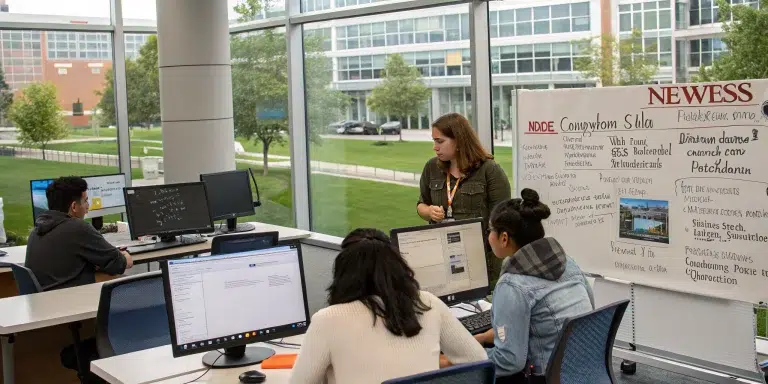
Journalism Programs: Courses & Career Paths
What is a Journalism Program?
Journalism programs equip students with the foundational knowledge and hands-on skills necessary to report, analyze, and communicate information across various media platforms. The curriculum typically emphasizes:
- Development of reporting and writing skills
- Mastery of interview techniques and background research
- Understanding of journalistic ethics and laws
- Learning multimedia and digital storytelling methods
By focusing on the multifaceted nature of journalism, these programs enable students to adapt to the rapidly evolving landscape of news and media.
What Do You Study in Journalism Programs?
The structure of journalism education builds proficiency through a variety of courses, projects, and experiential learning activities.
Core Curriculum Breakdown
-
Foundational Skills
- Reporting and Writing Techniques: Students learn to write news articles, features, and opinion pieces, primarily adhering to AP style conventions.
- Interview Techniques: Mastery in effectively conducting interviews, including preparation strategies and execution of insightful questions.
- Editing and Newsroom Simulation: Participation in editing exercises and real newsroom simulations to practice editing skills.
-
Media Law & Ethics
- Legal Foundations of Journalism: Comprehensive review of laws affecting media, such as the First Amendment and libel laws.
- Ethical Issues: Exploration of ethical challenges journalists face, including bias and misinformation.
-
Multimedia & Digital Storytelling
- Production Techniques: Instruction in multimedia production, including photography and video editing.
- Social Media Integration: Learning to publish web content and navigate various social media platforms.
-
Specialized Reporting Techniques
- Data Journalism: Techniques for analyzing and presenting data.
- Investigative Reporting: Training on methods for investigative journalism.
-
Practical Experience
- Hands-On Projects: Projects like podcasts and blogs for experiential learning.
- News Reporting Simulation: Real-time news reporting exercises to refine reporting skills.
Sample Curriculum Overview
| Major Areas | Representative Coursework |
|---|---|
| Reporting & Writing | News, feature, opinion, sports writing |
| Editing & Production | Newsroom editing, multimedia production |
| Interview & Research | Interview techniques, background research |
| Law & Ethics | Media law, First Amendment, ethics |
| Design & Digital Media | Layout, photography, video, web publishing |
| Special Topics | Data journalism, investigative reporting |
Careers After Journalism Programs
Graduates of journalism programs pursue diverse roles in the media and communication industries, including but not limited to:
- Reporter or Correspondent (print, broadcast, digital)
- Editor (news, features, multimedia)
- Multimedia Journalist or Producer
- Investigative Journalist
- Digital Content Manager or Social Media Editor
Salary Expectations
According to market data, here are some average salaries for journalism graduates globally:
- Reporter: $38,000–$60,000 (USD)
- Editor: $45,000–$75,000 (USD)
- Digital Content Manager: $60,000–$80,000 (USD)
- Investigative Journalist: $50,000–$90,000 (USD)
- Multimedia Producer: $45,000–$70,000 (USD)
Is Journalism Hard to Study?
The challenges of studying journalism do exist, including:
- Deadline Pressure: Journalists often must produce quality work under tight deadlines.
- Adaptability: The industry continually evolves, requiring students to keep pace.
- Critical Thinking and Analysis: Evaluating sources and narratives critically is paramount.
Required Skills
Individuals aspiring to succeed in journalism should develop:
- Strong Writing and Editing Skills
- Communication Skills
- Digital Literacy
- Research Skills
Preparation Tips
- Internships: Gain real-world experience through internships to build skills.
- Networking: Connect with professionals for mentorship and job prospects.
- Practice Writing Regularly
Top Certifications After Journalism Program Graduation
While a journalism degree provides a solid foundation, certifications can enhance employability, such as:
- Certified Journalist (CJ): Demonstrates proficiency and commitment.
- Social Media Certification: Expertise in leveraging social media for journalism.
- Multimedia Production Certification: Advanced skills in video and audio production.
Where to Study Journalism
Students interested in pursuing a journalism program can consider the following institutions, known for their robust curriculum and strong industry connections:
Take the Next Step with Study in Turkiye
If you’re ready to explore your options and find a journalism program that fits your goals, reach out to Study in Turkiye for personalized assistance. Our team is here to guide you in making informed decisions about your academic future.

