
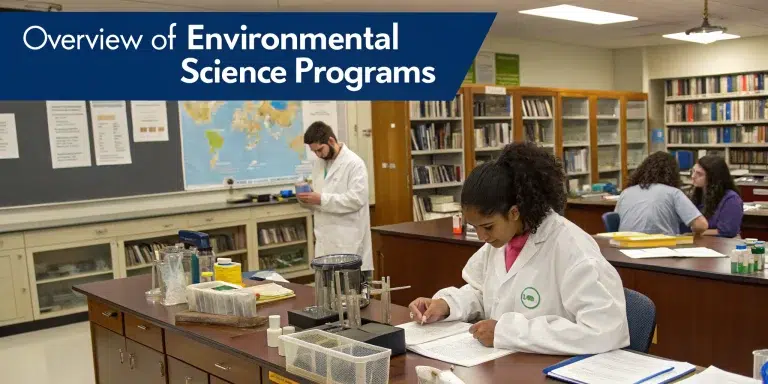
Overview of Environmental Science Programs
What is Environmental Science?
Environmental Science is an integrative field of study that examines the complex relationships within environmental systems. It encompasses multiple disciplines, including:
- Ecology: The study of ecosystems, biodiversity, and the interrelations between organisms and their environment.
- Chemistry: Understanding chemical processes in the environment, including pollution and contamination.
- Geology: The study of Earth’s physical processes and how they affect environmental sustainability.
- Social Sciences: Examining human behavior and policy-making in relation to environmental impact.
Environmental Science aims to equip students with the knowledge and skills necessary to address pressing global challenges such as climate change, resource depletion, and environmental degradation.
What Do You Study in Environmental Science?
Core Subjects and Course Structure
An Environmental Science curriculum typically includes foundational coursework and advanced electives. Below are the major components of the study plan:
- Introduction to Environmental Science: Overview of key concepts, issues, and solutions related to environmental challenges.
- Chemistry (General and Environmental): Study of chemical principles and their applications in environmental contexts.
- Biology (Ecology and Organismal Biology): Introduction to ecological principles and the study of living organisms’ roles in the environment.
- Mathematics (Statistics and Calculus): Essential quantitative skills for data analysis and modeling of environmental phenomena.
- Physics and Earth Science: Understanding physical concepts that underpin environmental processes and phenomena.
- Geography and Geographic Information Systems (GIS): Techniques for mapping and analyzing spatial data to study environmental issues.
- Environmental Engineering Principles: Introduction to sustainable engineering practices relevant to environmental issues.
- Environmental Health Sciences: Investigation of the impact of environmental factors on human health.
- Atmospheric and Oceanic Sciences: Study of climate science, air and water quality, and oceanography.
Elective Courses
To tailor their studies, students can choose from a variety of upper-division electives, such as:
- Environmental Microbiology
- Environmental Policy and Regulation
- Ecosystem Ecology
- Climatology
- Sustainable Solutions
Skills and Analytical Techniques
Students will develop essential skills throughout their program, including:
- Laboratory and field research methodologies.
- Data analysis techniques, including the use of statistical software.
- Advanced communication skills for effectively conveying scientific findings.
Experiential Components
Many programs include experiential learning opportunities such as:
- Internships: Working alongside professionals in environmental agencies or NGOs to gain practical experience.
- Research Projects or Capstone Experiences: Engaging in real-world projects that address contemporary environmental issues.
Careers After Environmental Science
Graduates with a degree in Environmental Science possess a wide range of career opportunities across various sectors. Below are potential job titles and their corresponding industries:
- Environmental Consultant: Assessing environmental regulations and advising clients (e.g., consulting firms, government agencies).
- Environmental Scientist: Conducting research and analysis on environmental issues (e.g., non-profits, research institutions).
- Environmental Policy Analyst: Evaluating and developing policies regarding environmental protection (e.g., governmental organizations).
- Wildlife Biologist: Studying wildlife and ecosystems (e.g., government agencies, non-profit organizations).
- Sustainability Specialist: Implementing sustainable practices within organizations (e.g., corporate sector, NGOs).
- Water Resource Manager: Managing water resources and conservation efforts (e.g., local government, consultancy firms).
Salary Ranges
According to recent labor market data, salaries for specific roles in the Environmental Science field vary significantly depending on experience, location, and sector:
- Environmental Consultant: $54,000 – $100,000 (USD) / €50,000 – €95,000 (EUR)
- Environmental Scientist: $45,000 – $90,000 (USD) / €42,000 – €85,000 (EUR)
- Environmental Policy Analyst: $52,000 – $104,000 (USD) / €48,000 – €98,000 (EUR)
- Wildlife Biologist: $48,000 – $85,000 (USD) / €45,000 – €80,000 (EUR)
- Sustainability Specialist: $50,000 – $90,000 (USD) / €46,000 – €85,000 (EUR)
- Water Resource Manager: $55,000 – $95,000 (USD) / €51,000 – €90,000 (EUR)
Is Environmental Science Hard to Study?
Studying Environmental Science can be challenging due to the interdisciplinary nature of the field. Students are required to grasp complex concepts that span both the sciences and humanities. The program often involves rigorous coursework, extensive research, and analytical thinking.
Common Challenges
- Interdisciplinary Nature: The need to integrate multiple scientific disciplines can be overwhelming for some students.
- Quantitative Skills: A strong foundation in mathematics and statistics is essential for data analysis.
- Fieldwork Requirements: Engaging in field studies can be physically demanding and require adaptability.
Preparation Tips
- Strengthen Math Skills: Taking preliminary courses in statistics and calculus can help prepare you for more advanced statistical analysis.
- Engage with Practical Experiences: Seek internships or volunteer opportunities related to environmental issues to gain hands-on experience.
- Stay Informed: Keeping up with current environmental issues and developments in science will enhance your understanding of course material.
Top Certifications After Environmental Science Graduation
After completing a degree in Environmental Science, obtaining additional certifications can enhance job prospects and professional growth. Essential international or national licenses may include:
- Certified Environmental Professional (CEP): Recognizes expertise in environmental management and compliance.
- LEED Accreditation: Focuses on sustainable building practices and green design.
- Certified Energy Manager (CEM): Validates expertise in energy management and sustainability practices.
- Project Management Professional (PMP): Essential for those looking to manage environmental projects and teams effectively.
- GIS Certification: Enhances skills in Geographic Information Systems, valuable for many environmental roles.
Where to Study Environmental Science
For students interested in pursuing a degree in Environmental Science, some notable private universities include:
Conclusion
Environmental Science programs equip students with the interdisciplinary knowledge and practical skills required to tackle environmental challenges. By understanding the complexities of natural and human systems, graduates are prepared to make impactful contributions in various sectors. Those interested in this field should consider pursuing studies at reputable institutions that align with their academic and career aspirations.
For personalized guidance and more information on pursuing a degree in Environmental Science, reach out to Study in Turkiye for assistance. Your journey to making a difference in the environment starts here.
Take the Next Step with Study in Turkiye
Explore your opportunities in Environmental Science and make a positive impact on the planet. Discover programs tailored to your interests and career goals.

