
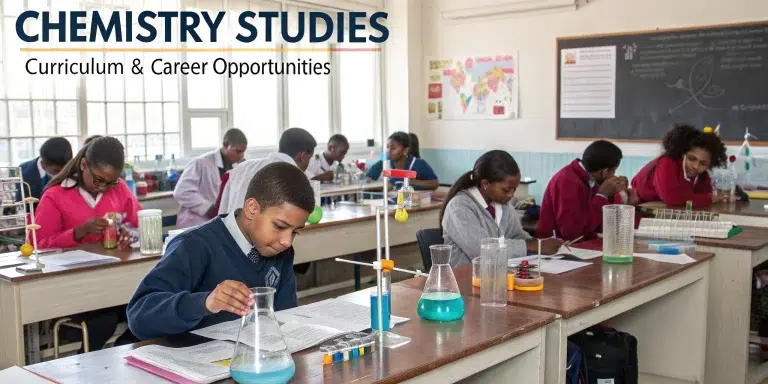
Chemistry Studies: Curriculum & Future Careers
Overview of Chemistry Studies
Chemistry studies delve into understanding the composition, structure, properties, and changes of matter. This foundational discipline prepares students to confront scientific inquiries and real-world challenges through a combination of theoretical learning and practical laboratory work. Ideal for those with a passion for science and a curiosity about the natural world, chemistry is integral to numerous fields, including medicine, engineering, environmental science, and pharmaceuticals.
What is Chemistry?
Chemistry is often referred to as the “central science” because it connects other natural sciences, including physics, geology, and biology. It involves the study of atoms and molecules, the building blocks of matter, as well as chemical reactions that lead to new substances. Chemistry plays a crucial role in the development of new materials, medicines, and sustainable solutions to global challenges.
What Do You Study in Chemistry?
Students pursuing a degree in chemistry engage with a curriculum that emphasizes both theoretical concepts and practical applications through a diverse range of courses.
Introductory Courses
In the initial stages, students learn foundational concepts. Core subjects typically include:
- Stoichiometry: Understanding the quantitative aspects of chemical reactions.
- States of Matter: Studying solids, liquids, gases, and plasma.
- Atomic Structure: Learning about the components of atoms and how they bond.
- Thermodynamics: Investigating energy changes and physical processes.
- Chemical Equilibria: Understanding the balance between reactants and products.
- Kinetics: Examining the rates of reactions and factors affecting them.
Laboratory Experience
Hands-on laboratory work is an indispensable part of chemistry education. Students participate in experiments that develop their practical skills and reinforce their theoretical knowledge. Laboratory experiences may include:
- General Chemistry Labs: Basic experiments to understand reaction principles.
- Material Science Labs: Testing and analyzing materials for real-world applications.
- Biochemistry Labs: Exploring biological processes at the molecular level.
Foundation Courses
Chemistry programs typically cover five major sub-disciplines:
- Analytical Chemistry: Techniques for determining the composition of substances.
- Inorganic Chemistry: Study of inorganic compounds and materials.
- Organic Chemistry: Understanding the chemistry of carbon-containing compounds.
- Physical Chemistry: Examining the physical principles governing chemical systems.
- Biochemistry: Investigating the chemical processes within and related to living organisms.
Advanced Topics
Following foundational coursework, students can choose specialized subjects such as:
- Environmental Chemistry: Focusing on chemical processes in the environment.
- Medicinal Chemistry: Gaining insight into drug design and development.
- Nanotechnology: Exploring the chemical principles behind nanoscale materials.
Additionally, students may engage in research projects and capstone experiences that delve into contemporary issues in chemistry, fostering critical thinking and independent study.
Professional Skills Development
Chemistry curricula also emphasize essential professional skills, including:
- Communication: Writing reports and presenting research findings.
- Critical Thinking: Analyzing data and problem-solving within experimental contexts.
- Teamwork: Collaborating in laboratory settings and research groups.
- Ethical Practice: Understanding the implications of scientific research and technological advancements.
Careers After Chemistry
Graduates of chemistry programs have diverse career opportunities in various sectors. Typical roles include:
- Research Scientist: Working in academic, industrial, or governmental laboratories on chemical analysis and product development.
- Chemical Engineer: Applying chemical principles to design processes for manufacturing and energy production.
- Pharmaceutical Scientist: Developing new medications and therapies based on chemical knowledge.
- Environmental Consultant: Addressing pollution issues and developing sustainable practices.
- Quality Control Analyst: Ensuring the safety and quality of products in manufacturing industries.
- Chemical Safety Officer: Overseeing safe practices in laboratories and industrial settings.
- Secondary or Post-secondary Educator: Teaching chemistry and conducting educational outreach.
Average Salaries
Below are the average salary ranges globally for various careers in chemistry:
- Research Scientist: $60,000 – $100,000 USD / €50,000 – €85,000 EUR
- Chemical Engineer: $70,000 – $120,000 USD / €55,000 – €100,000 EUR
- Pharmaceutical Scientist: $80,000 – $130,000 USD / €65,000 – €110,000 EUR
- Environmental Consultant: $50,000 – $90,000 USD / €40,000 – €75,000 EUR
- Quality Control Analyst: $40,000 – $70,000 USD / €35,000 – €60,000 EUR
- Educator: $45,000 – $90,000 USD / €40,000 – €75,000 EUR
These figures can vary based on location, industry, and experience level.
Is Chemistry Hard to Study?
Chemistry can present challenges, particularly due to its abstract concepts and mathematical components. Some common difficulties include:
- Complex Calculations: Many chemistry courses require mathematical proficiency, especially in stoichiometry and thermodynamics.
- Memorization of Theories and Compounds: Significant memorization is necessary for mastering organic chemistry.
- Lab Practicalities: Lab work requires not just understanding theory but also mastering techniques and safety protocols.
Required Skills
To excel in chemistry, students should develop:
- Strong analytical and problem-solving skills.
- Proficiency in mathematics.
- A keen attention to detail, especially during laboratory work.
- Effective communication skills for reporting results and collaborating with peers.
Preparation Tips
- Study Regularly: Allocate time each week for reviewing notes and reading textbooks to reinforce understanding.
- Engage in Group Study: Collaborating with peers can enhance comprehension and retention of complex materials.
- Utilize Resources: Take advantage of online resources, tutoring, and laboratory assistance when necessary.
Top Certifications After Chemistry Graduation
For students looking to advance their careers post-graduation, obtaining certain certifications and licenses can greatly enhance job prospects. Common certifications include:
- Certified Chemical Technician (CCT)
- Registered Chemist (RChem)
- Environmentally Sustainable Laboratory Practices (ESLP)
- Quality Control Certification (QCC)
Additionally, those pursuing careers in certain sectors, such as healthcare and pharmaceuticals, may need to pass specific licensing examinations or obtain further educational qualifications (e.g., a Master’s or PhD in Chemistry or related fields).
Where to Study Chemistry
Several esteemed private universities offer comprehensive chemistry programs. Here are some notable institutions:
These institutions are well-regarded not only for their strong academic programs but also for their engaging laboratory environments, experienced faculty, and connections to industry.
In conclusion, chemistry studies offer an expansive view into the intricate world of matter and its interactions. By understanding the nuances of this scientific field, students equip themselves for meaningful careers in various sectors, where their knowledge can lead to innovative solutions and advancements.
Take the Next Step with Study in Turkiye
Explore further and enhance your academic journey by connecting with the right chemistry programs. Reach out today for personalized assistance!

