
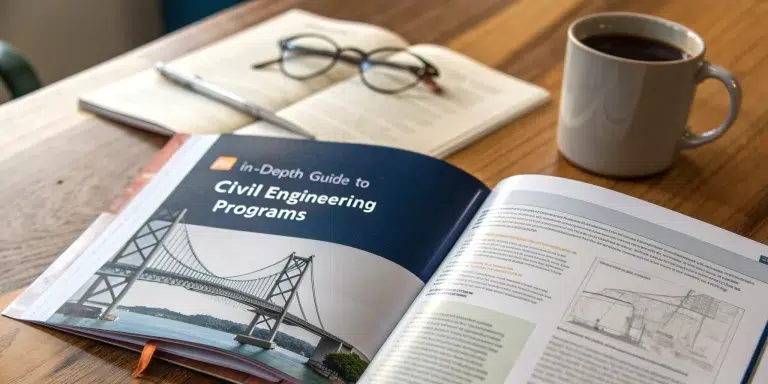
An In-Depth Guide to Civil Engineering Programs
What Do You Study in Civil Engineering?
Careers After Civil Engineering
Is Civil Engineering Hard to Study?
Top Certifications After Civil Engineering Graduation
Where to Study Civil Engineering
What is Civil Engineering?
Civil engineering is the discipline that deals with the development of infrastructure such as bridges, roads, canals, dams, and buildings. The role of a civil engineer is vital in enhancing the safety and functionality of constructed environments. This field is not just limited to construction but also incorporates aspects of design, project management, and sustainability. Civil engineering graduates often find themselves leading projects that improve communities and sustain the built environment for future generations.
What Do You Study in Civil Engineering?
Core Curriculum and Modules
Civil engineering programs typically offer a diverse curriculum that encompasses both technical courses and foundational subjects. The core subjects may include:
- Civil Engineering Design: Principles of engineering design and analysis utilized in creating structures.
- Structural Analysis: Study of frameworks, materials, and forces to ensure stability and strength.
- Fluid Mechanics: Understanding the behavior of fluids in motion and at rest, vital for hydraulic engineering.
- Geotechnical Engineering: Analysis of soil and rock properties to assess ground behavior and foundation design.
- Materials Science: Examination of different materials’ properties and their application in construction.
- Environmental Engineering: Addressing issues such as water quality, waste management, and sustainable design.
- Transportation Engineering: Focus on the planning and optimization of transportation systems.
- Mathematics and Applied Computing: Essential mathematical techniques and computational tools for problem-solving in engineering contexts.
Assessment Methods
Students in civil engineering programs may be assessed through a variety of approaches such as:
- Coursework
- Dissertations
- Exams
- Group projects
- Lab reports
- Practical tests and presentations
- Research projects
Labs, Workshops, and Internships
Hands-on experience is a crucial part of civil engineering education. Many institutions offer laboratory sessions that allow students to conduct experiments related to materials and structural testing. Workshops may cover software applications used in civil engineering, and internships provide valuable real-world experience. Internships typically involve working with engineering firms, gaining insights into project management, design, and execution in real-time environments.
Specializations
Some civil engineering programs offer opportunities to specialize in subfields such as:
- Structural Engineering
- Transportation Engineering
- Geotechnical Engineering
- Environmental Engineering
- Water Resources Management
Careers After Civil Engineering
Graduates of civil engineering programs can pursue a variety of fulfilling careers in multiple sectors, typically including construction, consultancy, and governmental agencies. Here’s a breakdown of potential job titles and sectors:
- Civil Engineer (design, construction, project management)
- Structural Engineer
- Geotechnical Engineer
- Transportation Engineer
- Water Resource Engineer
- Environmental Consultant
- Urban Planner
- Construction Manager
- Research and Development Specialist
Average Salaries:
Globally, civil engineering salaries can vary based on location, experience, and specialization. According to various labor market databases:
- United States: $70,000 – $106,000 per year
- Europe: €40,000 – €80,000 per year
- In Turkish Lira (TRY): Average salary ranges from 200,000 TRY to 350,000 TRY annually.
Is Civil Engineering Hard to Study?
Studying civil engineering can be challenging, requiring a strong foundation in mathematics and physics. Common challenges students may face include:
- Complex Concepts: Understanding advanced mathematical modeling and physics principles.
- Time Management: Balancing coursework, lab work, and project deadlines can be demanding.
- Teamwork and Collaboration: Group projects simulate real-world engineering teamwork but may present interpersonal challenges.
- Technical Software: Proficiency in engineering software (like AutoCAD and MATLAB) is necessary, which may require dedication to learn.
Required Skills and Preparation Tips
To succeed in civil engineering, students should develop:
- Strong analytical and critical thinking abilities
- Excellent problem-solving skills
- Effective communication and teamwork skills
- Technical proficiency in engineering tools and software
Preparation tips include:
- Strengthening mathematics and physics knowledge before enrollment
- Engaging in relevant internships or practical experiences
- Participating in extracurricular activities related to engineering (e.g., student engineering clubs)
Top Certifications After Civil Engineering Graduation
Upon completing a civil engineering program, graduates may consider obtaining certifications that enhance their credentials and career prospects. Essential certifications may include:
- Professional Engineer (PE): A widely recognized credential requiring passing an exam after gaining a specific amount of work experience.
- Project Management Professional (PMP): Certification proving competency in leading and directing projects, highly regarded in engineering sectors.
- LEED Accreditation: Focuses on sustainability in building and project management, valuable in today’s environmentally conscious job market.
Where to Study Civil Engineering
Students interested in pursuing a civil engineering degree can explore programs offered by leading private universities. Here are some notable institutions:
Take the Next Step with Study in Turkiye
If you want to explore more about civil engineering programs or need personalized assistance in finding the right academic path, reach out to SIT Search for tailored guidance and support.

