
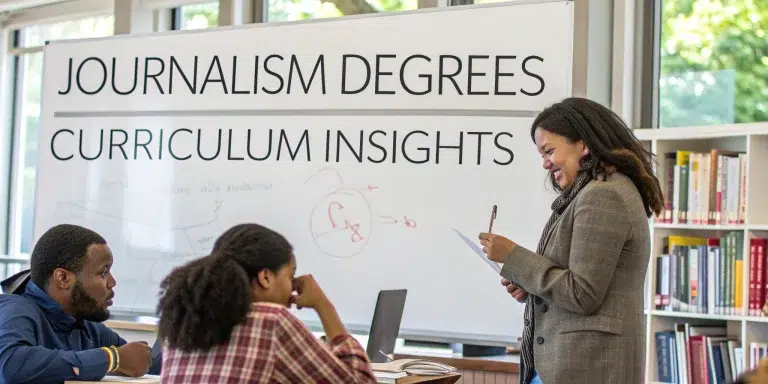
Journalism Degrees: Curriculum Insights & Careers
What is a Journalism Program?
A journalism program is an academic pathway that offers comprehensive training in various aspects of the media industry, including but not limited to print, digital, and broadcast journalism. The focus is on developing storytelling abilities, ethical reporting practices, and multimedia production skills.
These programs cater to individuals with a strong interest in current affairs, a passion for writing, and a desire to inform the public about important issues. Students learn to analyze, create, and disseminate information effectively, preparing them for successful careers in a rapidly evolving industry.
Journalism programs are often structured with a combination of theoretical courses, hands-on experiences, and real-world applications, providing an in-depth understanding of the industry’s demands and opportunities.
What Do You Study in Journalism Program?
Core Curriculum and Skills
Journalism programs emphasize both practical and theoretical aspects of the field. Students typically study:
- Reporting and Writing: Courses introduce students to news writing, interviewing, and research, emphasizing clear and accurate storytelling. These foundational skills are critical for any journalist who aims to deliver news effectively.
- Editing and News Judgment: Training includes the editing process, AP style, news judgment, and layout/design. This training ensures that students can present information effectively and ethically, adhering to journalism’s standards of accuracy and fairness.
- Multimedia and Visual Journalism: Students learn to create and edit visual content, including photojournalism, broadcast news writing, video production, and audio editing using digital tools. Multimedia storytelling is an essential skill in today’s diverse media landscape.
- Legal and Ethical Principles: Core courses focus on media law, ethics, and the responsibilities of journalists in society. Understanding the legal framework and ethical guidelines governing journalism is paramount for professional integrity.
- Specializations: Many programs offer specializations such as data journalism, sports media, magazine writing, and photojournalism. These tracks allow students to tailor their education to specific interests within the field.
- Capstone Experiences and Internships: Advanced coursework often culminates in capstone projects or internships that provide hands-on experience in professional settings. Such experiences are crucial for building a portfolio and gaining practical insights into the industry.
Example Curriculum Structure
| Year | Courses |
|---|---|
| Freshman | Written Communication, Introduction to Media Writing, Grammar & AP Style, Visual Media, Introduction to Sociology |
| Sophomore | Reporting & Newswriting, Broadcast Newswriting, Introduction to Radio/TV, News Production, Computer Literacy |
| Junior & Senior | Specialized courses (e.g., Sports Media, Data Journalism), Advanced Reporting, Capstone Team Projects, Internships |
Careers After Journalism Program
Professional Opportunities
Graduates of journalism programs are prepared for a wide array of media and communication roles, including:
- Reporter/Journalist: Covering news in print, digital, or broadcast formats
- Editor: Overseeing content, ensuring accuracy, and managing editorial teams
- Producer: Creating content for television, radio, podcasts, or online video platforms
- Photojournalist: Documenting news events through photography
- Multimedia Specialist: Integrating text, audio, video, and interactive elements in news production
- Specialized Roles: Opportunities exist in areas such as sports media, magazine writing, data reporting, and more, depending on the student’s chosen specialization
Salary Ranges
The average salary for journalism professionals can vary significantly based on role, experience, and location. Below are approximate salary ranges:
- Reporter: $30,000 – $55,000 (USD) / €25,000 – €50,000
- Editor: $45,000 – $80,000 (USD) / €40,000 – €70,000
- Producer: $40,000 – $75,000 (USD) / €35,000 – €65,000
- Photojournalist: $35,000 – $65,000 (USD) / €30,000 – €55,000
- Multimedia Specialist: $40,000 – $70,000 (USD) / €35,000 – €60,000
Is Journalism Hard to Study?
Studying journalism can present unique challenges, such as tight deadlines, the pressure to produce accurate content under scrutiny, and the need to stay updated on ever-evolving media technology.
Common Challenges
- Time Management: Journalists often juggle numerous assignments and need to submit pieces within strict deadlines.
- Critical Thinking Skills: The ability to analyze information critically and discern credible sources is essential, especially in an era of misinformation.
- Technical Proficiency: As the journalism landscape becomes increasingly digital, proficiency with multimedia tools and technologies is necessary.
- Field Experience: Gaining real-world experience through internships can be competitive and demanding, requiring students to adapt quickly.
Preparation Tips
- Stay Informed: Engage with current events and trends in journalism to foster an informed perspective.
- Develop Writing Skills: Practice writing regularly across different formats to enhance clarity and style.
- Networking: Build connections with professionals and participate in internships to gain practical experience.
- Continuing Education: Consider attending workshops or online courses to improve technical skills relevant to journalism.
Top Certifications After Journalism Program Graduation
While a journalism degree provides a strong foundation, certain certifications can enhance a graduate’s employability. Relevant certifications may include:
- Certified Journalism Educator (CJE): Demonstrates teaching proficiency and knowledge in journalism.
- Google News Initiative Certificate: Provides training in digital skills for journalists, focusing on data journalism and verification.
- Multimedia Journalism Certification: Validates skills in various multimedia applications, including video, photography, and online journalism.
Where to Study Journalism
If you’re considering pursuing a journalism degree, there are several esteemed programs available at private universities:
Conclusion
Journalism programs thus offer structured, comprehensive training for students seeking to become principled, skilled communicators in an ever-evolving media landscape. As the industry continues to adapt, graduates will find numerous opportunities to influence public discourse and contribute meaningfully to society.
Take the Next Step with Study in Turkiye
Explore further and embark on your academic journey in journalism!

